
WASHINGTON — A sailor’s pay is the last thing a navy touches. It is the account nobody raids, because the consequences of getting it wrong are immediate and personal and impossible to explain away. The US Navy has been raiding it.
A Pentagon memo on Navy funding, reported by The Guardian, warns of shortfalls in payroll accounts because the department has been drawing on them to pay for combat operations. A Navy official described the mechanics plainly: the money for payroll was taken to cover overseas contingencies and is being backfilled with funds that have not yet been spent elsewhere, so that paycheques still clear.
That sentence describes a service running on cashflow rather than budget. Nothing has been stolen and no sailor has gone unpaid. What has happened is that the Navy is moving money between accounts fast enough to stay ahead of its own obligations, which works until the balances it is borrowing against run out.
The arithmetic behind it is not complicated. The Navy’s budget for fiscal 2026 runs to roughly 300 billion dollars and was written before the campaign against Iran opened on February 28. Nothing in it anticipated a sustained blockade of Iranian ports, months of strike operations, or the expenditure of interceptors and cruise missiles at wartime rates. The operation has been funded, in effect, out of a peacetime document.
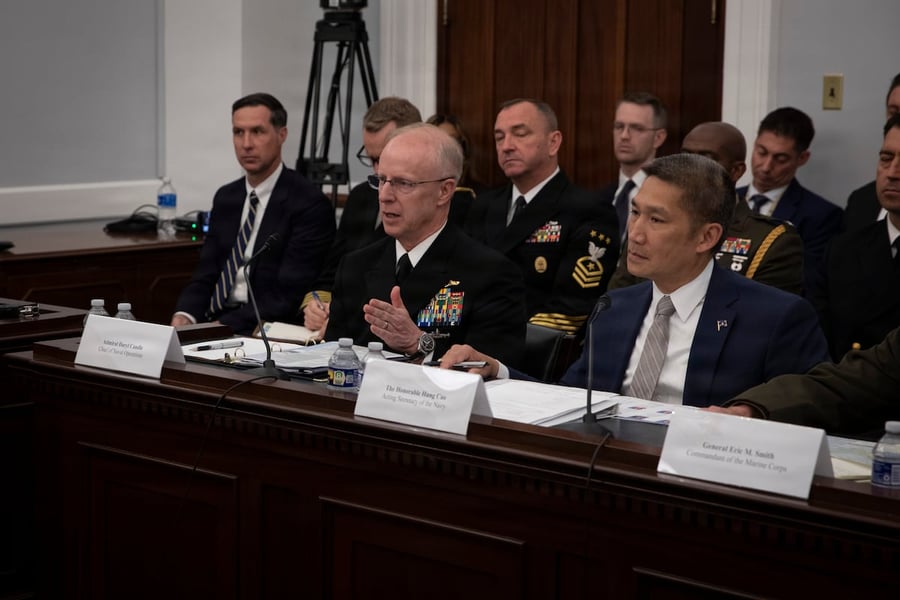
None of this arrived without warning. Admiral Daryl Caudle, the chief of naval operations, told the House Appropriations defence subcommittee on May 12 that without more money he would have to start changing training, operations and certification events, the things the Navy does to generate force, in what he called the July timeframe. July came and went. Caudle has since put the sum the service needs to be whole and solvent for the fiscal year at 6 to 8 billion dollars. At the time he testified, Defense News reported, the administration had not yet sent Congress a supplemental request at all, and the Pentagon’s acting comptroller, Jules Hurst III, was putting the running cost of the war at about 29 billion dollars, up from 25 billion a fortnight earlier.
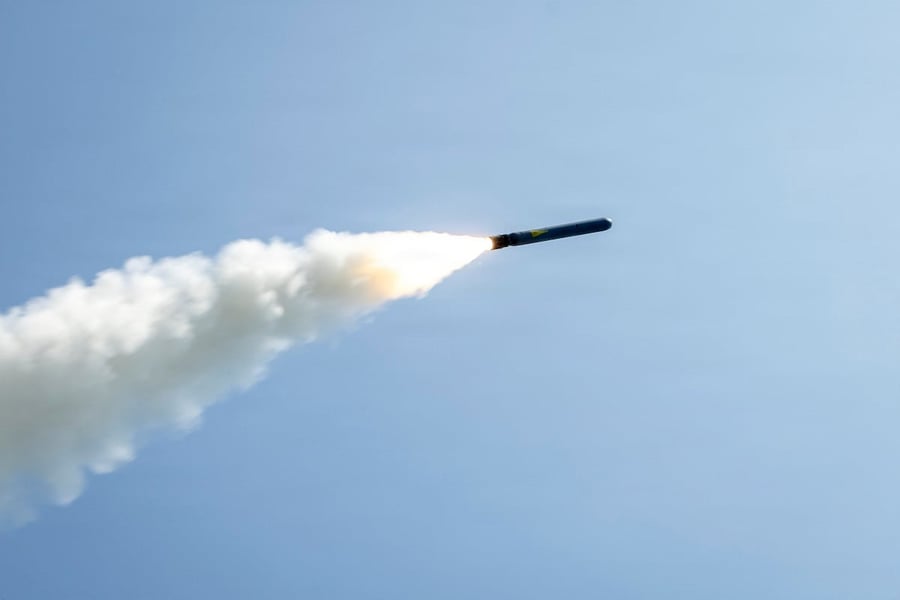
Washington now knows the size of the hole. The administration has asked Congress for 67 billion dollars in emergency funding for this fiscal year, and 18.2 billion of that is earmarked simply to replace munitions already fired: Patriot interceptors, Navy Tomahawks, and the Army’s high-altitude THAAD interceptors. These are replacement costs, not the cost of continuing.
Congress has not moved on the emergency request. It has been sitting while the House heads into a month-long recess, which makes action before the fiscal year ends on September 30 improbable. That date, rather than anything happening in the Gulf, is the real deadline in this story. On October 1 a new fiscal year begins and the accounting resets. Between now and then the Navy has to keep paying people out of whatever it can shift.
What it has been shifting is visible in the units. To keep operating, the Pentagon has moved money out of training, maintenance and weapons procurement, producing cancelled exercises and deferred upkeep across the force. Those are the classic symptoms of a service funding a war it was not appropriated for, and they are cumulative. A cancelled exercise is a readiness debt. Deferred maintenance on a warship is a bill that grows while it waits.
The munitions problem was forecast. The Center for Strategic and International Studies has warned that the United States risks a critical shortage of precision-guided munitions in a large-scale confrontation, because stockpiles are sized for short campaigns and production lines cannot surge quickly. The think tank was describing a hypothetical war. The bill in front of Congress is for a real one.
There is a structural point underneath the accounting. The blockade of Iranian ports is cheap in the sense that it rarely requires anyone to fire: CENTCOM has redirected more than 70 commercial vessels while disabling only three, because merchant masters comply rather than test it. But keeping warships and hundreds of aircraft on station to produce that compliance is expensive whether or not a shot is fired. Deterrence has an operating cost, and it is charged monthly.
That cost now runs alongside an economic campaign rather than a shooting one. The Treasury has moved to secondary sanctions as the main instrument against Tehran, with officials indicating the approach is expected to hold until at least after the midterm elections. Sanctions are enforced by lawyers and banks. The blockade that gives them physical force is enforced by ships, and the ships are the part that is running out of money.
The reporting on the memo rests on internal documents and on interviews with Navy officials, contractors and defence analysts, and the Pentagon has not publicly disputed its contents. It has also not explained what happens if Congress does not act. Neither the Navy nor the Department of Defense has said which accounts are being drawn down to backfill payroll, how much headroom is left in them, or what the service would stop doing first.
Those are the numbers that would settle whether this is an accounting inconvenience or the beginning of something that shows up on a flight deck. Until the Pentagon publishes them, or Congress forces them out in a hearing, the only firm fact is the one in the memo: the payroll account is being used as a bridge, and bridges are built to be temporary.