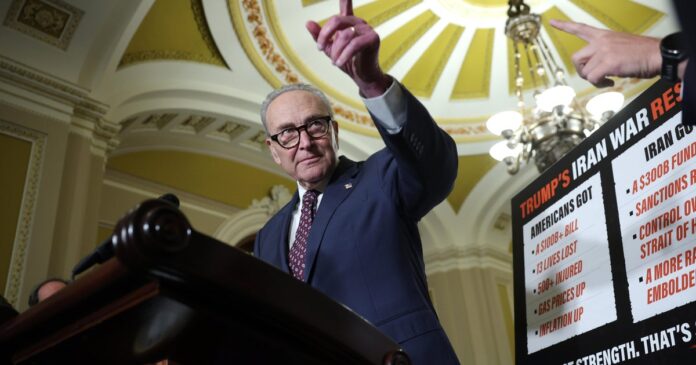
WASHINGTON — The instrument of American policy toward Iran this week is not a carrier group. It is a telephone. Scott Bessent told reporters on Monday that President Donald Trump is working through a list of foreign leaders, calling them individually with what the Treasury secretary described as specific requests to cease their interactions with the Iranian government.
The calls are the enforcement arm of something larger. Bessent used the same appearance to unveil what the Treasury has named Operation Economic Outcast, a campaign built almost entirely on secondary sanctions, meaning penalties aimed not at Iran but at everyone still doing business with it. He reached for a wartime comparison to describe it, calling the effort an economic D-Day and saying the objective was to sever every economic lifeline sustaining the government in Tehran until, in his phrase, Tehran stands alone.
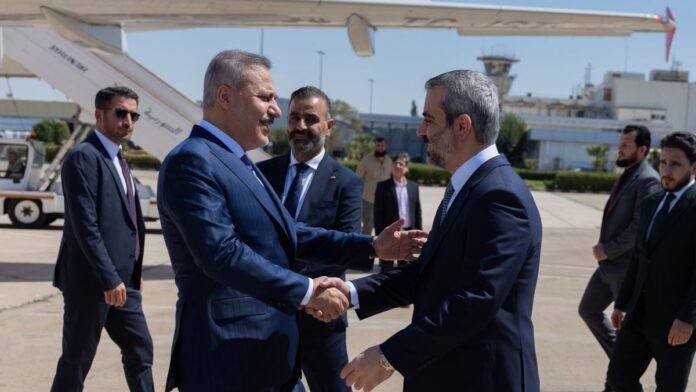
What makes Monday different from the many sanctions announcements that preceded it is the deadline attached to each government. Every country has a defined timeline to shut down activities Washington has identified, Bessent said, and if they do not take action, the United States will do so unilaterally through Treasury authorities. Teams from Treasury, the State Department and the US military are meeting counterparts around the world to deliver that message in person.
Read plainly, that converts a sanctions regime into a series of private bilateral ultimatums. The timelines have not been published. The activities identified have not been listed country by country. No government has said publicly what its own deadline is, or whether it intends to meet it, which means the only parties who know the terms are Washington and the capital on the other end of the call.
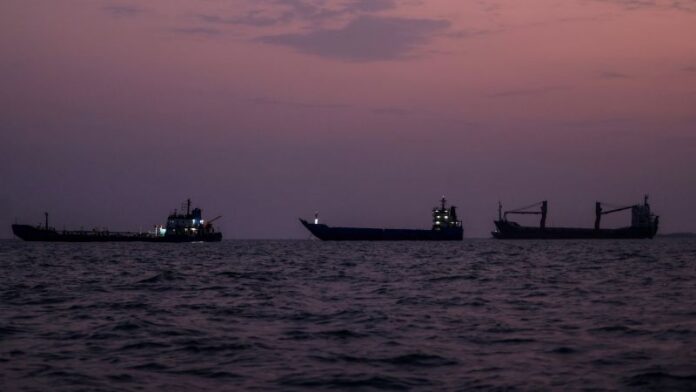
The measures themselves are wide. Treasury issued sectoral determinations covering five areas at once, naming digital assets, technology, gold, aviation and shipping, and designated close to 60 entities, individuals and vessels tied to nuclear and missile procurement, cyber operations and oil smuggling. Al Jazeera reported the package as a global economic war rather than a national sanctions list, which is closer to what the design actually is.

That asymmetry is the point, and it is also the weakness. The states most likely to comply are the ones whose trade with Iran matters least to Iran. The state whose compliance would matter most is the one Washington has so far declined to press, and Bessent did not explain why on Monday.
Trump announced the economic operation on August 20, calling it isolation on an unprecedented scale and urging American allies to join. He has been careful, though, to keep the other option visible. The shift to economic warfare, he has said, does not mean the United States is abandoning military options, and the naval blockade of Iranian ports has continued throughout.
Tehran saw the calls coming. On August 22, the secretary of Iran’s Supreme National Security Council, Mohsen Rezaei, warned that any country joining the American campaign would be regarded as an enemy and threatened what he called seismic retaliation. So the governments now receiving calls from Washington are receiving threats from both directions, and the two sets of deadlines are not synchronised.
Iran’s own read on the history is that none of this works. Foreign Minister Abbas Araghchi listed four previous American pressure campaigns and said each one failed, an argument that is true as far as forcing capitulation goes and beside the point as far as Iranians’ living standards go. Each campaign did leave the country measurably poorer. None produced the political outcome Washington wanted.
What is new here is less the pressure than the timeframe behind it. American officials have indicated that expanded secondary sanctions are expected to remain the main line of effort against Iran until at least after the midterm elections. That is a domestic electoral horizon, not a strategic one, and it suggests the campaign is being measured against a calendar in Washington rather than a condition in Tehran.
Which leaves the question nobody in Monday’s briefing answered. Bessent said Washington expects action and named a consequence for inaction. He did not say what compliance looks like, how it will be verified, or what a country gets in return for accepting a deadline it did not negotiate. Until one of the leaders taking those calls says publicly what was asked of them, the terms of the largest coercive campaign the Treasury has run in years exist only in the memory of the people on the phone.