
DUBAI — The warning from Tehran on Saturday was addressed to everyone, but the arithmetic of it points to Beijing.
Mohsen Rezaei, secretary of Iran’s Supreme National Security Council, said on August 22 that any country joining US-led economic restrictions against Iran “will be regarded as an enemy” and that retaliation would be “seismic.” The statement was remarkable not for its tone — Iran has issued similar warnings before — but for its timing. US Treasury Secretary Scott Bessent is scheduled to announce what he has called the “most crushing economic operation in history” against Tehran on Monday. And China, which buys more than 80% of Iran’s oil exports, is the country Washington most needs to cooperate with to make it work.
The geometry is straightforward. Iran needs China to keep buying its oil. The United States needs China to stop. Rezaei’s warning was directed explicitly at “nearby nations” — a phrase that in the context of Iran’s energy trade describes the countries of the Persian Gulf and Central Asia, but whose economic logic reaches considerably further. The message to Beijing was implicit: participation in US sanctions makes China an enemy of Iran. The message from Washington has been explicit: Bessent said last week that the US position is “you’re either with us or against us,” and specifically urged China’s cooperation.
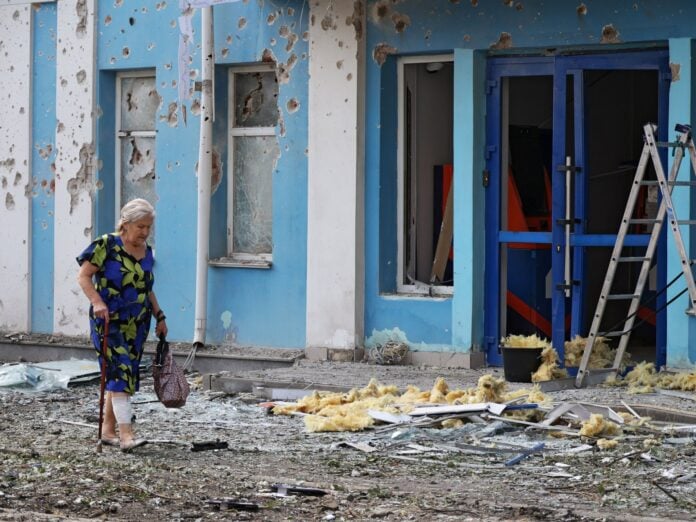
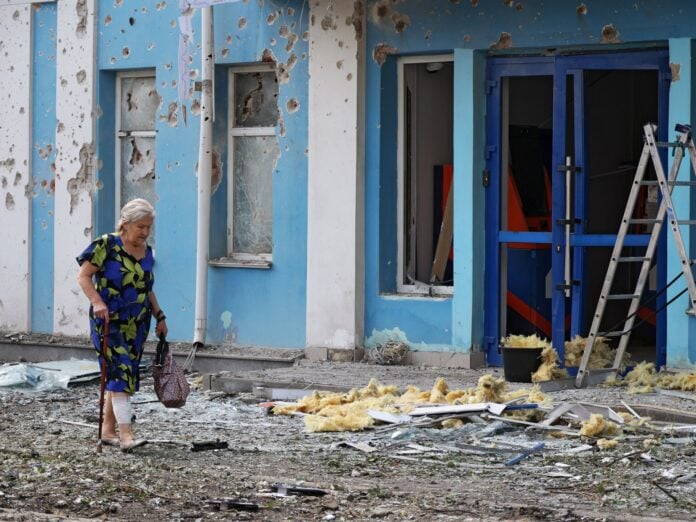
The conflict that created this standoff began on February 28, when the United States and Israel launched joint strikes against Iranian nuclear and military facilities. Iran’s response included blockading the Strait of Hormuz — a waterway through which roughly one-fifth of the world’s traded oil normally passes. The blockade has reduced traffic to a trickle; Bessent’s planned sanctions represent the economic complement to that military pressure, an attempt to collapse Iran’s foreign exchange earnings at the same time its naval leverage is at its peak.
Iran’s President Masoud Pezeshkian called on Friday for ending the conflict “from a position of strength” — a formulation that signals Tehran believes it holds enough leverage to negotiate rather than capitulate. That assessment rests on the Hormuz blockade, on the failure of Egypt’s mediation to produce any agreed framework, and on China’s continued oil purchases despite US pressure. If Rezaei’s warning persuades even one major purchaser to maintain its trade relationship with Tehran, the leverage calculation shifts.
The Monday sanctions announcement will be the most visible test of whether the US pressure campaign is landing. Bessent has telegraphed that the package will target Iran’s oil revenues, its financial system, and — pointedly — the third-country companies and governments that facilitate Iranian trade. That last category is where the threat to China becomes concrete. Secondary sanctions on Chinese entities buying Iranian oil would force Beijing to choose between its trade relationship with Iran and its access to the US financial system. Washington has offered China that choice before. The Hormuz blockade makes Iranian oil cheaper in spot markets and the choice correspondingly harder for Beijing to make in Washington’s favor.
Diplomatic efforts have stalled. Egypt, which positioned itself as the principal mediator, has not produced a framework that either side will accept. Iran maintains the blockade as its primary leverage; the United States maintains that the blockade’s termination is a precondition for any easing of military pressure. Those positions have not moved in the six months since the conflict began.
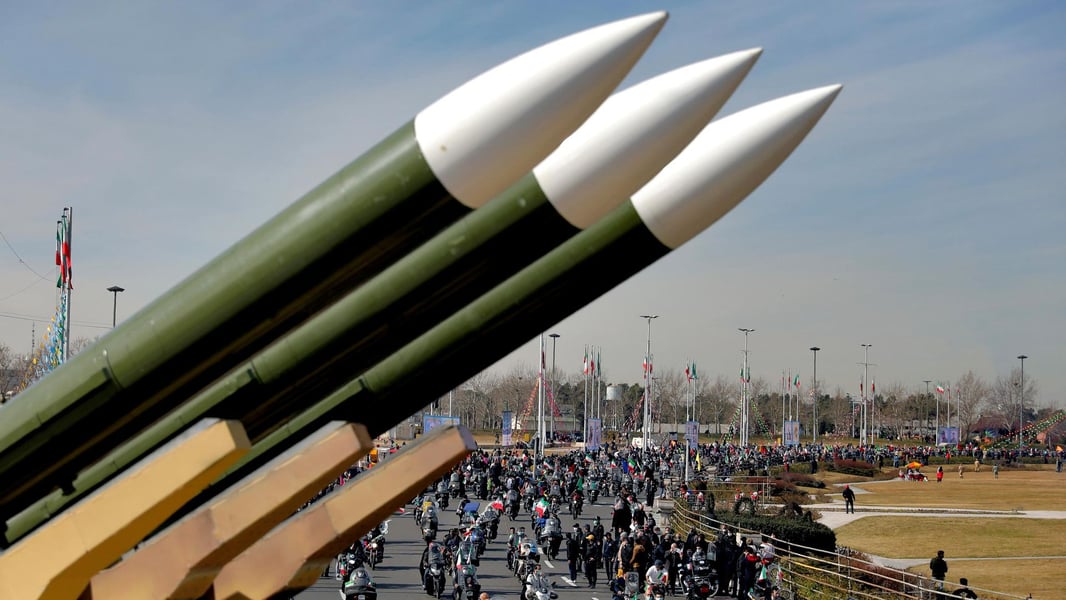
What Rezaei did not specify — the actual content of what “seismic retaliation” against cooperating nations would look like — is the gap the warning leaves open. Iran has demonstrated its ability to disrupt oil shipping through the Strait of Hormuz. It has demonstrated through February’s strikes and subsequent counter-strikes the reach of its drone and missile arsenal. What additional tools Rezaei was referencing, if any, was not something Saturday’s statement disclosed. The ambiguity is almost certainly intentional.
There is one fact the warning does not address: the record of what happened the last time the United States and Iran found themselves in a comparable escalation cycle, and how it ended. Rezaei’s statement is not about that history. It is about what happens in the next several days — specifically on Monday, when Bessent announces the sanctions details, and in the days after, when China, the Gulf states, and every country that still trades with Iran will have to decide what Rezaei’s warning is actually worth.