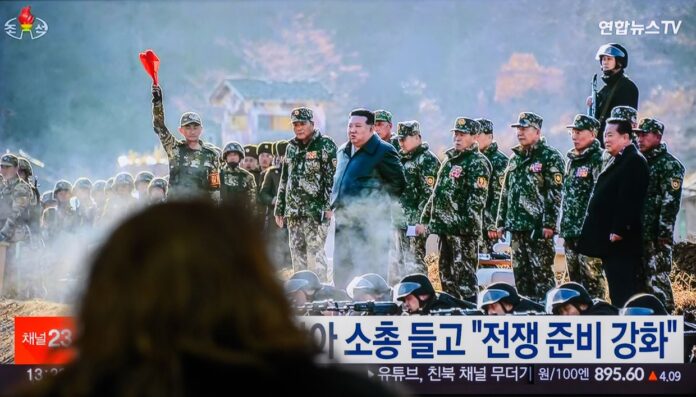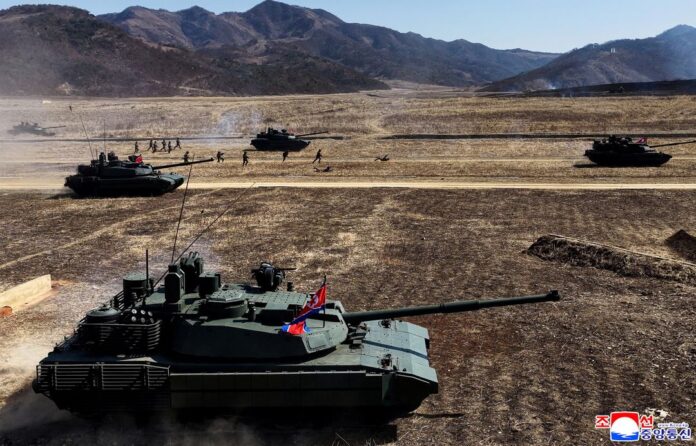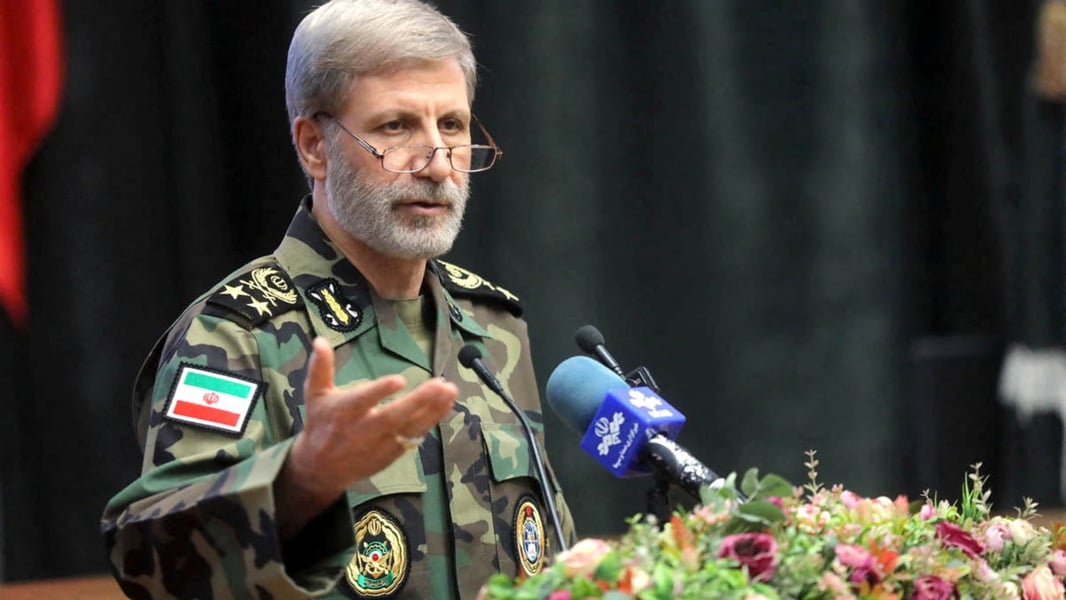

TEHRAN — The Islamic Republic’s army has a spokesman who gives interviews to the state news agency about once a week, and on Saturday Brigadier General Mohammad Akraminia used one of them to say something about the shape of the war. Iran’s military doctrine, he told IRNA, used to be defensive. It is not any more.
His words were that the doctrine had been defensive in the past but that gradually, during these two wars, it had moved from a defensive posture towards an offensive one. The two wars are the twelve days of June 2025 and the forty that began on 28 February this year and ended with the Pakistan-brokered ceasefire of 8 April, a ceasefire since extended indefinitely and broken by both sides often enough that nobody uses the word any more.
A doctrine is a claim about what a state will do next, and it is worth very little without an example. Akraminia gave one. He said an offensive doctrine did not necessarily mean pre-emption, but that Iran had taken a pre-emptive approach at one point, striking an American base in Jordan before the war entered. That is the sentence worth examining, because the strike he is describing happened on 29 July.
By 29 July the war was five months old. It had started on 28 February. The United States had announced a naval blockade of Iran on 13 April. American aircraft and ships had been in the fight for months by then. Whatever the Jordan operation was, it was not carried out before the war entered anything.
There is a narrower reading available and it deserves stating. Akraminia may mean pre-emption of an American ground operation rather than of the war as a whole, and Washington has been reported to be weighing operations that would put thousands of troops into play, including a raid on Iranian nuclear sites. On that reading the claim holds together. It is also unfalsifiable, because no such operation has happened.
The second problem is authorship. The Jordan strike was announced by the Islamic Revolutionary Guard Corps, which said it had fired multiple ballistic missiles at American military installations in response to aggressive actions by the US military, Al Jazeera reported at the time. Akraminia speaks for the Artesh, the regular army, which is a separate service with its own chain of command and a long institutional rivalry with the Guard. He offered the Jordan operation as evidence of the army’s doctrinal shift. The Guard fired the missiles.
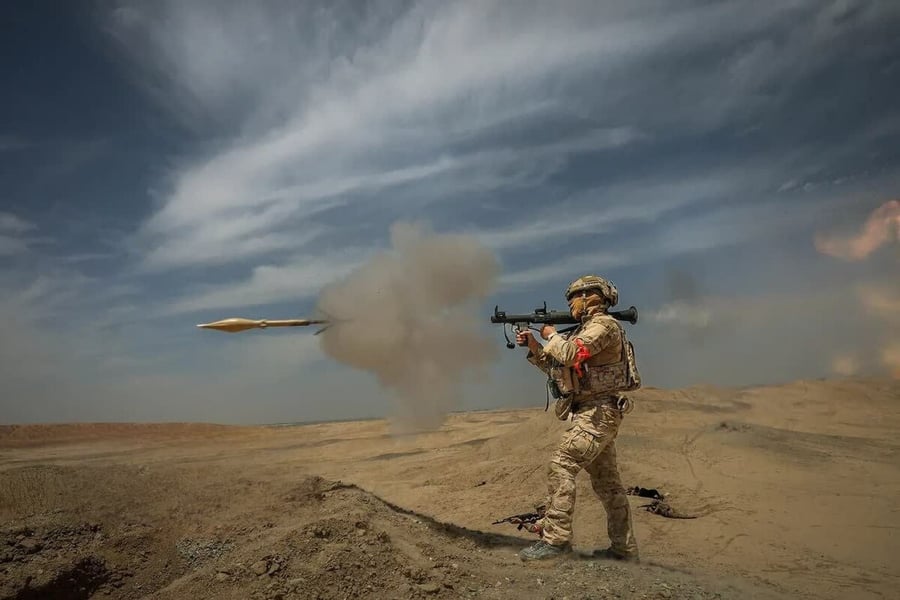
Strip out the Jordan example and what is left of the new doctrine is a rule about response. Akraminia said it means answering any attack immediately, with the answer potentially broader than the thing that provoked it. That is a description of escalation dominance, which every military in the world says it wants, and it is not obviously different from what Iran has been doing since February.
The one concrete instrument attached to the doctrine is money. Akraminia restated a reward announced six days earlier by Major General Amir Hatami, the army’s commander in chief: five billion tomans to anyone who kills or captures an American soldier during a ground incursion, ten billion if that person is a woman. The army will also buy the weapon used for twice its value and put it in a military museum. Hatami, announcing it on 16 August, said the only way out was for the Americans to leave the region entirely, and that they had already been effectively expelled from the Persian Gulf, according to RT.
The figure repays a closer look, because it has not held still. Hatami’s announcement was reported as 30,000 dollars, doubling to 60,000. Akraminia’s restatement on Saturday was rendered at about 26,000 and 53,000. The number of tomans did not change. What changed is which exchange rate the reporting outlet reached for, and Iran has more than one. A bounty that sheds an eighth of its dollar value in six days without anybody touching it is telling you about the currency rather than about the resolve.
It is also telling that the scenario has not occurred. There has been no American ground operation in Iran. The only known instance of US ground forces on Iranian soil during this war was a rescue mission in April for a downed pilot. Neither Hatami nor Akraminia said where or when the killing or capturing was expected to take place. The reward exists for a situation both men described in the conditional.
Nor is the doctrinal claim itself new. Iranian state media carried almost exactly the same line on 22 March, when Mohammad Reza Naghdi, an adviser to the commander of the Revolutionary Guard, said Iran was moving from a defensive doctrine to an offensive one and preparing forces to operate beyond its borders. Five months later the army’s spokesman said it again, in the same words, without any accompanying change in posture that has been made public.
Akraminia has been busy in the meantime. On 21 July he said the army had already defined precise defence scenarios for any enemy incursion. On 6 August he said it was maintaining full readiness despite the recent wars. On 8 August he said Iran’s new governance of the Strait of Hormuz was irreversible. Saturday’s statement is the latest in that run, and each has arrived through the same channel, IRNA, with no press conference and no question from anyone outside the building.
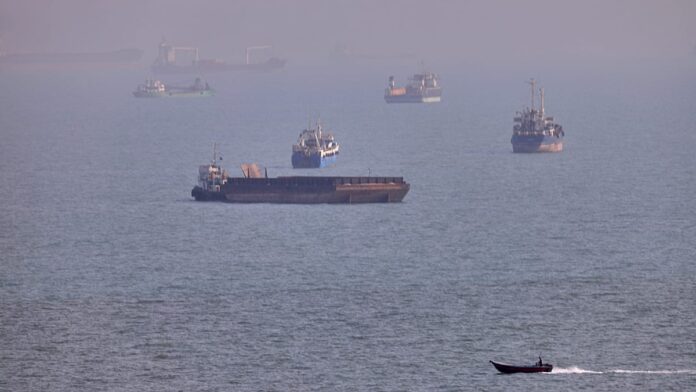
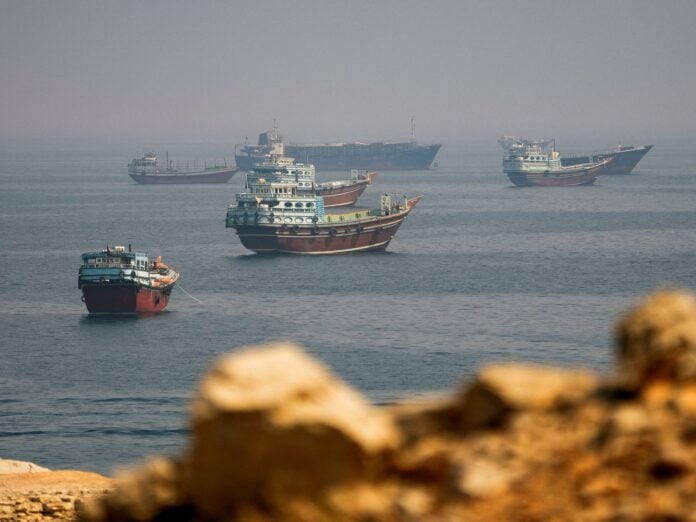
The strategic position underneath the language is harder than the language. Eastern Herald reported this week that Iran’s president called for peace from a position of strength while Washington prepared its largest sanctions package yet, and reported on Monday that the 60-day ceasefire framework expired without a successor, with traffic through the Strait of Hormuz down to three crossings on a single Sunday.
What Iran has not produced is a doctrine document, a date for the ground scenario the bounty anticipates, or any account of the Jordan strike that reconciles the word pre-emptive with the calendar. Akraminia will presumably give another interview next week.