
WASHINGTON — The numbers tell the story more clearly than the press releases. China buys roughly 90 percent of Iran’s exported oil, some $31.2 billion worth each year. Treasury Secretary Scott Bessent announced Monday what the White House is calling “Economic D-Day” against Iran, a package he described as “the toughest sanctions in history” and “the greatest coordinated economic isolation in the history of the world.” Chinese financial institutions, which underpin every barrel of that trade, were not among the named targets.
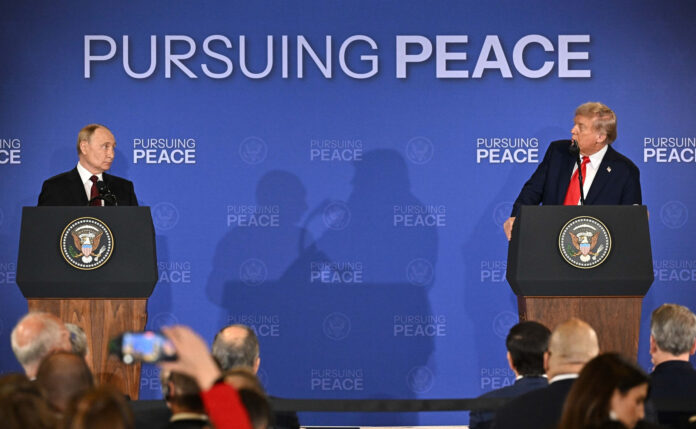
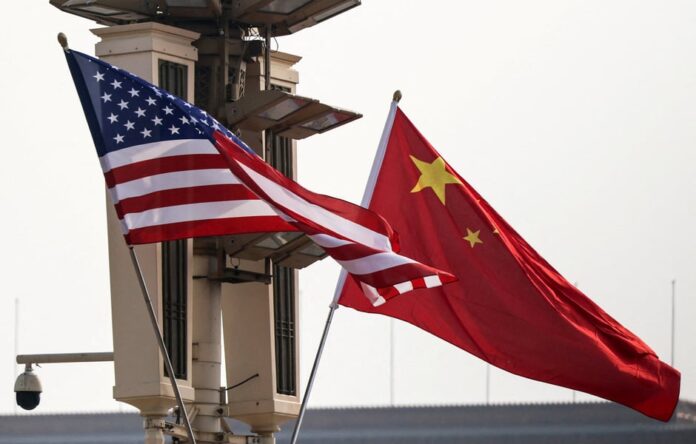
The omission is not accidental. Donald Trump and Xi Jinping are scheduled to meet at a summit on September 24 that both governments have described as a landmark effort to stabilize their relationship after years of trade hostility. Senior administration officials have made clear to reporters that sanctioning the Bank of China or China’s state oil buyers before that meeting would effectively end it. Brett Erickson of Obsidian Risk Advisors told analysts this week that explicitly targeting Chinese banks would be “a serious indication that the United States plans to wage this economic war for a prolonged period.” Washington has so far chosen not to send that signal.
What it has chosen to do is still substantial. Bessent’s Monday announcement targets Iranian oil smuggling infrastructure, ship registries used by sanction-evading tankers, swap lines through which Tehran converts oil revenue into usable currency, and cash transfer mechanisms sustaining Iran’s domestic economy. The naval blockade on Iranian ports, in place since the conflict began in February, remains. New authorities would allow Washington to sanction any country whose “financial institutions, businesses, airports, or government entities” provide what Trump called “any type of lifeline to Iran.”
That secondary-sanctions threat is designed to pressure Beijing without naming it. Trump posted over the weekend: “ANY country that allows its financial institutions to provide any type of lifeline to Iran will itself face TREMENDOUS Economic Consequences.” China’s Foreign Ministry spokesman Lin Jian responded Monday that “imposing sanctions and pressuring do not solve the issue” — a formulation Beijing uses when it intends to continue what it is doing.
Iran’s own response has been less restrained. Mohsen Rezaei, secretary of Iran’s Supreme National Security Council, warned Saturday that countries joining the US campaign would be “regarded as an enemy” and face “seismic” retaliation. Iran has separately threatened that no oil from Gulf states would flow through the Strait of Hormuz if regional neighbors sided with Washington. A draft law circulating in Iran’s parliament would require vessels from countries permitted to use the strait to pay Tehran service fees, an attempt to monetize access to a chokepoint the country has so far only threatened to fully close. Foreign Ministry spokesman Esmaeil Baghaei called the sanctions announcement an “assertion of extraterritorial sovereignty” that Iran intended to resist.
The strait is the pressure point around which everything turns. Roughly 20 percent of the world’s traded oil moves through it each day. Brent crude oil prices settled Monday at $93.21 a barrel, down from $94.39 on Friday but elevated against pre-conflict levels as traders maintain a geopolitical premium without the strait having fully closed. That premium would spike sharply on any credible closure announcement.
Pakistan’s Field Marshal Asim Munir arrived in Tehran Monday for his third visit to Iran this year. The Iran-US war negotiations Pakistan has brokered since spring produced a 60-day memorandum of understanding in June that expired in mid-August without extension. Iran’s conditions for any resumption remain unchanged: lift the naval blockade, release frozen assets, and halt military threats. Washington has extended none of those guarantees, and the Monday announcement makes it harder to do so in the near term without appearing to capitulate.
Analyst Hamidreza Azizi noted that previous US pressure campaigns against Iran have consistently underestimated Tehran’s capacity to route oil sales through alternative channels. China’s willingness to absorb that oil at the discounted prices Iran offers sanctioned buyers has made every prior round of Iran sanctions less effective than its architects advertised. The new package does not change that fundamental structure. Al Jazeera reported that the administration has already sanctioned Hengli Petrochemical in Dalian, four Hong Kong firms, and six China and Hong Kong shipping lines this year without denting China-Iran oil flows at scale.
Jennifer Kavanagh of Defense Priorities offered the bluntest assessment: cutting off Chinese economic ties is “key to the success of any attempt to increase pressure on Iran,” she told reporters, but the administration “won’t do it.” Paul Musgrave of Georgetown questioned whether Washington has the enforcement capacity to police the secondary-sanctions regime against a country the size of China while simultaneously trying to negotiate a summit outcome from a position it has already staked on pressure.
What the September 24 summit produces on Iran could determine whether Monday’s announcement is a ceiling or a first step. If Trump and Xi reach no understanding on Tehran’s oil revenues, the secondary-sanctions threat remains legally in place but practically unenforced, sustained by the same dynamic that has allowed China-Iran trade to continue through every prior round of US pressure. Whether this time is different depends on a meeting that neither side has announced any detailed agenda for, and on whether Iran’s oil can find buyers willing to accept the legal risk of doing so. Neither of those questions had an answer by Monday afternoon in Washington.