
NEW DELHI — Bharti Airtel’s average revenue per user crossed INR 200 in Q1 FY27, making it the first Indian telecom operator to reach that threshold in ten years. It took the industry a decade to recover from a single quarter of aggressive pricing in 2016. The INR 200 milestone is not a rounding error or accounting reclassification; it is the clearest evidence yet that India’s telecom market has structurally repriced.
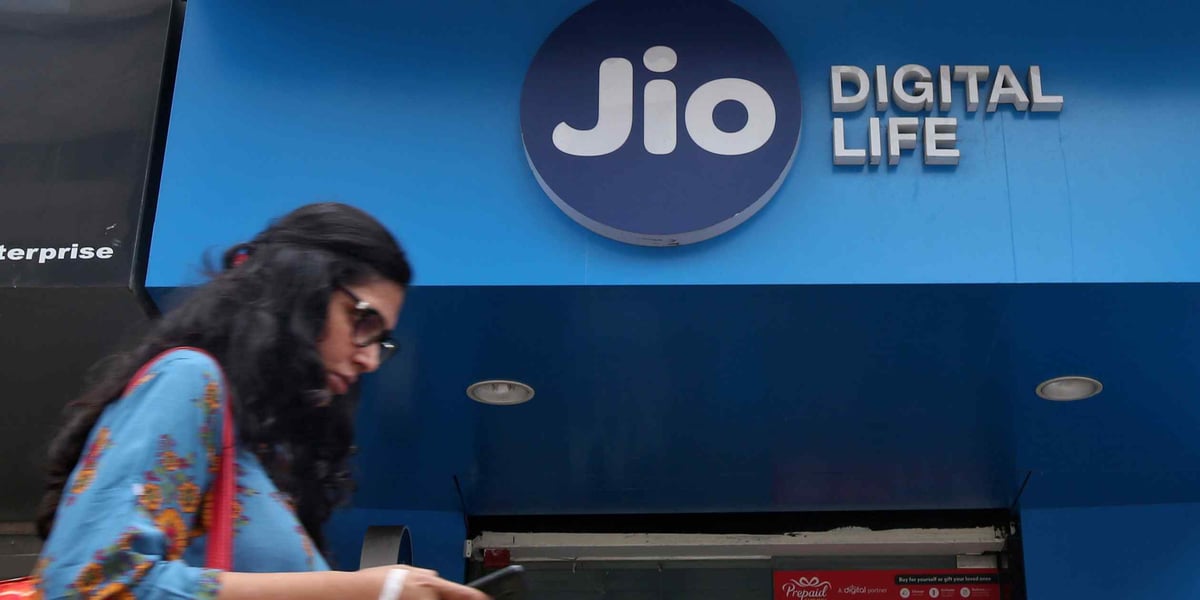
Airtel’s Q1 FY27 ARPU landed at INR 203, up 10.9% from INR 183 a year earlier and ahead of the consensus estimate of INR 196. Reliance Jio, which does not formally report standalone ARPU on the same basis, delivered an implied ARPU of INR 196 based on subscriber revenue and the 481 million active subscribers it reported at the end of June. The gap between the two operators has narrowed considerably from a year ago, when Airtel’s premium positioning gave it a 15-point lead. Both operators are now pricing within the same band, which is what duopoly economics eventually produce.
| Metric | Bharti Airtel Q1 FY27 | Reliance Jio Q1 FY27 | YoY Change (Airtel) | ||||||
|---|---|---|---|---|---|---|---|---|---|
| ARPU (INR) | 203 | 196 (implied) | +10.9% | ||||||
| Mobile subscribers (mn) | 394 | 481 | +4.2% | ||||||
| 5G subscribers (mn) | 38 | 62 | N/A (new metric) | ||||||
| EBITDA margin | 52.8% | 54.1% | +180 bps | ||||||
| YTD stock return | +31.2% | Unlisted (Jio) | vs Nifty 50 +12.4% | ||||||
| Source: BSE/NSE filings, company Q1 FY27 earnings reports. | |||||||||
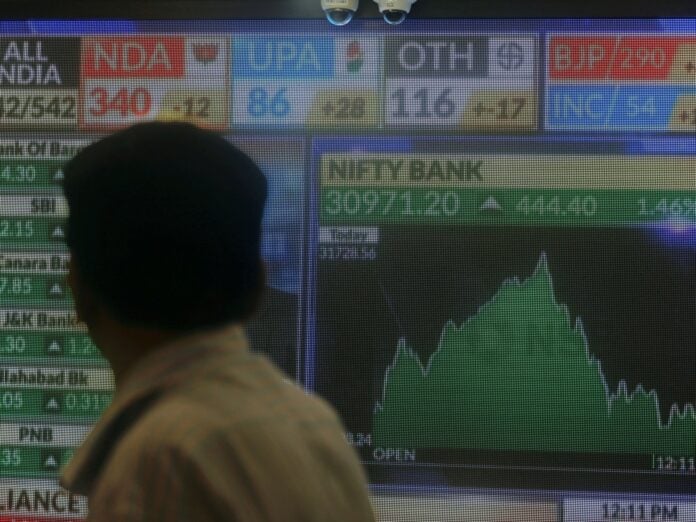
Airtel’s stock has returned 31.2% year-to-date, the third-strongest performer in the Nifty 50 after HAL and Mahindra and Mahindra. The Nifty 50’s 12.4% YTD return makes the telecom outperformance visible even adjusted for the broader market rally. The ARPU print drove a round of earnings estimate upgrades from domestic brokerages in late July: consensus FY27 EBITDA forecasts for Airtel moved up 6-8% on average in the three weeks after results, and several FY28 estimates were also revised on the assumption that the tariff hike cycle has more room.
The 5G dimension is where the story gets more complicated. India’s combined 5G subscriber base crossed 100 million in August 2026, a milestone the Department of Telecommunications cited in its August 15 connectivity report. Airtel holds approximately 38 million of those subscribers; Jio has the balance, benefiting from its larger total base and heavier distribution of bundled 5G-capable handsets through its Jio Phone ecosystem. The 100 million figure sounds large. In context, it represents about 10% of India’s mobile subscriber base of 1.1 billion.
The monetization path for 5G remains unresolved. Average revenue per 5G user in India is currently equivalent to average revenue per premium 4G user because neither Airtel nor Jio is charging a separate 5G tariff. The upgrade to 5G access is included in existing INR 299 and above monthly plans. The strategic logic is straightforward: charging separately for 5G in a market where smartphone 5G-readiness is still uneven would accelerate churn toward whichever operator prices lower. The result is that the capital expenditure cycle that produced INR 1.9 lakh crore of spectrum auction payments between 2021 and 2024, and roughly INR 55,000 crore of combined annual 5G rollout capex across both operators, is not yet generating an incremental revenue line.
The return on that investment depends on enterprise 5G adoption, including private networks, Industry 4.0 deployments, and fixed wireless access, at a scale that has not yet materialized. Airtel’s FWA product, launched commercially in Q4 FY26, had 1.2 million subscribers as of Q1 FY27. It is growing faster than the company’s enterprise 5G contracts but from a very low base. The addressable market for FWA in India is unusually large: an estimated 60 million households in Tier-2 and Tier-3 cities lack reliable broadband, and Airtel’s infrastructure density advantages over fiber operators create a genuine competitive moat outside the metros.
The FPI inflows into India in August 2026 included meaningful buying in Airtel and Bharti Hexacom, the latter a listed subsidiary covering northeast India. The foreign investor thesis is straightforward: a market with two rational operators, rising ARPU, and a long runway of household broadband penetration is one of the cleanest consumer-staple-adjacent growth stories in emerging markets.
The Vodafone Idea variable is the sector’s most significant unresolved risk. Vi’s Q1 FY27 results showed the company losing 1.5 million subscribers per quarter and generating EBITDA margins below 25%, structurally insufficient for debt servicing on its outstanding obligations. The government’s conversion of Vi’s AGR dues into equity extended the runway, but the fundamental question of whether Vi can hold enough subscribers to remain operationally viable has not been resolved. A Vi subscriber exit at scale would be the largest tariff-positive event in Indian telecom in a decade. Airtel and Jio have been gaining Vi churners since 2022, and the quarterly transfer rate accelerated in Q1 FY27. What neither operator nor the market can model cleanly is the timeline of that exit, or whether the government would intervene to manage the sequencing in a way that limits disruption to enterprise clients.
The same rural household that drove FMCG volume recovery in Q1 FY27 is also upgrading from 2G feature phones to 4G smartphones at a pace that was not in consensus forecasts two years ago. The telecom sector is a direct beneficiary of that demographic shift, and the shift is durable. The question is not whether Airtel’s ARPU will keep rising. It is whether Jio’s IPO, expected in FY28, creates a valuation reset for the entire sector or simply pulls capital toward the larger operator at the expense of Airtel’s premium positioning.