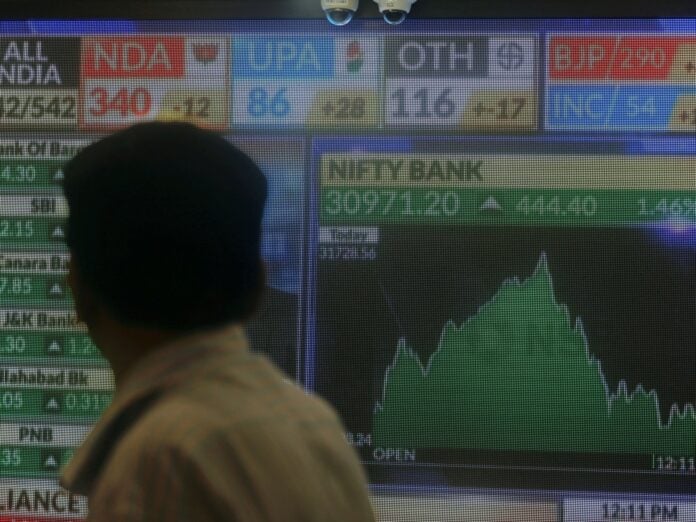

MUMBAI — For India’s steel investors, the number that defined the quarter ending June 30 was not printed in any earnings release. It was published in a government gazette in June, when the Ministry of Steel raised the base customs duty on flat-rolled steel imports from 15 percent to 25 percent.
That single policy decision stabilised domestic hot-rolled coil prices, pushed Chinese imports to a six-quarter low, and effectively secured the EBITDA per tonne across every major Indian mill at levels that had not held since FY24. The Nifty Metal index returned 15 percent year to date through August 27, outperforming the broader Nifty 50 by eight percentage points.
| Company | Q1 FY27 EBITDA/tonne | YoY Change | Installed Capacity | ||||||
|---|---|---|---|---|---|---|---|---|---|
| Tata Steel India | Rs 18,700 | +32% | 21 MTPA | ||||||
| JSW Steel | Rs 9,400 | +18% | 28 MTPA | ||||||
| SAIL | Rs 6,200 | +24% | 19.5 MTPA | ||||||
| Hindalco (India upstream) | Rs 22,100 | +9% | 1.3 MTPA aluminium | ||||||
| Source: BSE/NSE filings, company Q1 FY27 earnings reports. | |||||||||
Tata Steel’s Indian operations posted EBITDA of approximately Rs 8,900 crore for the quarter, the company’s strongest India print in three years by the metric that matters most to its investors: EBITDA per tonne at Rs 18,700. Twelve months earlier, that number stood at Rs 14,200, a reflection of how severely the prior cycle of Chinese overcapacity had compressed domestic realisations. The recovery reflects both the tariff-driven price floor and a sequential reduction in coking coal costs as Australian export supply normalised following the weather disruptions of late 2025.
The India business carries a heavier strategic burden than its earnings alone suggest. Tata Steel’s UK operations at Port Talbot remain in deep restructuring, with the electric arc furnace transition not expected to reach commercial production before FY28. Every rupee of margin generated in India is currently funding a British industrial transformation that the UK government has partially co-financed but not fully backstopped. That arithmetic was visible in the company’s investor communication throughout Q1: India as the engine, the UK as the long-term bet.
JSW Steel operated at 28 million tonnes per annum of consolidated capacity in Q1 FY27 and announced a revised roadmap toward 37 MTPA by the end of FY28. The additional capacity is weighted toward downstream value-added products, particularly colour-coated and galvanised sheet, where import substitution margins are widest and the 25 percent duty creates the most durable protection. JSW’s EBITDA per tonne at Rs 9,400 lagged Tata Steel India’s figure but reflected a product mix still more exposed to hot-rolled coil, a commodity grade where pricing is tighter even with the duty floor in place.
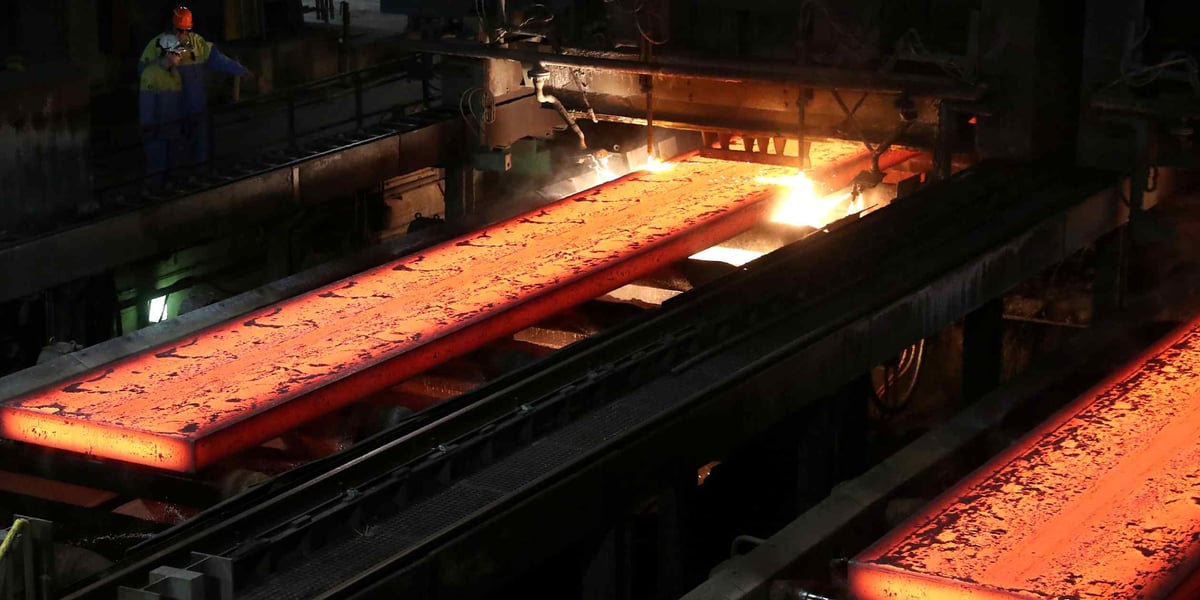
Steel Authority of India delivered the quarter’s most legible demand signal. SAIL’s order book from Indian Railways reached Rs 28,000 crore as of August, the largest in the company’s 52-year history, fed by the government’s accelerated dedicated freight corridor and high-speed rail programmes. Railway-grade rail steel commands higher realisations than construction-grade long products and requires no downstream processing steps, giving SAIL a structural advantage at its Bhilai and Rourkela plants, which hold the only BIS-certified rail steel production lines at the required scale. The company’s EBITDA per tonne reached Rs 6,200 in Q1 FY27, still the sector’s lowest margin profile but its best reading in eight quarters.
As India Inc.’s strongest earnings quarter in two years showed across the broader market, metals was one of the few sectors where actual results exceeded analyst consensus entering the quarter. The differential is almost entirely attributable to the tariff floor.
| Company | Q1 FY27 Volume | Q1 FY27 EBITDA | Key Driver | ||||||
|---|---|---|---|---|---|---|---|---|---|
| Tata Steel India | 5.1 MT | Rs 8,900 Cr | Tariff floor + coking coal | ||||||
| JSW Steel | 6.8 MT | Rs 6,400 Cr | Capacity + value-added mix | ||||||
| SAIL | 4.7 MT | Rs 2,900 Cr | Railways order book Rs 28,000 Cr | ||||||
| Novelis (Hindalco sub.) | 953 kt | $447 million | US auto sheet demand +9% YoY | ||||||
| Source: BSE/NSE filings, company Q1 FY27 earnings reports. | |||||||||
Hindalco Industries approached the quarter from a different vantage point. The aluminium narrative in India runs on power costs more than import duties, and the renewable energy build-out that has driven down residential tariffs pushed industrial power rates in Odisha and Chhattisgarh marginally higher in April, compressing Hindalco’s upstream aluminium EBITDA margin by 80 basis points sequentially. The shortfall was more than offset by a 12 percent improvement in contribution from Novelis, the Atlanta-based rolled aluminium subsidiary whose revenue is anchored in North American automotive and beverage-can sheet.
Novelis shipped 953 kilotonnes in Q1 FY27, its highest quarterly volume on record, generating EBITDA of $447 million. Shipments to North American automotive customers rose 9 percent year on year as US automakers accelerated aluminium-intensive body panel adoption — a structural trend that has now held across four consecutive quarters regardless of broader economic conditions. The Rs 26.75 trillion private investment surge documented in FY27 also feeds aluminium demand in India through data centre construction and solar panel mounting systems, though the revenue from those projects falls into FY28 rather than the current quarter.
The structural risk in the sector is not internal. China’s steel mills, operating at roughly 1.1 billion tonnes of annual capacity against domestic consumption of under 900 million tonnes, have been redirecting surplus tonnage to global markets wherever duties permit. India’s 25 percent flat-rolled duty has been effective precisely because it targets the segment where the Chinese surplus is widest. Long steel products — which feed construction — face only a 15 percent duty, and Chinese long steel has begun entering through third-country routing that the Ministry of Steel has flagged. Domestic producers have jointly petitioned the Directorate General of Trade Remedies for an anti-dumping investigation into Vietnamese hot-rolled coil, which several trade analysts believe is partially of Chinese origin transshipped to avoid the duty.
October’s tariff review is the event that defines Q2 FY27 for the sector. Most producers have extended their capex plans on the assumption that the June measures are renewed. If the duty is allowed to lapse or is reduced, JSW’s Rs 37 MTPA target rests on market assumptions that would no longer hold.
India’s steel consumption grew 8.4 percent in Q1 FY27, according to the Joint Plant Committee, sustained by the government’s Rs 11.1 trillion infrastructure budget and a housing construction cycle that shows no signs of slowing in Tier 2 and Tier 3 cities. Even with that demand backdrop, the number the sector watches most closely is not a volume or earnings figure. It is the spread between domestic hot-rolled coil prices and the landed cost of Chinese imports. That spread is what determines whether the current cycle is structural or transient.
In August 2026, the spread stands at Rs 4,800 per tonne in favour of Indian producers. The Q1 FY27 results were built on it, and the sector’s FY27 outlook will be made or broken by whether it holds.