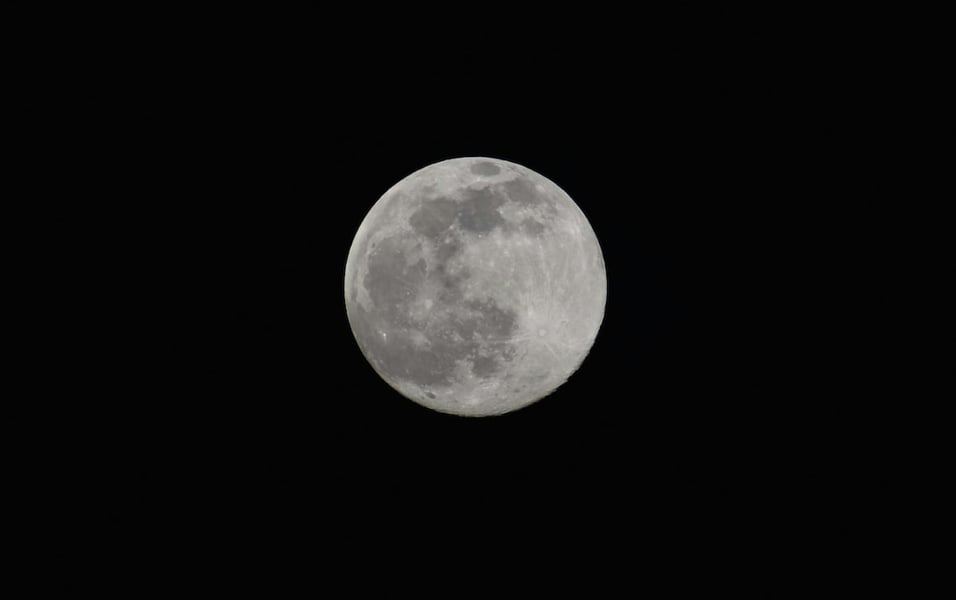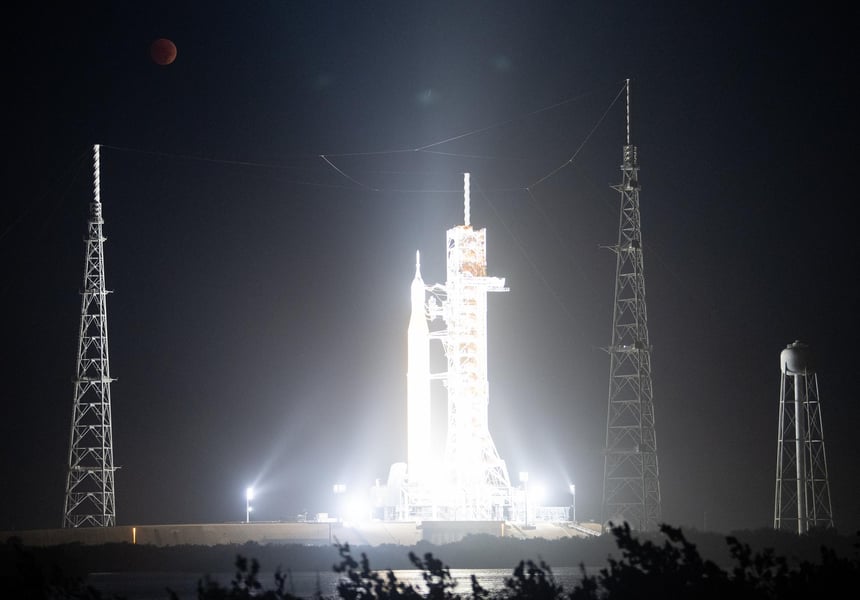

NEW YORK — Two nights from now, 96 percent of the moon will vanish. Not completely. Nothing about this eclipse is total. But at 4:12 in the morning Greenwich time on August 28, Earth’s shadow will swallow nearly the entire disc, leaving only a thin crescent of sunlit surface glowing at the top. What observers in the Americas will watch happen is called a partial lunar eclipse. What astrologers call it is something else: the closing chapter of a two-year emotional reckoning that began in September 2024.
The eclipse falls at 4 degrees 54 minutes of Pisces, the last sign of the zodiac, the one associated with dreams, dissolution, faith without evidence, and the kind of grief that does not announce itself. It is the sixth in a set of seven eclipses along the Virgo-Pisces axis, a series that began when the North Node entered Pisces in 2024 and will not conclude until a final eclipse in February 2027. Every eclipse in this set has asked some version of the same question: what are you willing to let go of? This one asks it louder.
The partial phase begins at 2:33 AM UTC and ends at 5:52 UTC, a window of roughly three and a quarter hours during which the moon’s color will shift from its usual silver-white to a deepened copper-rust, the light of every sunrise and sunset on Earth refracted through the atmosphere and cast onto the lunar surface. Observers along the eastern coast of North America will have the clearest view; viewers in Europe will catch the final stages near or at moonset. Asia misses this eclipse entirely.
Mercury will be in near-exact conjunction with the Sun when the eclipse peaks, a cazimi in traditional astrology, meaning the planet of thought and communication is momentarily at its most potent. Ideas that surface in the hours around this eclipse may carry unusual clarity. They may also carry unusual finality.
The Virgo-Pisces axis is, structurally, a tension between the measurable and the immeasurable, between the things you can put in a spreadsheet and the things that resist quantification: grief, faith, intuition, the feeling that a relationship has run its course even when nothing definitively happened. This eclipse pulls toward the Pisces end. It rewards those who have been trying to name something they have been feeling for months, and it complicates the position of anyone who has been choosing precision over emotional truth. EH has tracked the Virgo season eclipse in Pisces from its opening in August.
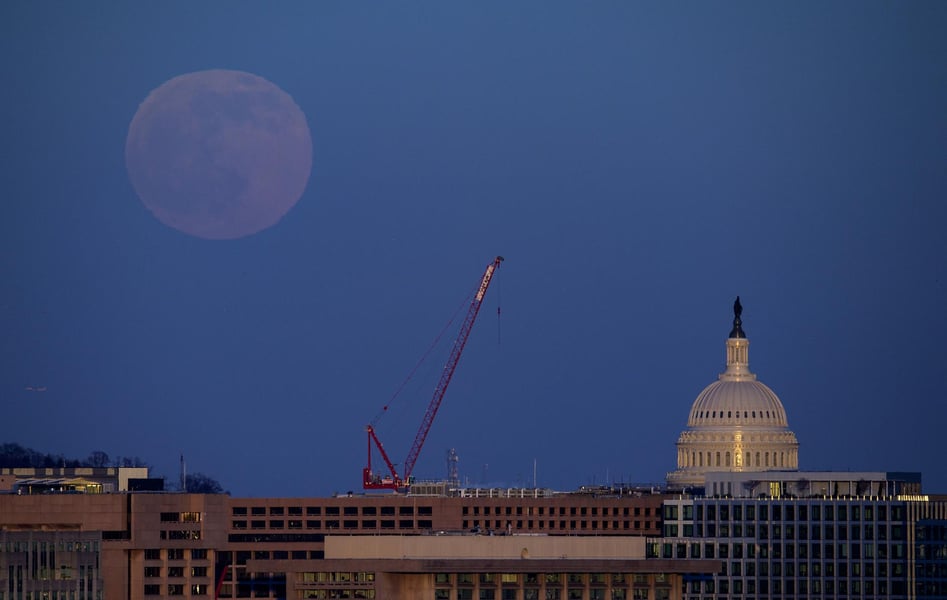
For Pisces, the eclipse is personal and unusually significant: this is the last lunar eclipse in Pisces until 2043, making it a once-in-two-decade moment of culmination for this sign. Those with Pisces placements, particularly the Sun, Moon, or Ascendant, often report this kind of eclipse as an ending that feels as though it has been delayed for years. The letting go, when it comes, is rarely as painful as the waiting.
Virgo sits directly opposite, and for Virgos the eclipse illuminates the part of life they have tried hardest to organize: relationships, routines, the systems they have built to manage what they are afraid to feel. The eclipse asks whether the system has been serving them or protecting them from something they need to encounter directly. The moon phase patterns entering Virgo season have primed this axis for weeks.
For the mutable signs, Gemini and Sagittarius alongside Virgo and Pisces, the eclipse arrives at right angles, and the experience tends to be more disruptive than culminating: plans shift, conversations stall, something assumed to be settled becomes unsettled again. The disruption is usually pointing somewhere.
Cardinal signs, Aries, Cancer, Libra, and Capricorn, tend to experience Pisces eclipses as emotional weather in the background rather than in the foreground. The eclipse touches something in their chart, often around partnerships or long-term commitments, but rarely as an event of the same magnitude felt by the mutable signs. The invitation is still present: to release what has been clouding clarity in the domain that Pisces occupies in their chart. Today’s horoscope has the daily breakdown for every sign as August 28 approaches.
Fixed signs, Taurus, Leo, Scorpio, and Aquarius, often find their experience of Pisces eclipses subtle in the immediate aftermath and more legible in the weeks that follow. Leo has been the sign of eclipse activity for much of this year, with the August 12 solar eclipse in Leo still reverberating; August 28 represents a kind of complementary release, the emotional exhale after Leo’s declarative note.
What astrology cannot determine with certainty is whether what any given person experiences at an eclipse will feel like relief, grief, or the particular confusion that comes when something ends before you were ready to say goodbye. The Pisces eclipse specializes in that third category. Its theme is not resolution but surrender, the recognition that some things cannot be controlled, only accepted.
The observable fact at the center of all of this is also worth stating plainly: this is a deep partial lunar eclipse with an umbral magnitude of 0.9319, caused by the same geometry that governs every eclipse, the alignment of Earth between the Sun and Moon at a node, the precise angle at which shadow falls. According to NASA’s Scientific Visualization Studio, at the moment of greatest eclipse, 96.3 percent of the moon’s disc is within Earth’s umbra. That it arrives in Pisces and not in any other sign is an artifact of where the Moon happens to be in its orbit at the time of the full moon. Whether that correspondence carries weight is a question astrology offers an answer to and astronomy does not.
The eclipse remains as yet unverified in its emotional effects on any individual observer. What history suggests, based on two years of this eclipse series along the Virgo-Pisces axis, is that those who are paying attention tend to find it meaningful.