
MUMBAI — The quarterly results that India’s four largest listed pharmaceutical companies filed between late July and early August 2026 did not tell a single story. Dr. Reddy’s Laboratories disclosed a ₹240 crore charge tied to a semaglutide API quality failure — a provision that compressed its net profit 69 percent to ₹443 crore in the three months ended June 30. Sun Pharmaceutical Industries, reporting in the same window, logged a 27 percent profit increase to ₹2,895 crore. The distance between those two numbers speaks less about the health of Indian pharma in aggregate and more about the specific positions each company took in the United States market, and what those positions cost — or returned — in Q1 FY27.
India’s pharmaceutical exports reached $8.1 billion in the quarter, up 6.8 percent year-on-year according to data from the Pharmaceuticals Export Promotion Council of India, confirming that the sector’s underlying global demand remained intact even as individual company results diverged sharply. Drug formulations and biologicals accounted for $5.98 billion, or 73.85 percent of total exports. The macro picture was consistent. Company execution was not.
| Company | Revenue Q1 FY27 | Revenue YoY | Net Profit Q1 FY27 | Profit YoY |
|---|---|---|---|---|
| Sun Pharma | ₹15,300 crore | +10.1% | ₹2,895 crore | +27% |
| Lupin | ₹8,277 crore | +32% | ₹1,417 crore | +16% |
| Dr. Reddy’s Laboratories | ₹8,071 crore | -5.6% | ₹443 crore | -69% |
| Cipla | ₹7,119 crore | +2.3% | ₹786 crore | -39% |
Sun Pharma’s India formulations revenue rose 16 percent to ₹5,475 crore in Q1 FY27, and that number did more to drive the company’s quarter than any other single variable. India now accounts for 36.1 percent of Sun Pharma’s consolidated sales — a share that has grown steadily as the company’s chronic-disease portfolio in cardiovascular, dermatology, and ophthalmology gains volume from branded generics at margins that hold across cycles. US formulation sales slipped 9.7 percent to $427 million, reflecting legacy generic price erosion, but the specialty medicine segment — Ilumya in psoriasis, Cequa in dry eye disease — held at $351 million, up 12.8 percent. Total revenue reached ₹15,300 crore, up 10.1 percent year-on-year. Sun Pharma’s Q1 FY27 press release noted that Global Innovative Medicines remained a growth driver even as North American generics repriced lower.
Lupin’s Q1 FY27 revenue of ₹8,277 crore — its highest-ever quarterly figure — marked the company’s 16th consecutive quarter of sequential revenue expansion. Net profit grew 16 percent to ₹1,417 crore, and EBITDA margin reached 29.76 percent, reflecting the premium economics of limited-competition generics over commodity products. India business grew 13.9 percent to ₹2,380 crore. The US pipeline produced six new ANDA clearances in the quarter, taking cumulative US approvals to 350. Lupin’s official Q1 FY27 filing highlighted respiratory and complex dosage forms as the segments anchoring its limited-competition positioning — a structural differentiation that has shielded its US margin from the pricing pressures weighing on companies with heavier commodity generic exposure.
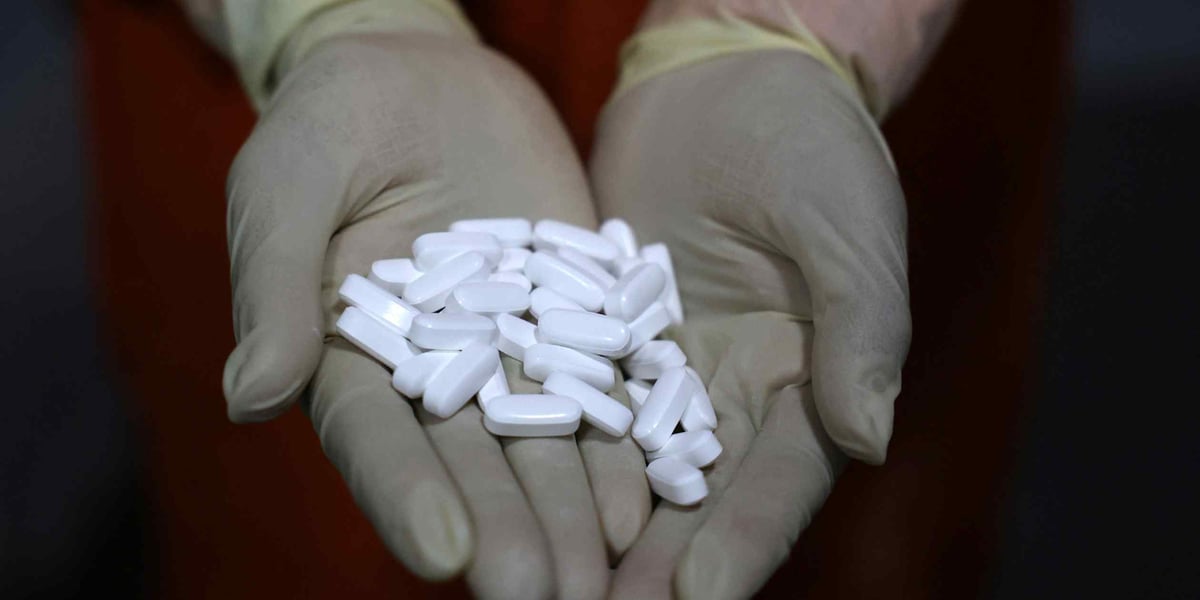
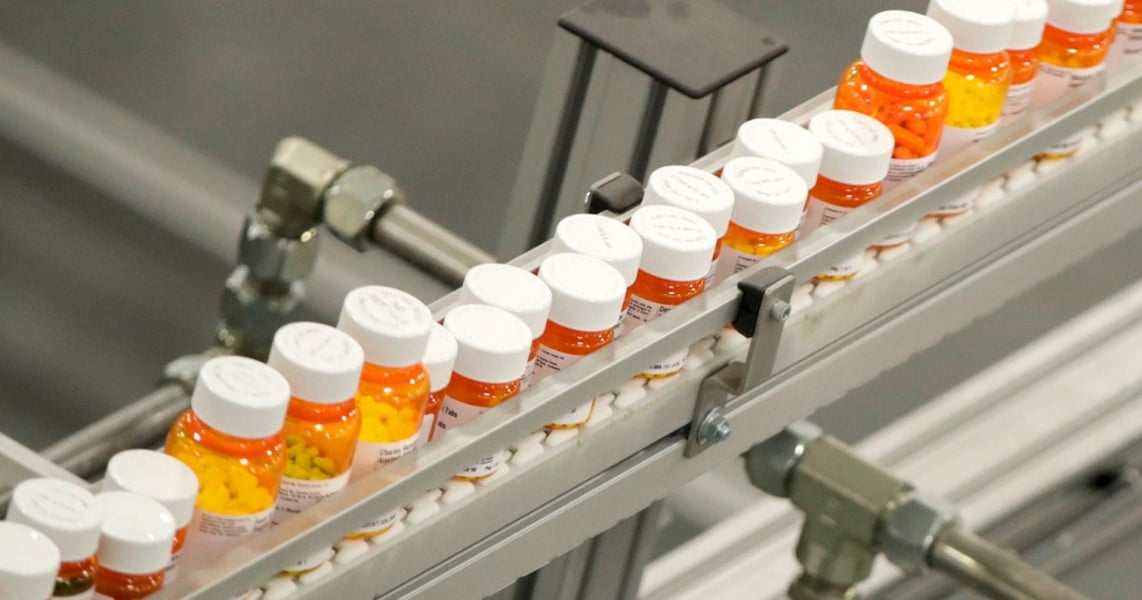
Dr. Reddy’s entered Q1 FY27 as one of the more closely watched names in the sector. The company had been developing generic semaglutide — the active pharmaceutical ingredient that powers Novo Nordisk’s Ozempic and Wegovy — and had disclosed earlier in 2026 that certain batches were found out-of-specification due to an impurity discovered during production. In Q1, that problem became a ₹240 crore line item, covering inventory write-downs and associated costs. The provision was not the quarter’s only headwind: lenalidomide, a high-margin US product where Dr. Reddy’s had benefited from limited competition in prior quarters, saw pricing pressure as additional competitors entered the market. Together, the two factors drove consolidated net profit to ₹443 crore, down from ₹1,392 crore in Q1 FY26, on revenue of ₹8,071 crore — 5.6 percent lower year-on-year. EBITDA margin fell to 12.5 percent; excluding the semaglutide provision, it would have been 15.4 percent.
Management told analysts that the semaglutide API quality issue is expected to be resolved by the third week of September 2026, with commercial finished-product supply targeting resumption by late October or early November. The annual pen supply target was revised to 6–7 million units from an initial 12 million. What Dr. Reddy’s cannot yet tell shareholders is whether the GLP-1 market — moving rapidly as Novo Nordisk and Eli Lilly intensify commercial competition — will offer the same scale of opportunity when supply resumes.
Cipla’s Q1 FY27 revenue of ₹7,119 crore represented a 2.3 percent gain year-on-year and, the company noted, its highest-ever Q1 revenue. The headline was a 39 percent fall in net profit to ₹786 crore. EBITDA margin contracted sharply to 16.75 percent from 25.56 percent in Q1 FY26. Two forces drove the contraction. Cipla booked provisions under India’s four labour codes — employment laws being consolidated and phased in nationally — that created a one-time cost impact in the quarter. The US business simultaneously faced pricing pressure consistent with what peers reported. Management maintained full-year margin guidance, indicating it treats the labour code provision as non-recurring. Cipla’s India business grew 12 percent, a rate more representative of the company’s underlying strength than the margin figure suggests.
The asymmetry across these four companies is a cleaner window into Indian pharma’s structural condition than any aggregate export statistic. Domestic demand is strong, growing between 12 and 16 percent across each company’s India segment — consistent with the same broad-based consumer and credit health that India’s private sector banks reported in Q1 FY27. The pressure points are US-sourced and company-specific: a semaglutide quality failure at Dr. Reddy’s, lenalidomide competition at the same company, and a one-time labour provision at Cipla. None of those headwinds are sector-wide signals, and all three are described by management as temporary. The domestic credit stability that lifted PSU bank results in Q1 FY27 is visible in each pharma company’s India segment growth — a structural floor that limits how far US headwinds can push aggregate results, even when they are severe for individual companies.
What Q1 FY27 revealed is that Indian pharma’s US exposure is now a granular risk rather than a blanket one. Companies positioned in specialty and limited-competition generics expanded margins. Companies absorbing semaglutide inventory write-downs and lenalidomide pricing pressure did not. The sector is not moving as one. That has been true for several quarters. The June results made it undeniable.