
NEW YORK — Kevin Warsh gave the tech sector two gifts this week and took one back on Friday.
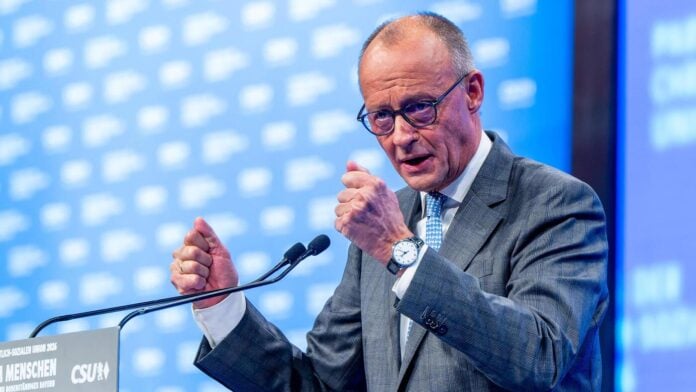
The first gift was NVIDIA. The company reported $96.2bn in revenue Wednesday evening — a number large enough that the 8.7% rally in its shares on Thursday carried the Nasdaq 100 to a weekly gain of roughly 0.9% almost by itself. The second gift was subtler: the rest of the index managed to hold approximately flat while that rally was happening, suggesting buyers were real even if they were concentrated. Friday delivered the reversal. Warsh, speaking at the Federal Reserve’s annual Jackson Hole symposium in Wyoming, gave a mildly hawkish address that declined to signal any rate cut before year’s end, CBS News reported. The QQQ, the most widely traded Nasdaq 100 fund, fell 0.5%.
The session’s move was not dramatic. Futures had already priced roughly 0.3% lower before Warsh spoke, so the actual speech landed in a market that had done some adjustment in advance. But the direction was consistent: an index that had made most of its weekly progress on Thursday’s earnings surge from one company was not positioned to absorb a Federal Reserve Chair who offered no comfort on borrowing costs. The 10-year Treasury yield held near 4.679% after the speech — a level that compresses growth stock valuations by raising the rate at which future earnings are discounted.
NVIDIA’s contribution to the week is the story, not just the context. The company’s second-quarter results showed data center revenue of approximately $89bn, representing growth of 138% year on year. Guidance for the current quarter came in at $108bn, a 12% sequential step up. At 8.7% on Thursday, the stock added more market value in one session than the vast majority of the Nasdaq 100’s constituents are worth in total. NVIDIA’s shares pulled back modestly on Friday but the earnings-week move remained intact.
One detail in the guidance carries weight beyond this quarter: NVIDIA confirmed it is not assuming any Data Center compute revenue from China in its $108bn forecast. Washington’s export restrictions have been formalised into the company’s own forward projections, and the market on Thursday decided that did not matter. Whether that judgment holds depends on questions the earnings release cannot answer — how quickly domestic Chinese accelerators close the performance gap, and whether excluded Chinese revenue is deferred or permanently lost.

Away from NVIDIA, the week’s best performers among major Nasdaq 100 names included Amazon, which gained 3.47%, Microsoft at 1.93%, and Apple at 1.58%. The common thread across those three was cloud and AI software exposure without the direct semiconductor commodity risk that the hardware suppliers carry. Amazon’s gain reflected continued AWS strength and expectations for enterprise cloud spending to hold even as broader IT budgets face scrutiny. Microsoft’s advance was quieter, built on the same AI services theme without a company-specific catalyst.
The laggards told a related story. Tesla fell 2.36% over the week, hurt by rate sensitivity that affects its consumer financing model more directly than companies whose customers are corporations and government agencies. AMD gave back 0.89%, part of a broader pattern in which the secondary semiconductor suppliers have not sustained the read-across from NVIDIA’s result that a simple AI-demand story would produce.
Warsh’s Jackson Hole address is the Fed’s clearest recent statement of intent. The new chair, who replaced Jerome Powell in February 2026, has positioned the central bank as requiring durable evidence of progress toward the 2% inflation target before easing again. That is not an aggressive posture, but it is not the accommodating one that had been priced into some corners of the technology sector for the second half of the year. Two rate cuts remain priced for 2026, with the first expected in November, NBC News reported. Whether that schedule holds depends on the next PCE print, the next employment report, and whether the AI infrastructure spending driving NVIDIA’s guidance proves as demand-inelastic as it has appeared through the summer.
The 10-year yield at 4.679% is the rate at which future growth earnings are discounted. At that level, the real rate remains positive, which places continuous pressure on the multiples that technology investors are prepared to pay. The Nasdaq 100 ended the week up 0.9% despite Friday’s pullback — a number that conceals how narrow the week’s gains were. Strip out NVIDIA’s contribution and the picture is considerably flatter. That concentration is not a side effect of the AI trade. It is its defining feature, and Warsh’s remarks are a reminder that the macro environment surrounding it has not changed.