
WASHINGTON — Scott Bessent had a message for Canada on Monday morning, delivered with the quiet assurance of someone who does not expect to be contradicted: the country is simply too small to fight back.
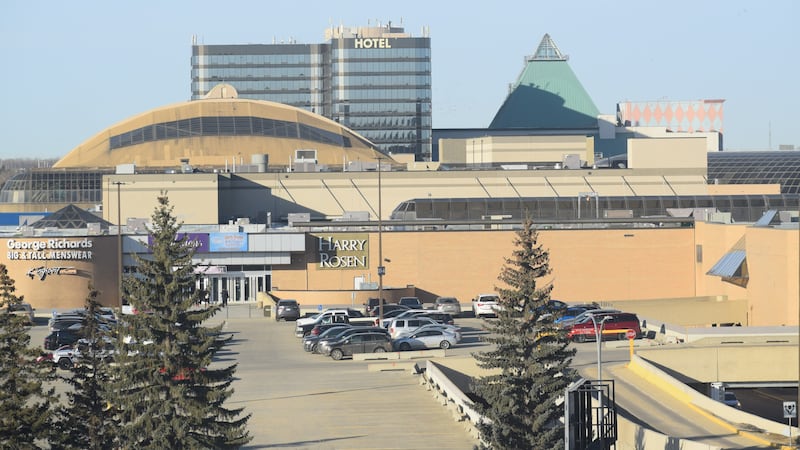
“I don’t think you can be in a tit for tat with someone that’s 13 times larger than you are,” the United States Treasury Secretary said on CNBC, hours before Canada’s retaliatory tariffs were scheduled to take effect. Then, reaching for a punchline, he suggested Ottawa might dispatch “their two submarines from the Edmonton Mall” if it wanted to escalate further.
The problem was the facts. Canada operates four submarines, not two. And the West Edmonton Mall’s submarine attraction — a short-lived novelty from the 1980s — closed in 2005, twenty-one years before Bessent reached for it as evidence of Canadian helplessness. What the Treasury Secretary offered as a demonstration of American confidence landed instead as a demonstration of American carelessness: a senior official mocking a neighbor’s military capacity with numbers he had not bothered to verify.
The mockery was not really about submarines. It was the same logic Washington applies to every economy it decides to pressure into compliance. You are too small to matter. Your resistance is theatre. Bessent was not speaking only to Canada on Monday. He was speaking to every country that has ever tried to stand its ground against an American trade ultimatum — a position readers know from Tehran, Caracas, and Havana as much as from Ottawa.
Prime Minister Mark Carney had a different accounting. “You’re at war when you get attacked,” he said on Sunday, as Canada prepared to impose counter-tariffs on roughly $20 billion in American goods, effective September 8. “We got attacked.” He described the agreement that collapsed at the last moment as one where the United States “asked too much and offered too little,” with last-minute changes that were “unfair, uneconomic.” He did not sound like a prime minister preparing to send mall submarines anywhere.
The timeline leading to Monday’s exchange shows how quickly managed disagreements can become open confrontations. On August 22, the Trump administration imposed 50 percent tariffs on approximately $28 billion in Canadian goods — framed in Washington as leverage, received in Ottawa as a punitive measure against industries and workers who had no role in whatever grievance the White House was processing. Canada’s response was calibrated: retaliatory tariffs on $20 billion in American goods, targeted at sectors politically sensitive to Republican constituencies, arriving in September.
Speaking to CNBC anchor Sara Eisen on “Squawk on the Street,” Bessent suggested Carney had turned away from “the best trade deal of any country on the globe” and transformed what should have been a negotiation into “a political shouting match.” The framing was notable: in Washington’s telling, the confrontation began when Canada declined to accept what Washington offered, not when Washington imposed 50 percent tariffs on a country whose goods had crossed the border freely under a signed agreement for decades.
What is happening in Canada is not happening in isolation. Canada’s pivot away from US trade dependence had already accelerated by May 2026, with Calgary and Toronto leading a push toward European and Asian partners that would have seemed premature eighteen months earlier. Ottawa did not wait for submarine jokes to begin repositioning.
The human costs of that repositioning had already arrived. Canada’s full-time job losses in Ontario mounted through the spring as US-facing manufacturers absorbed the uncertainty of an administration that treats trade relationships as leverage instruments rather than mutual commitments. The workers bearing those costs were not consulted before Washington decided they were an acceptable variable in a tariff negotiation.
The “too small to fight back” doctrine has a poor empirical record. Iran has operated under American sanctions for decades without the political outcomes Washington sought. Venezuela has faced intensive economic pressure for years with similar results. Cuba has been subject to an American embargo since 1962. What the doctrine reliably accomplishes is the hardening of political will in the targeted country, converting trade disputes into questions of national dignity that are considerably harder to resolve than any tariff schedule. Washington’s tariff strategy has already begun rewiring global supply chains in ways that are proving difficult to reverse regardless of any eventual negotiated settlement.
As CTV News reported, Canadian officials moved quickly to frame Bessent’s remarks not as a negotiating position but as an insult — one whose factual errors about Canadian military capacity were being noted, in some detail, by Ottawa’s political establishment. The Royal Canadian Navy was not finding the submarine count particularly amusing.
The retaliatory tariffs are still scheduled for September 8. Canada has not indicated it intends to accept whatever terms Washington describes as the best deal ever offered to any country. Whether the pattern the United States has applied to smaller economies around the world is now producing the same kind of entrenchment in a country that shares the longest land border in the world remains an open question — one that no arithmetic about relative economic size can answer on its own.
What Bessent achieved on Monday, beyond a few seconds of television, may be the transformation of a tariff dispute into something harder to walk back: a matter of national standing with domestic political audiences on both sides now paying close attention. That tends to be considerably harder to unwind than any schedule of retaliatory duties.