
SÃO PAULO — For patients who cannot tolerate antibiotics, whether from allergies, immunosuppression, or concerns about growing resistance, dentists have had few alternatives for treating the most severe forms of gum disease. A new clinical trial suggests one may finally be at hand: fish oil capsules and low-dose aspirin, taken daily for six months alongside standard cleaning, worked just as well as antibiotics in a year-long study of 109 patients with advanced periodontitis.
The result surprised even the researchers who ran the trial. “The result was surprising because the two therapies performed very similarly, paving the way for it to become a treatment option for these patients,” said Nidia Castro dos Santos, the study’s lead author and a professor at the Albert Einstein Israelite Hospital in São Paulo. The findings were published in the Journal of Periodontology.
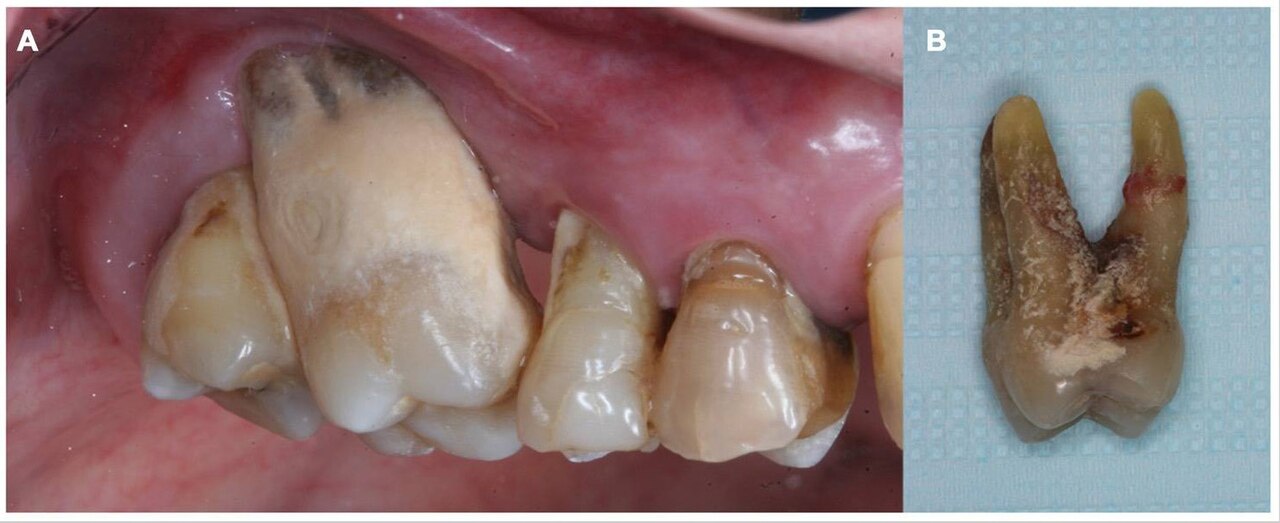
Periodontitis is not a minor nuisance. At its most severe forms, Stage III and Stage IV, the infection destroys the connective tissue and bone that anchor teeth to the jaw. Standard care begins with scaling and root planing, the deep-cleaning procedure dentists perform to remove bacteria from beneath the gum line. For many patients, that is not enough. Bacteria sustain a prolonged inflammatory response that erodes the tooth’s supporting structures even after surface cleaning.
Antibiotics have long been the adjunct of choice for that residual infection, capable of suppressing the microbial load when mechanical cleaning falls short. The problem is that dentistry shares the same concern about antibiotic resistance facing medicine broadly. The World Health Organization has warned, in its guidance, that antimicrobial resistance is one of the gravest threats to global public health, and unnecessary antibiotic prescribing in dental settings contributes to that burden.
The Brazilian trial enrolled 109 adults with Stage III or Stage IV periodontitis across three research hospitals and a dental school affiliated with the University of São Paulo. All participants first received the same baseline scaling and root planing. They were then randomly assigned to one of four groups: a placebo group, an antibiotic group, an omega-3 plus aspirin group, or a combined group receiving all three active treatments.
The primary endpoint measured whether a patient’s disease had reached the threshold of four or fewer sites with probing depths of at least five millimetres, a standard clinical marker for treatment success in advanced periodontitis.
At the one-year mark, 57.7 percent of patients in the omega-3 and aspirin group met that threshold. In the antibiotic group, the figure was 57.9 percent. The numbers were nearly identical.

Castro dos Santos and her colleagues were careful about what the finding does and does not claim. The trial was designed to test whether omega-3 and aspirin could match antibiotics, not surpass them. They did match them. Adding antibiotics on top of the omega-3 and aspirin combination produced no additional benefit, a signal that the two treatment pathways may be addressing the same underlying process through entirely different routes.
That process is rooted in the biology of inflammation. Omega-3 fatty acids, specifically EPA (eicosapentaenoic acid) and DHA (docosahexaenoic acid), act as precursors to compounds called specialized pro-resolving mediators. These molecules help the immune system shift from active inflammation to active resolution, the phase that damaged gum tissue requires to heal. Low-dose aspirin amplifies that same pathway. Together, they appear to accomplish what antibiotics do through chemical suppression: interrupt the immune cascade eroding bone and connective tissue.
The implications extend beyond dental offices. Periodontitis affects an estimated 19 percent of the global adult population. The condition is also increasingly linked to systemic diseases, including cardiovascular disease, diabetes, and rheumatoid arthritis, through shared inflammatory mechanisms. A treatment strategy that addresses oral health by modulating inflammation rather than targeting bacteria could, in principle, reduce that systemic burden, though the current trial was not designed to test that connection directly.
What the study cannot settle is whether these results will hold in broader populations. The 109 participants were drawn from a single country, Brazil, in a narrow clinical setting. Whether the same regimen performs equally well in patients with diabetes, compromised immune systems, or different oral microbiomes remains unknown. The long-term safety of daily low-dose aspirin combined with three grams of fish oil, the specific dosages used in the trial, has not been measured beyond the 12-month study window.
The dosage matters practically. Three grams of omega-3 daily is substantially higher than what standard pharmacy supplements typically provide, and sustained low-dose aspirin carries risks including gastrointestinal bleeding over months. Anyone considering this approach would need clinical supervision. This is not a suggestion to self-medicate with grocery-store fish oil capsules.
Still, for periodontology, the equivalence finding carries real weight. Antibiotic stewardship has become a growing pressure in dental practice, for patients with resistance or documented allergies, and for health systems working to reduce unnecessary prescribing. The Journal of Periodontology study, published in its study, adds a tested clinical alternative to what has been a narrow list of options.
The research team plans to investigate the mechanisms more closely and to examine whether lower omega-3 doses, closer to those in standard supplements, might replicate the result. For now, the 12-month follow-up data has accomplished something concrete: put omega-3 and aspirin on the table, alongside antibiotics, as a legitimate choice for treating one of dentistry’s most intractable conditions.
Related Posts