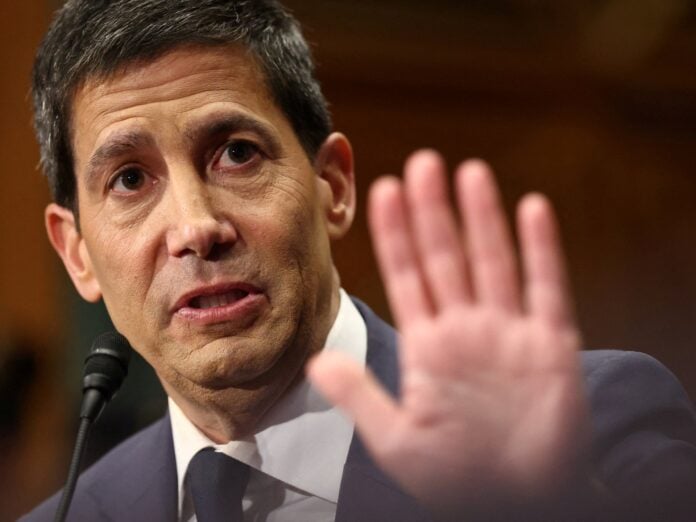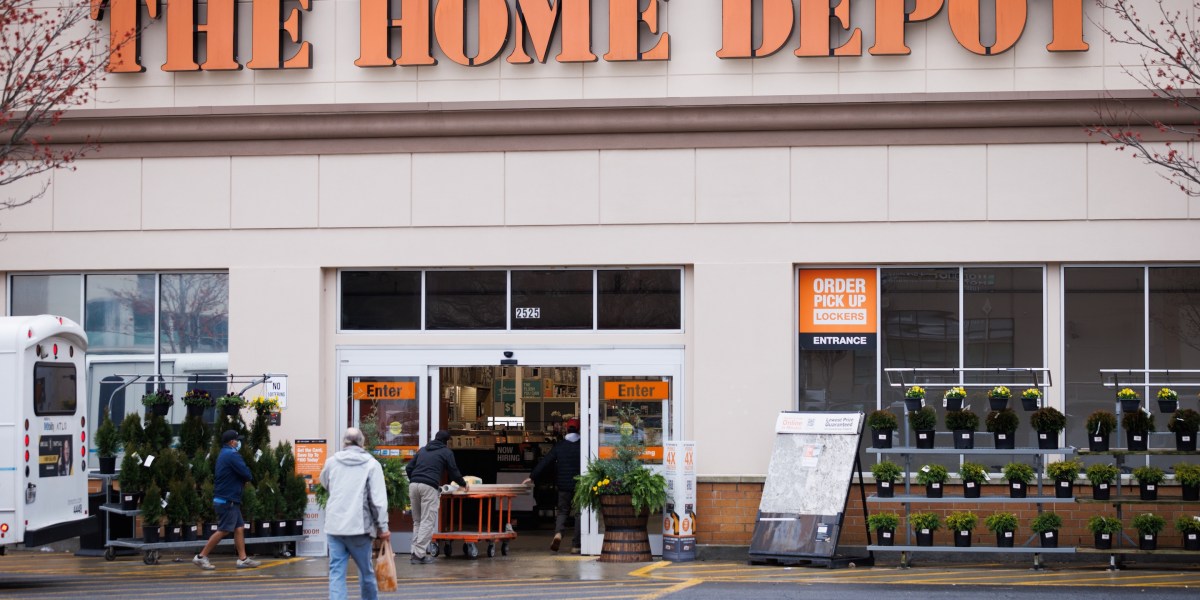

NEW YORK — Ted Decker built Home Depot’s Pro strategy from the inside out. On August 28, he was not there to defend it. His company closed at $330.19 — down $2.73, or 0.82% — in a session where Kevin Warsh’s higher-for-longer rate warning from Jackson Hole pressed every housing-adjacent name in the Dow, and two executives were splitting the chief executive role on an interim basis after Decker took a temporary medical leave on August 12.
At the same time, the $730 million tariff refund that powered Home Depot’s Q2 earnings beat ten days earlier had already been flagged by analysts as largely spent. The questions that matter for HD in the back half of 2026 are not about Q2. They are about what Q3 looks like without a tariff windfall, with no confirmed CEO, and with CFO Richard McPhail still describing the housing environment as frozen.
Home Depot reported second-quarter results on August 18, 2026. Revenue reached $47.9 billion, up 5.7% from the year-ago period. Comparable sales rose 1.7% overall and 1.3% in the United States. Adjusted earnings per share came in at $4.92, above the consensus estimate of $4.73. The company reaffirmed fiscal 2026 guidance: total sales growth of 2.5% to 4.5%, flat to low-single-digit EPS growth. Online sales grew 11%, the strongest digital rate the company has reported in three years. US pending home sales had been declining since spring as mortgage rates kept prospective buyers sidelined — the same frozen conditions that have suppressed Home Depot’s big-ticket project demand throughout 2026.
The tariff refund’s mechanics tell most of the Q2 story. Home Depot received $730 million in refunds on previously paid tariffs, of which $685 million flowed through cost of goods sold. That flow-through lifted gross margin by roughly 145 basis points. But unplanned fuel, energy, and other input costs consumed about 60 of those basis points, and acquisition mix — primarily the drag from the SRS Distribution portfolio — cost another 60. Fortune reported the net improvement landed at approximately 25 basis points, bringing Q2 gross margin to 33.7%. The company described the refunds as “the vast majority” of what it expects to receive, meaning Q3 faces that comparison without the same cushion.
The SRS Distribution thesis is the part of the Q2 story that compounds quietly. Home Depot acquired SRS in 2024 to crack the professional contractor market at scale — roofing distributors, pool supply chains, landscaping networks that reach trade customers who do not browse retail aisles. Through SRS, the subsidiary completed the acquisition of Mingledorff’s, a wholesale HVAC distributor with 42 locations across five southeastern states, on May 11, 2026. That deal brought HVAC distribution into the Pro portfolio for the first time and pushed Home Depot’s stated total addressable market to $1.2 trillion. The company is planning 40 to 50 new SRS locations during fiscal 2026.
The SRS acquisition mix is the same item that dragged gross margin in Q2. The segment operates at structurally lower margins than the Home Depot retail business — distribution economics versus retail economics — so as SRS grows as a share of revenue, it creates a natural margin headwind the company has accepted in exchange for addressable-market expansion. That trade-off explains why the reported 33.7% gross margin, even with $685 million in tariff refund flowing through, needs to be read against a business mix shifting from retail toward distribution.
The leadership variable arrived suddenly. The company announced August 12 that Decker would take a temporary medical leave, with Ann-Marie Campbell, Senior Executive Vice President, assuming oversight of day-to-day operations, and McPhail adding financial management and oversight of the Pro subsidiaries to his CFO responsibilities. Greg Brenneman, the independent lead director, chaired the board during the absence. The company indicated it expected Decker to return without specifying a timeline. It did not appoint a permanent successor, leaving the leadership structure unresolved.
Warsh’s Jackson Hole remarks, delivered the morning of August 28, compounded the pressure from outside. The Fed chair laid out a case for holding rates higher for longer and pushed back against market expectations of fourth-quarter cuts. That rate signal reverberated across the Dow the next day and into the week. For Home Depot specifically, elevated mortgage rates suppress existing home sales — and existing home sales are the trigger for the large renovation projects that carry disproportionate margin for the retail business. At 1.3% US comparable-store growth, Home Depot is managing the freeze reasonably well. The numbers that would come from a thawing market have not appeared, and Warsh’s framework suggests they may not arrive before 2027.
The $2.33 quarterly dividend, payable September 17, 2026, is unchanged. At $330.19, the annualized yield sits at approximately 2.82%. That is not why institutional holders own HD. They own it for the Pro expansion story and the eventual housing-market recovery trade — two theses that require patience, a CEO in the building, and a rate environment that Warsh just made more uncertain. What August 28 confirmed is that Q2 was good. Q3 will need to be good on its own terms.