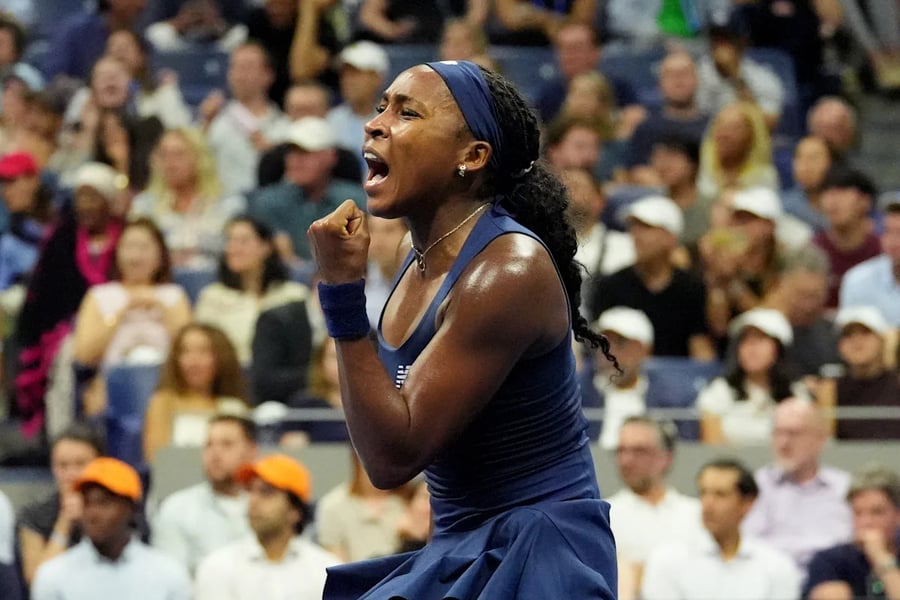

NEW YORK – She came back to Arthur Ashe Stadium trying to hold back a smile.
That smile, Coco Gauff would later admit, arrived before the nerves did, and the nerves, on this occasion, did not follow. In three years of professional tennis since her first Grand Slam final, she has learned to anticipate the weight of a tournament opener at Flushing Meadows. On Tuesday, at the place where she became a champion, the weight was gone. Only the smile remained.
Then she beat Zeynep Sönmez 6-3, 6-4 in 80 minutes, opened her US Open title defense without drama, and left Queens with the tournament’s most complicated question still entirely unanswered: can she sustain this without the underdog narrative, without the fairy-tale framing, and without anyone in the building expecting anything other than a win?
Defending a Grand Slam title is structurally harder than winning one the first time. History insists on it. The pressure calcifies differently when you are the expectation rather than the surprise. Gauff arrived in New York as the fourth seed, carrying a 16-2 record since Wimbledon and a Cincinnati Open title over Jessica Pegula that she sealed 6-2, 6-4. She has two Grand Slams in her pocket (the 2023 US Open and the 2024 French Open) and a World No. 1 ranking within reach if she can get through the fortnight. She arrived as the story before she hit a single ball.
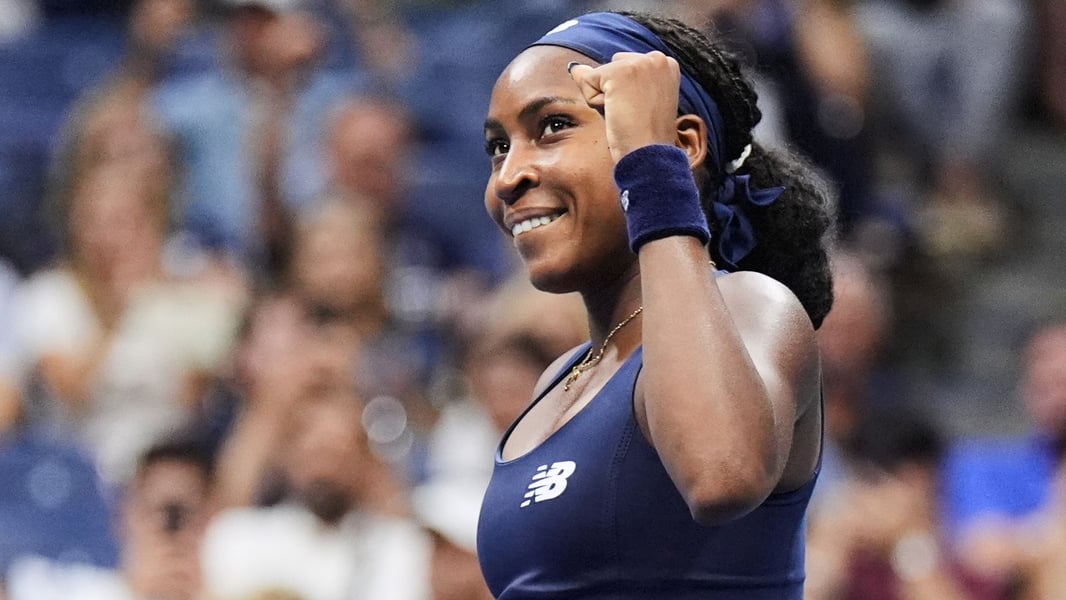
“I wasn’t that nervous today, which was a shock,” she said. “When I walked back out on this court, I was trying to hold back a smile.”
The smile held through the first set and into the second, where Sönmez abruptly changed the texture of the match. The Turkish qualifier, ranked outside the top 80, had been largely passive through the opening set and the first three games of the second. Then she started coming forward. She took positions at the net, forced Gauff to construct passing shots under pressure, and attacked the shorter ball she had spent the first hour inviting Gauff to produce.
It worked. Not for long, but long enough to matter.
Sönmez broke in the fifth game and led 4-3, serving to stay level and defending with far more urgency than anything she had produced before. It was the kind of moment that separates defending champions from one-time champions. A test not of footwork or forehand, but of composure under a suddenly reshaped set of conditions.
“She started coming to the net and playing great tennis,” Gauff said, as Yahoo Sports reported. “And I know that I can raise my level if I need to.”
She raised it. Four consecutive games, four composed and technically efficient exchanges where Gauff took the ball early, dominated the crosscourt forehand, and gave Sönmez no clean opportunities at the net again. The 6-4 second set arrived without ceremony. No dropped racket, no roar into the crowd, no visible relief. Just the walk to the net, the handshake, and the same smile she had been holding back since warmup.
Sky Sports noted that Gauff’s groundstroke depth in the first set ranked among the most controlled she has produced on hard courts this year, a technical marker her coaches have been tracking since she adjusted her ball contact point during the clay-court swing in the spring.
Elsewhere at Flushing on Tuesday, Serena Williams and Venus Williams took the doubles court together at a Grand Slam for the first time since 2022, drawing a crowd at Arthur Ashe that had arrived early for the occasion. Their opponents were Maya Joint and Chan Hao-Ching. Joint defeated Serena at Wimbledon this summer, which had raised genuine uncertainty about whether either Williams would return to New York at all.
Gauff will meet the survivor of a rain-suspended match between Paula Badosa and Daria Kasatkina in the second round. Badosa led 6-1, 1-2 when officials called the players off court. Kasatkina holds a winning record against Badosa on hard courts in their recent meetings; Badosa has been inconsistent this season but capable of her best tennis at Flushing Meadows.
The second-round matchup matters only insofar as it will tell us whether Tuesday’s composure was situational or structural. Sönmez gave Gauff a real test for roughly three games in the second set. An opponent of Badosa or Kasatkina’s quality will give her a sustained one.
That is the only story worth watching in the women’s draw this fortnight: not whether Gauff can win a match, but whether 2026 Gauff, the expectation rather than the story, has rebuilt the psychological architecture that nobody needed to construct for her in 2023.