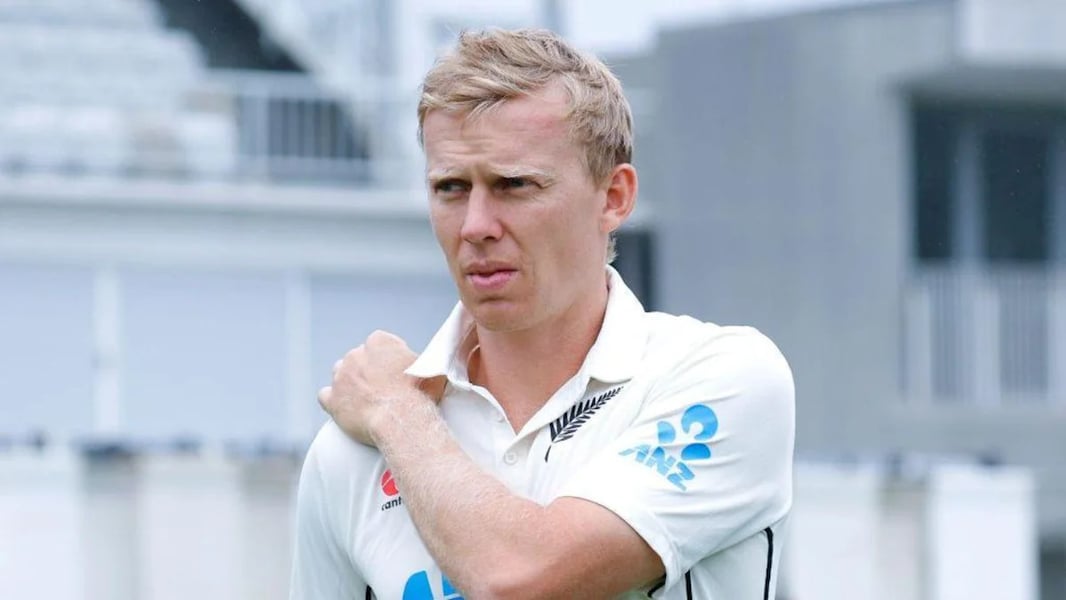

SOUTHAMPTON — Scott Kuggeleijn arrived at the Utilita Bowl on Wednesday morning expecting to play cricket. He had signed with Hampshire for the final four rounds of the County Championship. His name was in the squad. Five minutes before the toss for a Division One fixture against Warwickshire, Hampshire issued a statement: he would not represent the club. Not for this match. Not at all.
The reversal arrived within 48 hours of Kuggeleijn’s quiet inclusion in Hampshire’s squad, framing the episode less as a careful governance decision than as a rout. The club said it had “reflected and listened to feedback from our staff and supporters” before confirming the New Zealand all-rounder would not play. It did not explain what had changed between the moment someone at Hampshire decided to sign him and the moment the statement was posted. That gap between the decision and the reversal is where English county cricket’s framework for handling players with contested histories is most clearly absent.
Hampshire brought Kuggeleijn in as overseas cover for Delano Potgieter, called up to the South Africa A squad ahead of the Bangladesh A series. The signing was not announced on social media. No press release was distributed. His name appeared in a squad sheet, the squad sheet went public, and within hours supporters were describing the move as “shameful” and “a disgrace.” By Wednesday morning, Hampshire’s own staff had joined the criticism, a detail the club buried in a statement that did not acknowledge it was an apology.
Kuggeleijn, 34, was charged with sexual violation involving rape and indecent assault following an incident in 2015 in New Zealand. A first trial resulted in a hung jury. A second trial, in 2017, produced his acquittal. He is, in law, not guilty. But the case has followed him across formats and across years: in 2019, posters appeared at Eden Park during a Black Caps match calling for his exclusion from the national side. His selections for New Zealand have prompted organised public challenge that few international cricketers have faced. Hampshire’s signing of him as a late-season overseas replacement, without public communication and apparently without anticipating the response, brought the same challenge to county cricket, compressed into 24 hours.
No formal supporter organisation claimed responsibility for the reversal. The pushback came from individuals, via social media and direct club contact, and was comprehensive enough that Hampshire walked back the signing before the first ball was bowled. That speed matters. Hampshire are last in Division One with 86 points, 16 behind Leicestershire in ninth and facing relegation with four matches left. A club in that position does not surrender an overseas signing without significant pressure.
The silence from the England and Wales Cricket Board is the most significant element in what Hampshire did not say. Overseas player registrations pass through ECB approval, meaning the board was aware of Kuggeleijn’s signing before it became public. Whether the ECB would have intervened had Hampshire not reversed the decision is a question the board has not answered. No ECB spokesperson was quoted in connection with Wednesday’s events. The institution that restructured England’s Test cricket leadership in July as part of a broader cultural reset appears to have no formal protocol for counties signing players whose acquittals have not resolved their public controversies.
That absence of policy matters more than any individual case. The question facing every county is not specifically about Kuggeleijn: it concerns what criteria govern the signing of players whose legal clearance does not fully settle public concern. Hampshire appeared to believe the 2017 acquittal was sufficient grounds to proceed. Its supporters and its own staff believed otherwise, and acted faster than any formal process could have. English county cricket has now confirmed a precedent that supporter pressure can reverse a signing in under 48 hours without any formal ECB intervention. The distinction between institutional governance and reactive damage control has consequences well beyond this player and this county.
Kuggeleijn played three Tests, two ODIs, and 18 T20 internationals for New Zealand across 12 years with Northern Districts. England’s cricket conduct controversies this summer, from ECB investigations into nightclub incidents to revised player behaviour guidelines, have established that off-field histories carry more institutional weight in 2026 than the sport’s recent record acknowledged. How that applies to county cricket, and on what criteria, remains the question Hampshire’s week has posed without answering.
Related Posts