
FLUSHING MEADOWS, N.Y. — Five times, the scoreboard said Madison Keys was done. Five times, she played the right ball at the wrong moment for the wrong person.
The 22nd seed, a former champion on this court, turned a match that was over before it ended into a second-round win, saving five match points against Anna Bondar before winning the decisive super tiebreak 10-5. The final score of 5-7, 6-4, 7-6 reads like a close match. The match was something closer to a revival.
Five match points against one opponent in a single set is not how most professional matches play out. Players lose one, they are eliminated. Keys faced five of them, at different junctures in a third set where Bondar had established both the rhythm and the lead, and she converted none of them into a loss.
Bondar, ranked just outside the world’s top seventy-five, reached the second round of a Grand Slam by playing the kind of game that does not make mistakes. She is not a point-creator; she is a point-preserver, a player who constructs situations in which opponents give points away and then accepts the gift. In the third set on Thursday, Keys began to give points away. Bondar accepted them.
She had Keys trailing, and she had match points. One required a winner. Two required a winner. On the first two, Bondar delivered double faults and handed them back. Three, four, five required one more ball landing where Bondar needed it to land, and it did not.
Keys won four consecutive games to force a tiebreak. Then she won the tiebreak 10-5.

Keys won this title in 2017. She was 22, still early in a career defined by her serve and her forehand and the expectation that she would eventually organize those physical gifts into consistent results. The 2017 US Open was the moment those gifts arrived at once. She beat Venus Williams in the semifinals, came back from a first-set deficit, and then handled Sloane Stephens 6-3, 6-0 in the final, one of the more clinical US Open victory scorelines of the decade.
She is 31 now. The gifts have not diminished. The seasons between 2017 and this one have not been straightforward. As Yahoo Sports reported, Keys arrived in Flushing Meadows this week working to move past a difficult 2025, a year she has characterized as requiring recovery more than advancement.
What Thursday showed, the part worth holding, was not the first set she lost or the stretch of the third where Bondar pulled ahead. It was the five moments where Keys was one ball from the end of her tournament and produced the right response. Professional players find one such moment in a career. She found five in a match.
There is a particular kind of pressure that plays out on Court 17 at the USTA Billie Jean King National Tennis Center in front of a crowd that knows what it is watching. Keys grew up in this environment. She won the championship in it. The crowd on Thursday knew who she was and what the match meant, and their knowing was audible.
Her next match will come against either Qinwen Zheng, the Olympic champion who has been among the sport’s most technically complete players since her gold medal at the Paris Games, or Yulia Putintseva, who makes the second week of Grand Slams a professional habit. Neither will allow the positioning that Bondar occasionally conceded.
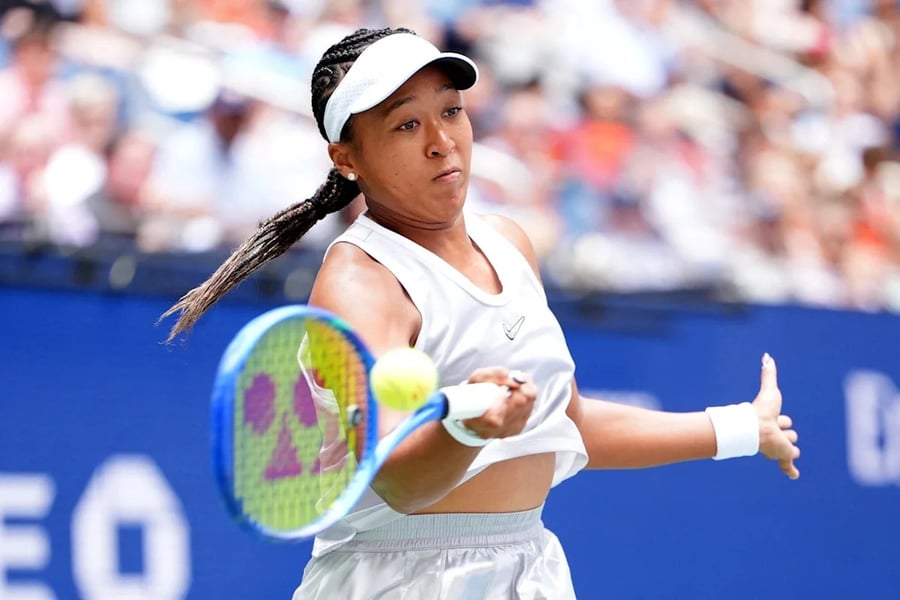
Thursday’s women’s draw produced several stories simultaneously. Naomi Osaka, the two-time champion, survived a second-set collapse, twenty unforced errors in a set she had been winning, to reach this round. Coco Gauff, defending champion and title favorite, advanced under the weight of what a second title would mean for her ranking. Keys’ survival added a third thread to a tournament that is accumulating them.
She has been trying to return to what she produced in 2017 across eight years and several difficult seasons. The five match points she saved on Thursday settle nothing about whether she will. What they settle is simpler: she is still here, in the third round, with the tiebreak margin of 10-5 suggesting that once she decided to take the match back, she did not hesitate.
Zheng or Putintseva awaits.
The five match points are already history.