
CUPERTINO – The question Apple investors were actually asking on August 28, 2026 was not what caused the 0.85% advance to $228.45, but whether it will hold in the two weeks before the answer arrives. Apple Inc is expected to announce the iPhone 17 lineup in the second week of September, and every point gained before that event is simultaneously a bet on the product and a marker against which post-announcement trading will be measured.
Apple Inc (NASDAQ:AAPL) closed at $228.45, outperforming the Dow Jones Industrial Average, which fell 9.45 points to 53,559.99 on Thursday. The advance came in a session where broader macro concerns (Federal Reserve Chair Kevin Warsh’s Jackson Hole signal that rate cuts would arrive later than markets had priced) weighed on rate-sensitive sectors while leaving large-cap technology with cash-generative business models relatively insulated.
The insulation Apple receives from rate pressure is structural rather than coincidental. Unlike technology companies whose valuation depends on discounting distant future earnings, Apple generates approximately $100 billion in annual free cash flow, carries a net cash position despite its capital return program, and earns growing revenue from a services business that operates at gross margins roughly double those of its hardware segment. That profile, confirmed in the company’s third-quarter fiscal 2026 earnings release, tends to hold value better in rate-rising environments than growth-at-any-price technology names.
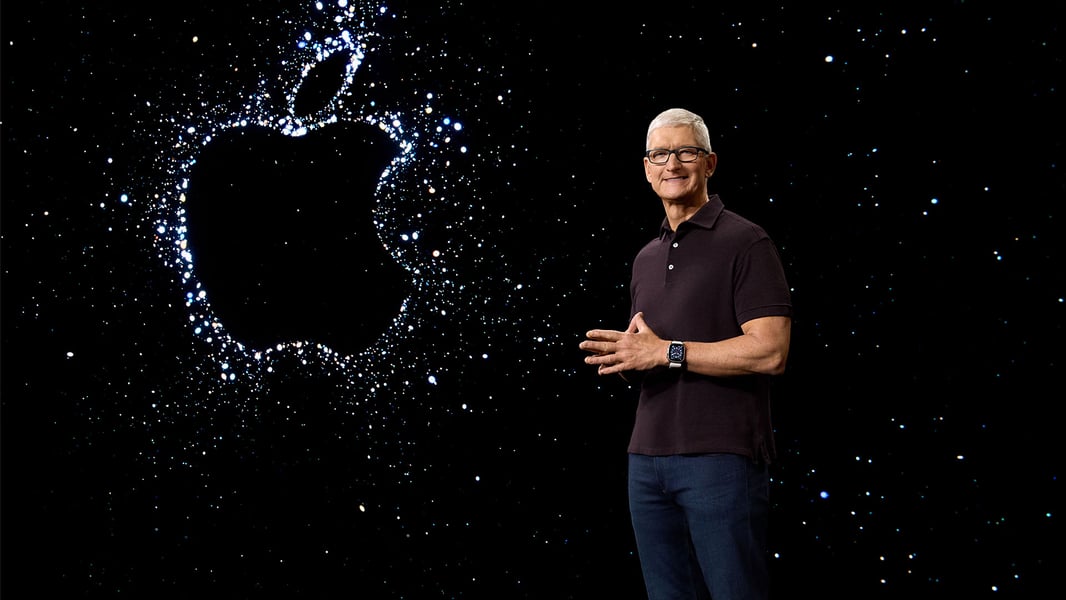
Services revenue (comprising the App Store, Apple Music, iCloud, Apple TV+, Apple Arcade, and Apple Pay) reached $24.2 billion in fiscal Q3 2026, a 14% increase over the comparable period in 2025. That figure now represents approximately 26% of Apple’s total revenue, a proportion that has doubled from its share five years ago. Tim Cook, Apple’s chief executive, characterized the services trajectory on the earnings call as the company’s most important structural shift since the App Store launch in 2008; the gross margin differential means each services dollar contributes more to earnings than each iPhone dollar from a profit standpoint.
Apple Intelligence, the company’s generative AI integration across iOS, iPadOS, and macOS, launched in phases beginning in late 2024. The full feature set (including the upgraded Siri capable of cross-application reasoning, context-aware writing tools, and image generation) reached its complete build across all supported devices by the second quarter of 2025. Adoption data suggests Apple Intelligence features are driving an accelerated upgrade cycle among users on older hardware, particularly those whose devices predate the iPhone 15 and are therefore ineligible for on-device Apple Intelligence processing.
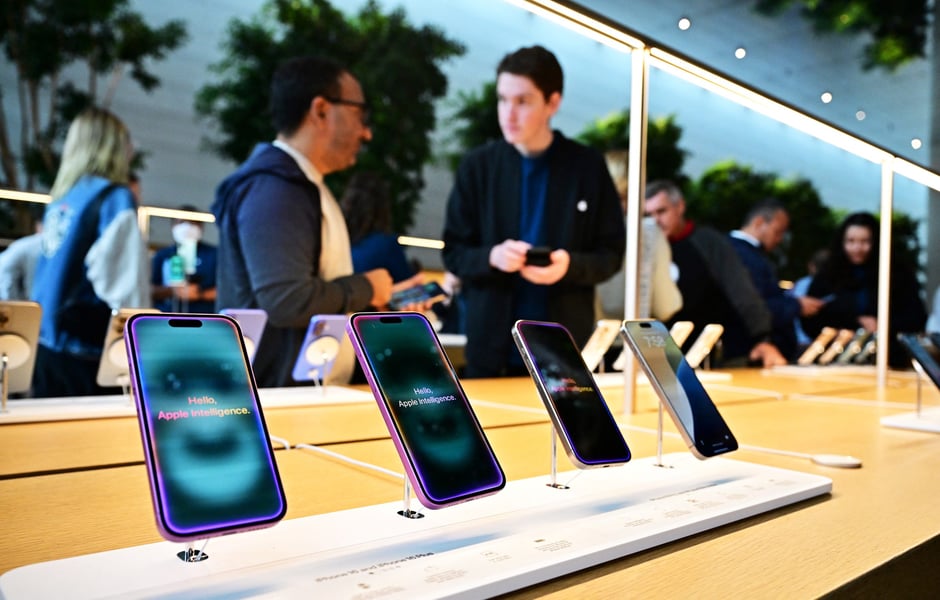
That cycle is the primary reason analysts are forecasting iPhone 17 shipments between 240 million and 260 million units for the fiscal year beginning in October 2026, a 5% to 10% improvement over fiscal 2025 actuals. The range reflects genuine uncertainty. China remains the critical variable. Apple’s share of the Chinese premium smartphone market has faced sustained pressure from Huawei, which introduced a domestically produced 5G chip that closed the performance gap in 2024 and has continued refining its flagship lines since. Apple Intelligence is not available in mainland China due to regulatory constraints on the generative AI features, which limits the upgrade incentive for Chinese consumers specifically. Whether China drags the shipment total toward the low end of guidance or whether domestic-market tailwinds elsewhere compensate will not be visible until the December quarter earnings report.
The Berkshire Hathaway position in Apple (now approximately 5% of Apple’s outstanding shares following Warren Buffett’s partial reduction in 2024) provides an implied institutional endorsement that influences retail investor sentiment in ways that are difficult to quantify precisely. Buffett’s sale of roughly a third of Berkshire’s Apple stake in mid-2024, widely attributed to tax considerations ahead of a potential capital gains rate increase, created a temporary overhang that the stock has subsequently absorbed. The remaining Berkshire position is the single largest equity holding in the Berkshire portfolio by market value.
Short-interest data from exchange filings showed Apple’s short interest at approximately 0.7% of shares outstanding as of the most recent reporting period (among the lowest of any company in the Dow Jones Industrial Average). That combination of institutional concentration, low short interest, and a product cycle catalyst approaching means volatility is more likely to manifest as downside if the iPhone 17 disappoints than as upside if it meets expectations, because the positive scenario is already substantially embedded in the share price at $228.45.
For context on how the session unfolded for other large-cap technology names, the NVIDIA Corp (NVDA) decline of 3.4% illustrated the divergence within the sector: NVDA’s growth-equity profile made it considerably more exposed to rate repricing than AAPL’s services-driven cash flow model. The Amazon (AMZN) session analysis covers the cloud and e-commerce dynamics that separated the AWS revenue story from the same macro backdrop. Other Dow technology components navigating the same rate-pressure environment through the following sessions included Microsoft and IBM; the full Dow context is covered in the August 31 session recap. What the iPhone 17 cycle ultimately contributes to Apple’s fiscal 2027 will begin to become clear at the December quarter earnings call, a question that $228.45 does not resolve.