
WASHINGTON — When Deborah Boardman took up Trump’s latest executive order on birthright citizenship, she did not need to break new legal ground. The Supreme Court had already done it for her.
In a 35-page ruling issued Wednesday, the U.S. District Judge for the District of Maryland entered a third preliminary injunction blocking the president’s effort to deny citizenship to children born on American soil — this time halting an August executive order drafted explicitly to navigate around the constitutional barrier the Supreme Court erected in June. The case, CASA Inc. v. Trump, has become the running record of an administration that has now lost the same argument in three different variations. Boardman’s verdict on the latest version matched her verdicts on the ones before: the order “is almost certainly unconstitutional.”
The August 6 executive order had abandoned the terrain where Trump had already lost. The administration’s original effort — halted by the Supreme Court’s 6-3 ruling striking down birthright citizenship restrictions in a decision that included three of Trump’s own appointees — sought to deny citizenship to nearly all children born to parents without legal status. That broad claim did not survive. The August order retreated to narrower ground: restrict citizenship only to children whose parents fall into specific categories — people designated “alien enemies” of the United States, including those classified as members of foreign terrorist organizations or drug cartels; parents working for foreign embassies with diplomatic immunity; and parents the administration accused of entering the country specifically for what it called a commercial birth tourism arrangement.
The constitutional argument behind each category was different, but the practical result the administration wanted was the same. And it was that result — stripping citizenship from children born in America — that Boardman declined to permit.
The judge invoked the Supreme Court’s own June language. The court’s majority held that children born on American soil to parents “subject to the jurisdiction” of the United States are citizens under the 14th Amendment’s Citizenship Clause. The August order, Boardman found, did not engage with that holding — it attempted to declare that the targeted parents, by virtue of their designations or purposes, fell outside the jurisdictional requirement entirely. She found no constitutional footing for that move. The order “is almost certainly unconstitutional as applied to the certified class,” she wrote, noting she was compelled to “once again, preliminarily enjoin enforcement.”
The ruling’s reach is nationwide. No federal agency may enforce the August order’s citizenship restrictions against any member of the certified class — a designation that extends well beyond CASA Inc.’s membership to all parents who would have been affected under the order’s three categories. For the families who spent weeks uncertain whether the latest executive action would survive its first legal test, the answer arrived within three weeks of the order’s signing.
CASA Inc., the Maryland-based immigration advocacy nonprofit that has brought and won each of these challenges, argued in court that the administration’s strategy follows a recognizable pattern: narrow the order enough to appear responsive to the court’s prior objections, then watch it fail for the same underlying constitutional reason. The case number is gov.uscourts.mdd.574698.
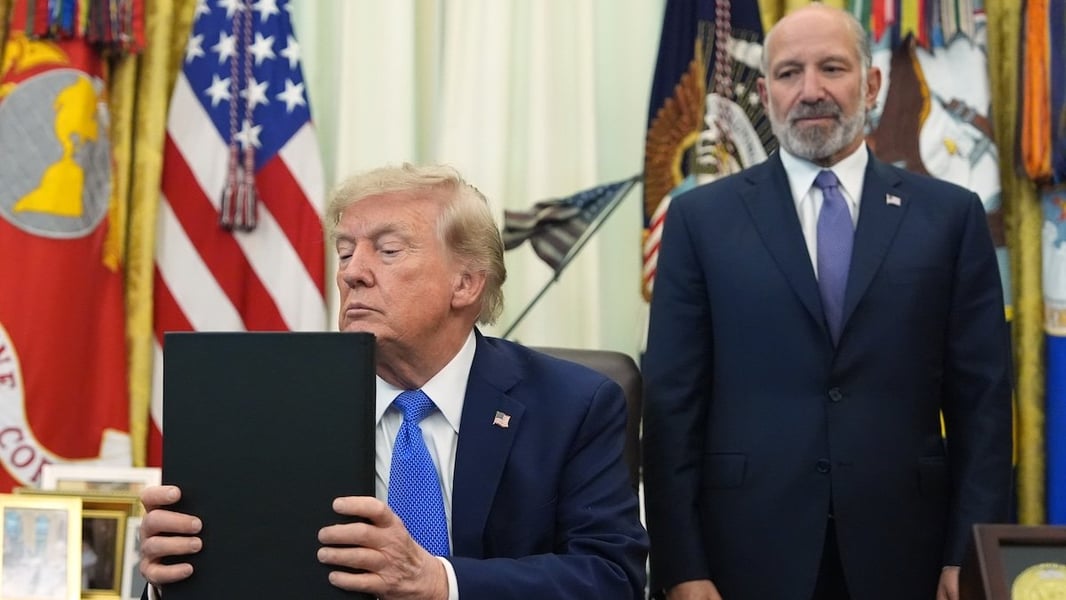
The White House called the ruling political. Spokesperson Lauren Bis dismissed Boardman as an “activist judge appointed by Biden attempting to thwart President Trump’s commonsense agenda,” according to NBC News. Attorney General Todd Blanche said the administration had “crafted the EO” based on Supreme Court guidance and signaled it would appeal if necessary. That reading of the June ruling — that it left space for the alien enemy and birth tourism carve-outs the August order attempted — is one that constitutional scholars and immigration lawyers have consistently disputed. The Supreme Court’s majority made no such reservation.
The administration’s use of the alien enemy framework has faced scrutiny across multiple fronts. Alien Enemies Act deportation challenges in the Fifth Circuit were recently dismissed as moot — a procedural result that left the foundational constitutional question about the 1798 law’s peacetime application unresolved. In the birthright citizenship context, the alien enemy designation was the mechanism by which the administration argued that parents affiliated with designated terrorist organizations or drug cartels fell outside the 14th Amendment’s protection for persons “subject to the jurisdiction” of the United States. Courts have not accepted that argument.
Trump’s third consecutive loss on birthright citizenship by executive order does not end the fight. The administration has signaled appeal to the Fourth Circuit. If that appeal fails, a claim that there is any narrow category of persons born in the United States whose children could be constitutionally denied citizenship would ultimately fall to the Supreme Court itself — the same court that, in June, said the answer was no. CBS News reported the ruling halts enforcement while appeals proceed.
The August executive orders targeting alien enemies and birth tourism were signed weeks after the Supreme Court’s rebuff, timed to avoid the direct constitutional challenge that doomed the first attempt. That calculation has now produced a result: signed August 6, challenged immediately, blocked September 3. The theory that a narrower target could survive what a broader one could not has been tested and rejected at the first opportunity. Whether the appeal reverses that finding, or whether the cycle simply repeats with a fourth variation, is the question Boardman’s ruling leaves unanswered.