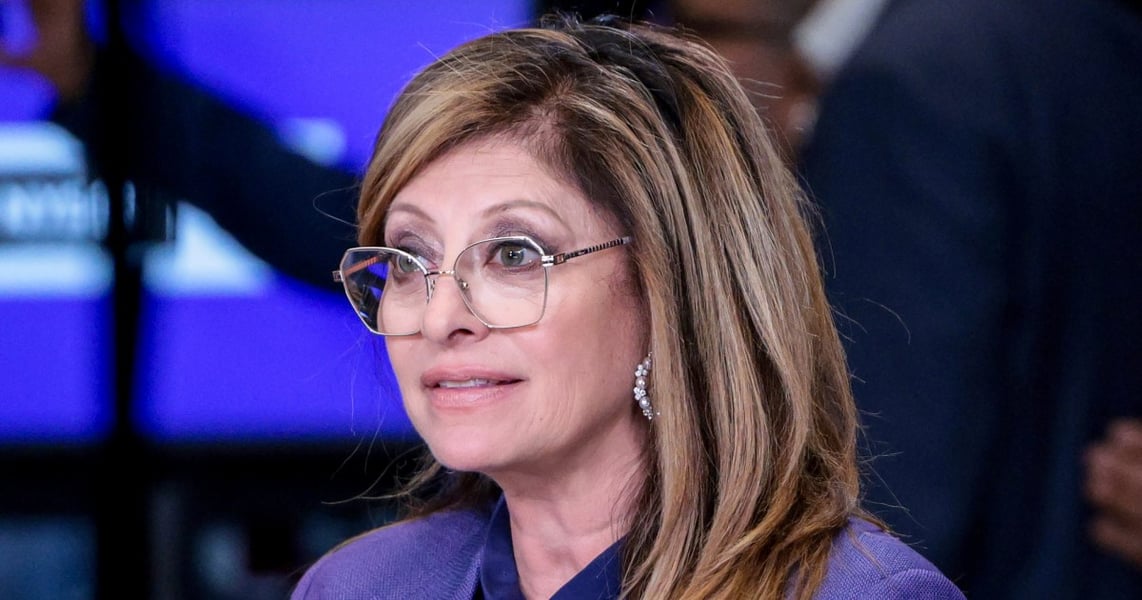

NEW YORK — For three years after the 2020 election, Maria Bartiromo’s broadcasts on Fox Business Network were a regular destination for members of Donald Trump’s cabinet, campaign advisers, and the attorneys pushing what courts would later call a manufactured case against Dominion Voting Systems. On Wednesday, Fox News ended her 12-year run at the network, effective immediately, with a statement that offered no explanation.
The departure, first reported by NBC News, closes a chapter Fox had been quietly trying to rewrite since 2023, when the network paid Dominion $787 million to settle a defamation lawsuit over false claims that its voting machines had stolen the 2020 presidential election. Bartiromo’s programs were among the central exhibits in Dominion’s case, with her interviews amplifying allegations that the company’s own documents showed Fox executives privately regarded as baseless.
Fox said in a statement, “We thank Maria for her work over the last 12½ years and wish her all the best on her next chapter.” Bartiromo had not responded to requests for comment by Wednesday afternoon.
She had been off the air since August 9, a 25-day gap conspicuous enough that industry observers had begun speculating about her status well before the announcement. The exit without an on-air farewell, followed by the curtly worded statement, followed a template Fox has used before. Tucker Carlson left in 2023 under similarly unexplained circumstances. The network now fills Bartiromo’s former Fox Business slots with rotating anchors and Cheryl Casone; “Sunday Morning Futures” on Fox News Channel passes to Jason Chaffetz.
Bartiromo’s career in financial television predates Fox by two decades. She spent the better part of the 1990s and early 2000s at CNBC, where she became one of the most recognizable faces in business broadcasting, credited with pioneering live reporting from the floor of the New York Stock Exchange at a time when most financial television still felt like a ticker-tape readout with a narrator. The nickname the Street gave her, “Money Honey,” preceded her into every profile written after Wednesday’s announcement. She joined Fox Business Network at its 2007 launch and moved to Fox News Channel’s “Sunday Morning Futures” in 2013, eventually hosting three programs simultaneously.
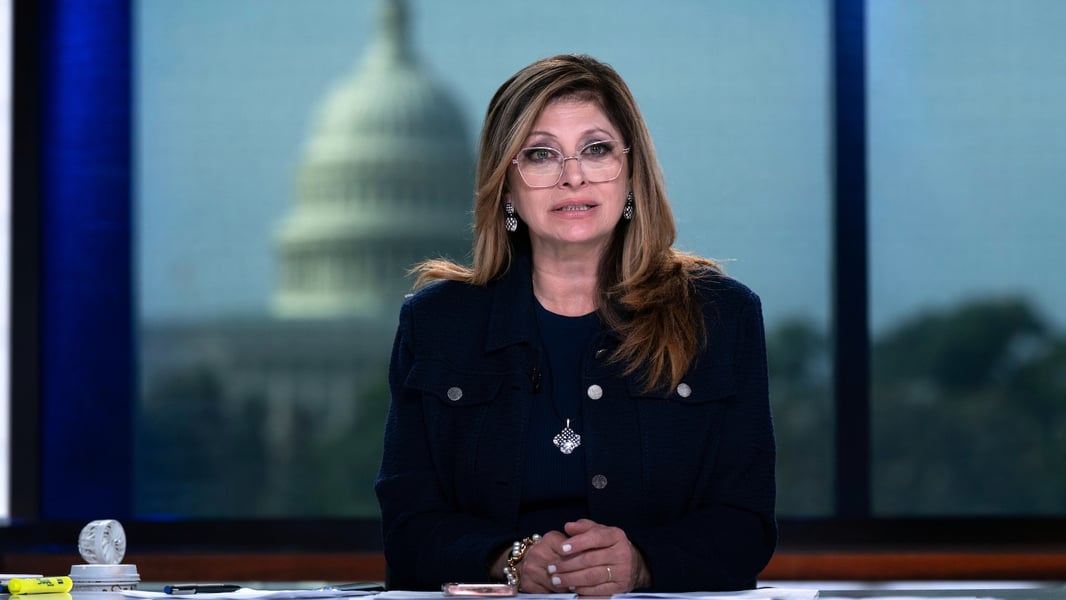
The specific broadcast that Dominion’s legal team put at the center of its lawsuit was Bartiromo’s November 8, 2020 interview with Sidney Powell, in which Powell alleged without documentation that Dominion’s software had been designed to flip votes. Internal Fox communications disclosed during litigation showed company executives knew the claims were false as the programs aired. The settlement, finalized on the eve of trial in April 2023, required no admission of wrongdoing from Fox, and Bartiromo was not named as an individual defendant.
Fox has given no indication of whether her departure reflects an expired contract, a negotiated buyout, or a termination. The 25 days of silence before the announcement and the brevity of the exit statement leave those questions open. Three of her programs end this week.
The pattern, taken together with the Carlson precedent, suggests a network selectively recalibrating its post-settlement identity. Bartiromo’s Sunday program had been a reliable landing spot for Trump allies since 2017, its access built on a relationship that proved useful to the administration and damaging to Fox in a federal courtroom. The departure reads less as a routine contract decision than as the delayed institutional consequence of that arrangement.
In an industry year marked by high-profile departures across entertainment, including the suspension of a Wheel of Fortune announcer after an incident aboard a flight and the cancellation of a major John Galliano retrospective by a New York museum, the Bartiromo exit carries a distinct institutional weight. Those cases involved individuals. This one involves a network working through what it owes its own history.
For context on how the broader political-media intersection has shifted, the Trump administration’s campaign to shape Hollywood through federal tax incentives represents a different axis of the same tension, the degree to which political relationships define and ultimately constrain media institutions in the United States.
What Bartiromo does next is unknown. Fox, characteristically, seems content to keep it that way.