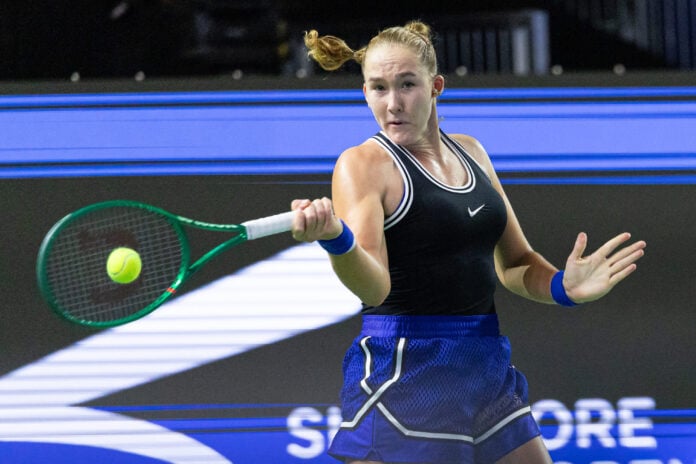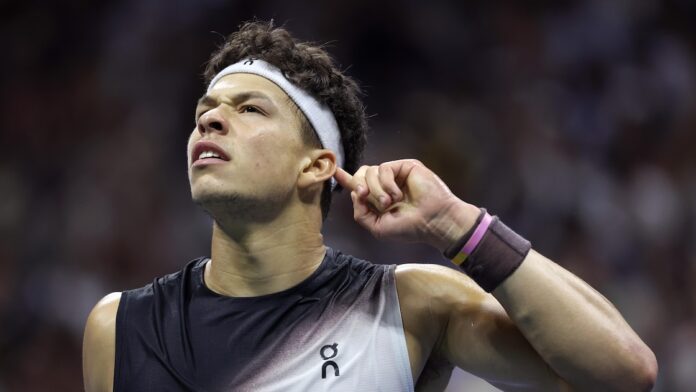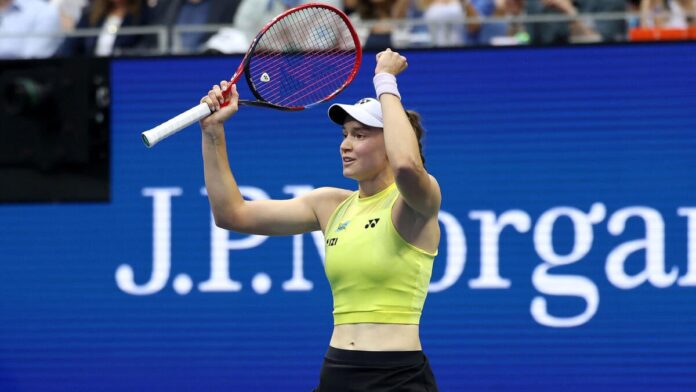

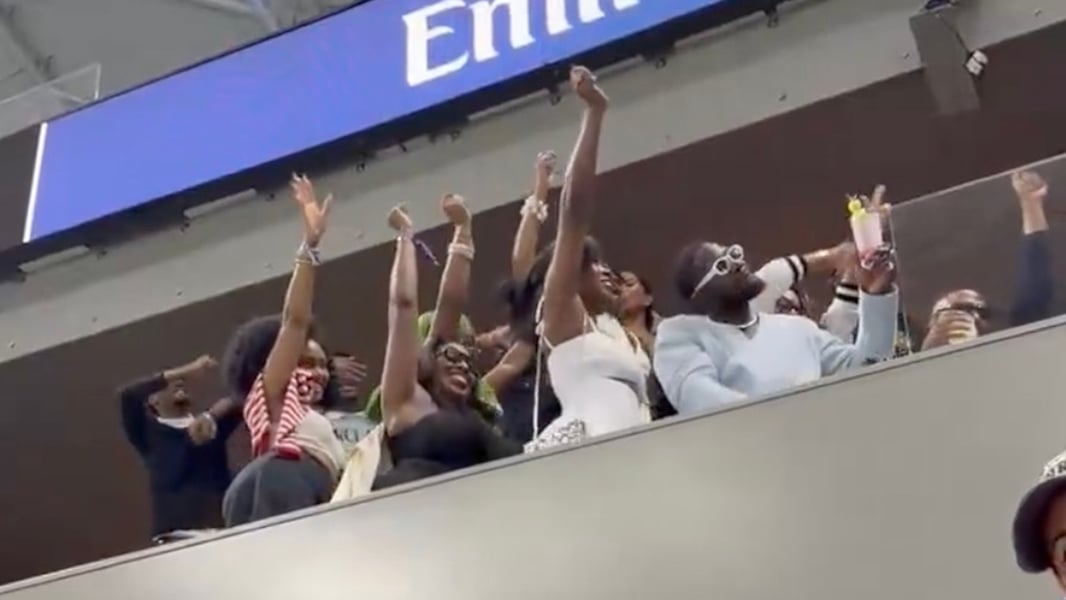
FLUSHING MEADOWS, N.Y. — The match paused. Chair umpire Kader Nouni turned away from the court, addressed the suite positioned directly behind him, and announced over the Arthur Ashe Stadium microphone what no Grand Slam umpire should need to say mid-point: “Guys, please, in the suite behind me, please thank you guys, please take your seat.”
A group of spectators had been wandering around the suite conducting what appeared to be a photoshoot, ring lights on and portable cameras rolling, while Naomi Osaka was serving. The US Open was roughly 48 hours into its first week.
The people in that suite were not part of the tournament’s credentialed content creator program. They were guests. And yet their moment became the lens through which everyone — players, officials, and the tennis press — began examining what the USTA has built: a program that nearly doubled its influencer credentials in a single year, from 54 in 2025 to roughly 100 in 2026, without an equally clear framework for what those 100 people are allowed to do once they are inside.
The credentialed creator program’s most documented failure came on a separate track. Meg Radice and Audrey Jongens, who operate the Instagram account @theviplist with 154,000 followers, had their passes revoked after posting a video on Instagram Stories displaying the credentials. The US Open moved quickly: anyone could screenshot the image and use it to gain unauthorized entry. Radice and Jongens said they had no idea they had violated any rules. They had blocked off both tournament weeks to create content.
Osaka responded after her first-round win over Anastasia Zakharova — the match during which the ring-lights incident occurred. She was careful about the framing: the influencer program broadly is not the problem. The behavior is. “I think obviously, if you come to a sporting event, you have to respect the sport,” she said. “And I feel like it’s common courtesy to read up on the sport, especially the etiquette.”
Yahoo Sports reported the full scope of the credential expansion and the incidents it produced across the first week. Osaka advanced to the third round despite the disruption, though Nouni was called to intervene again during her second-round match against Katerina Siniacova. Twice in two rounds, the same problem.
Jessica Pegula, ranked No. 3 in the world and one of the American players the USTA is most counting on for audience growth, was more specific about what she found troubling. “I can appreciate the influencers coming and kind of showcasing the U.S. Open experience,” she said. “But I do think that it’s tough when you see videos like that when they’re taking pictures and using the selfie lights. People are down there trying to perform, and it’s their career and their job. It seems like a bit disrespectful.”
Coco Gauff, the defending singles champion and the tournament’s central figure this fortnight, found an analogy that described the gap better than any official statement has managed. “I definitely think it’s cool to have a new demographic and I definitely think it helps grow the sport,” she said. “But if you’re being invited to a red carpet, you wouldn’t show up in jeans. I think it’s just follow the etiquette of the sport.”
Gauff entered her US Open title defense pursuing the world No. 1 ranking she has never held, competing in a tournament whose attention this week has been divided between what is happening on court and what is happening in the suites around it.
The USTA has not announced plans to scale back the program. Brendan McIntyre, the US Open’s head of communications, said the tournament is “continually looking for ways to ensure fans in the stands know what is permitted and what is prohibited” and that organizers “need to ensure” the audience experience “does not interfere with the action and competition on the court.” That formulation describes the standard without addressing whether the current program’s scale makes it achievable.
As ABC News noted, the incidents have put the spotlight on fan etiquette at a tournament that has historically prided itself on a quieter, more formal atmosphere than most major sports. The tournament launched a YouTube series called Rally the Boroughs this year and partnered with creator MrBeast on an opening-day video. The strategic logic is legible: younger audiences find tennis through content platforms, not broadcast, and the sport’s growth in the United States depends on reaching them. That logic has not changed. What has changed is that the mechanism for delivering on it — credentials for 100 people, a number that will presumably grow again next year — is generating the kind of etiquette failures that the tournament’s players are now publicly cataloguing.
Daniil Medvedev has taken the opposite position from Osaka and Pegula, welcoming the influx of creators. He is not alone. The debate among players is real, not one-sided, and the USTA can point to Medvedev’s posture as evidence that the program does not uniformly antagonize the locker room.
What the tournament cannot yet point to is a working system for ensuring that its growth strategy and its competitive integrity do not collide in the middle of a point at Arthur Ashe Stadium. The ring-lights incident was weeks ago. The credential revocations happened days into the first week. The year’s invitations have been sent. What the USTA does with the program’s design after this edition ends — whether it caps the numbers, adds behavioral orientation, or simply accepts the friction as an acceptable cost of reach — remains open.