
OTTAWA — On the afternoon of September 7, China’s Ministry of National Defense issued a brief announcement confirming that its officials had met their Canadian counterparts in Ottawa three days earlier for what Beijing described as a “candid and in-depth exchange” on regional and international issues. Canada’s government said nothing.
That asymmetry — Beijing writing the press release, Ottawa declining to acknowledge the meeting — captures something essential about where Canada finds itself in the autumn of 2026: deepening its strategic relationship with China precisely when it cannot afford to be seen doing so.
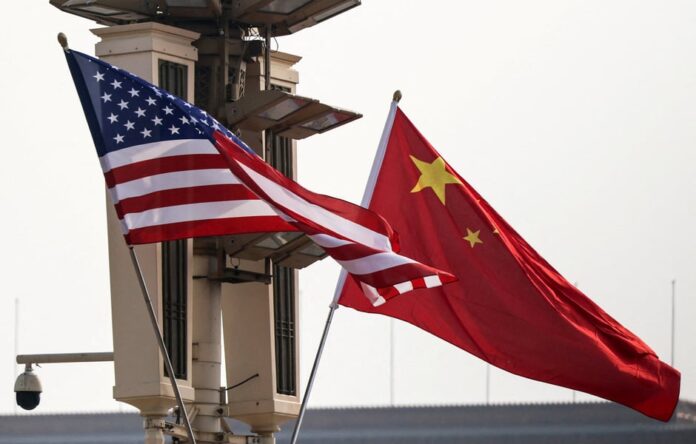
The encounter, formally called the 5th China-Canada Defence Coordination Dialogue, was held on September 4 in the Canadian capital. It was the first such meeting since 2018, resuming a military communication channel that had been suspended for more than eight years. The gap traces directly to December of that year, when Canadian authorities arrested Huawei executive Meng Wanzhou at Vancouver airport on a US extradition request, triggering a bilateral crisis that saw China detain two Canadian citizens, Michael Kovrig and Michael Spavor, in what was widely understood as retaliatory leverage.
The diplomatic freeze thawed only gradually. Kovrig and Spavor were released in September 2021 when Meng reached a deferred prosecution agreement with US authorities. Three years of painstaking diplomatic work followed before Prime Minister Mark Carney flew to Beijing in January 2026 and announced what his government called an updated Canada-China Strategic Partnership — a document that committed the two countries to regular high-level dialogue across trade, climate, and public safety.
The September defence talks were one node in that expanding network. But their timing is inseparable from a parallel development reshaping Canada’s foreign policy calculus since August: the imposition of Trump’s 50% tariffs on Canadian goods — part of the broader trade collapse that has pushed Ottawa to accelerate its search for economic alternatives to the United States.
The arithmetic is not subtle. Canada exports roughly $500 billion in goods annually, and the overwhelming majority flows south. When Trump threatened last month that any Canadian free-trade agreement with China would trigger 100% US tariffs on Canadian goods, he was attempting to close off the very option Ottawa was quietly exploring. The defence dialogue, in this light, is not merely a security question. It is a signal that Canada is willing to absorb some risk in its relationship with Washington to maintain options in Beijing.
Canada’s former chief of the defence staff, Retired General Wayne Eyre, addressed this tension explicitly after the dialogue was reported. Eyre, who spent years briefing Parliament on Chinese military recruitment of Canadian personnel and on Beijing’s intelligence operations on Canadian soil, described the resumed contacts as “communication, not cooperation” — a distinction he insisted must not be blurred. His broader public warning in June that the Carney government should be “very wary” of its accelerating embrace of Beijing has drawn no public rebuttal from Ottawa.

The silence has its own logic. Canada finds itself caught between two powers it cannot fully trust. Washington has made clear, through its trade policies and increasingly pointed statements, that it views Canadian outreach to China with deep suspicion. Beijing, meanwhile, signaled through its ambassador’s public comments in April that the strategic partnership could suffer if Ottawa permits Canadian parliamentarians to visit Taiwan or deploys additional naval vessels through the Taiwan Strait. Ottawa has offered no public answer to either demand — in part because responding openly to one risks imposing a cost on its relationship with the other.
The defence dialogue mechanism itself predates the current tensions. China and Canada established the coordination framework in 2013, under markedly different geopolitical circumstances. Meetings took place in 2013, 2014, 2016, and 2018 — four rounds over five years — before the Meng Wanzhou crisis effectively shut down the channel. The resumption of the fifth dialogue, eight years later, indicates that both sides still regard the mechanism as worth preserving, even amid a deeply strained political relationship.
Wang Yi’s visit to Ottawa in late May, the first visit by a Chinese foreign minister to Canada in a decade, established much of the institutional backdrop for what followed. The discussions covered trade, critical minerals, clean energy, and bilateral sensitivities. Military communications were not publicly identified as part of the agenda, making the quiet scheduling of the September defence dialogue — and the even quieter Canadian reception of it — particularly notable.
The Carney government’s approach appears to reflect a deliberate form of compartmentalization: pursuing the bilateral relationship through areas where progress can be managed below the threshold of public controversy, while avoiding statements that could force a broader reckoning over what the partnership entails. A military-to-military channel restored after eight years fits that pattern. So, too, does the absence of a Canadian press release.
Whether that compartmentalization can hold remains an open question. Trump has already demonstrated a willingness to impose economic pressure on Canada over policies he opposes. The 50% tariff regime, Ottawa’s retaliatory measures, and the threat of a further increase to 100% if Canada pursues a free trade agreement with China have created an environment in which even a routine defence coordination dialogue can carry broader political significance.
Against that backdrop, Canada’s silence on September 4 is difficult to dismiss as a simple oversight. The silence itself appears to have been the position.