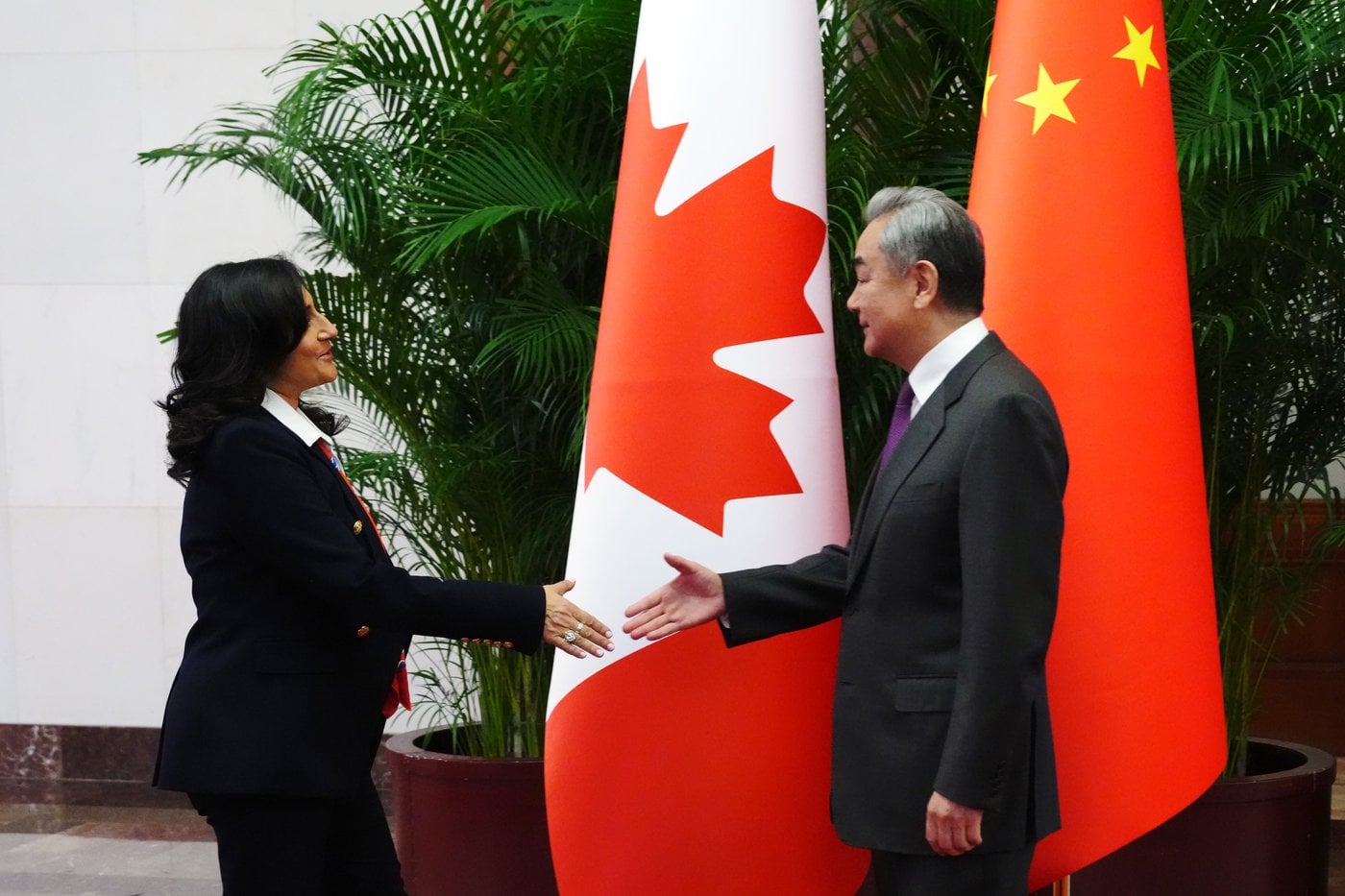

OTTAWA — Chinese Foreign Minister Wang Yi touched down in Ottawa on Wednesday for a closely watched three-day visit, the first time a Chinese foreign minister has set foot in Canada in a decade and a milestone in a bilateral relationship that has undergone a striking transformation over the past year.
Wang, who also serves as Director of the Office of the Central Commission for Foreign Affairs and is China’s most senior diplomat, arrived at the invitation of Canadian Foreign Affairs Minister Anita Anand. The two are scheduled to hold substantive talks in the capital focused on the recently updated Canada-China Strategic Partnership, as well as trade and investment, global security, and a range of bilateral matters that have kept both sides busy since January.
Global Affairs Canada confirmed the visit in a statement, noting that it would “advance pragmatic engagement and the implementation of the updated Canada-China Strategic Partnership.” The last time a Chinese foreign minister visited Canada was in June 2016, when Wang held the same portfolio and made headlines — not entirely for diplomatic reasons.
That 2016 trip is remembered in Canadian political circles for a tense moment at a joint news conference in Ottawa, when Wang publicly dressed down a Canadian journalist who had asked about Beijing’s human rights record, calling the question “full of prejudice against China and arrogance.” The episode lingered in the diplomatic memory of both capitals. Nine years later, the atmospherics are notably warmer.
The shift traces its roots to January 2026, when Prime Minister Mark Carney traveled to Beijing alongside Anand — the first visit to China by a Canadian prime minister since 2017 — and announced an updated Canada-China Strategic Partnership. As part of that reset, Beijing agreed to grant visa-free access to Canadian passport holders through the end of 2026, a gesture that signaled a thawing after years of deep chill that had followed the 2018 detention of Huawei executive Meng Wanzhou and the subsequent tit-for-tat arrests of two Canadian citizens, Michael Kovrig and Michael Spavor.
Chinese Ministry of Foreign Affairs spokesman Guo Jiakun, asked about the visit at a regular press briefing in Beijing last week, said that “China-Canada relations have turned around and continue to improve, and the two sides are working to build a new type of strategic partnership.” Beijing, he added, hoped the trip would enhance political trust, expand mutually beneficial cooperation, manage differences, and keep bilateral relations on a stable and sustainable footing.
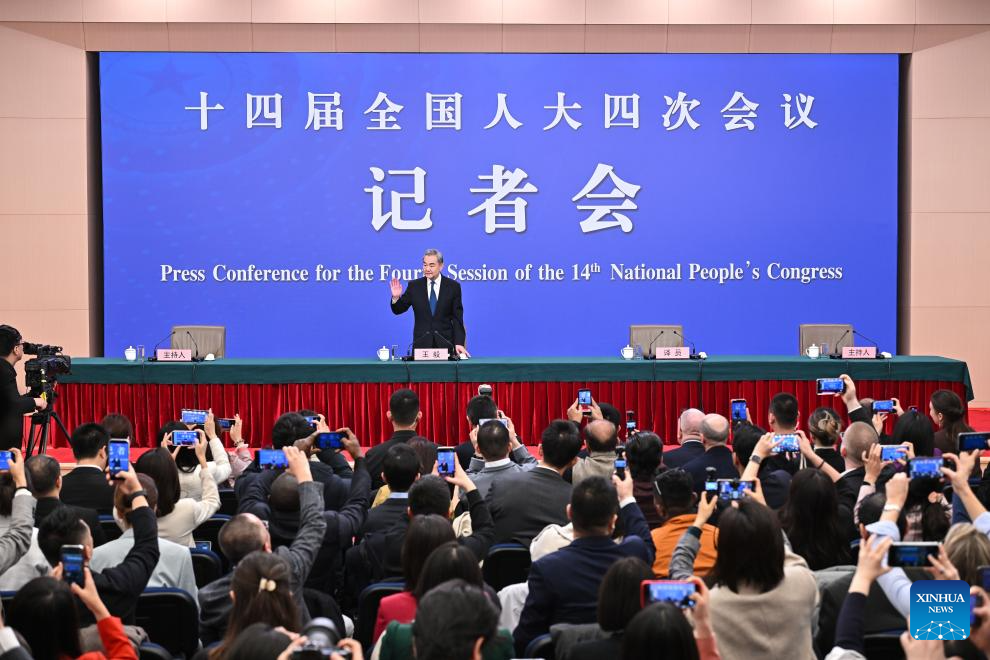
Wang’s North American leg began before he landed in Ottawa. On May 26 he was in New York, where he chaired a high-level meeting of the United Nations Security Council and held separate meetings with UN Secretary-General António Guterres and several foreign ministers on the sidelines. The Security Council appearance underlined Beijing’s desire to project an image of multilateral engagement at a moment when Washington’s relationship with the international order has grown more unpredictable under President Donald Trump.
Canada’s decision to deepen ties with Beijing comes with its own tensions. China’s ambassador to Canada, Wang Di, warned in a late-April interview that the strategic partnership would be damaged if Ottawa allowed Canadian parliamentarians to visit Taiwan or sent additional Royal Canadian Navy vessels through the Taiwan Strait — something the Canadian navy has done regularly over recent years. Beijing considers the waterway an internal Chinese waterway, a position Canada does not accept.
The visit is also unfolding against the backdrop of a broader geopolitical realignment. Canada, stung by tariff pressures and pointed rhetoric from Washington, has spent much of 2026 accelerating its outreach to alternative trade and diplomatic partners. China, which buys significant volumes of Canadian canola, seafood, and other agricultural products, represents both an economic necessity and a political calculation for the Carney government, which came to office in early 2025 on a promise to recalibrate Canada’s place in the world.
The breadth of the agenda reflects how much ground the two sides are trying to cover. Trade and investment top the list: a January deal cut tariffs on Canadian electric vehicles and canola exports as a confidence-building measure, and officials from both countries have signaled an interest in expanding cooperation in clean energy, critical minerals, and health. Global security is also on the table, including each government’s sensitivity over the other’s positions on major conflicts. The two sides have not publicly confirmed whether the talks will produce a joint statement or a more limited readout.
A source familiar with the planning told the Globe and Mail that Anand intends to take Wang on a hike through the forested parks of Gatineau, across the river from Ottawa, on May 30 — a gesture that, if it happens, would carry the distinct air of a relationship being deliberately humanized after years of frost. Whether Wang will hold a news conference during the visit remains unclear, which has fueled speculation about how his side intends to manage questions on human rights, Taiwan, and the ongoing tensions over Canadian lawmaker visits to Taipei.
China’s diplomacy has been active across the Western hemisphere this spring. The Ottawa stop follows a summit last month between President Xi Jinping and Trump that featured cordial exchanges but no major breakthrough on trade or Iran. Beijing has since indicated that Xi is expected to pay a state visit to the United States in the autumn — a calendar that gives every Chinese diplomatic move between now and then a degree of strategic framing.
For Ottawa, the challenge is threading the needle between economic pragmatism and the values-based foreign policy that Canada has long articulated publicly. The Carney government has moved quickly to show that it is open for business with Beijing, even as its relationship with Washington remains complicated. Critics at home and allies abroad will be watching the Ottawa talks closely to see how far Canada’s recalibration extends — and whether the warm optics of a Gatineau hike translate into durable changes in the way the two countries manage their deepest differences.
Wang’s arrival marks at least a symbolic closing of a chapter that opened with Canada’s expulsion of a Chinese diplomat and extended through years of frozen ministerial contacts. Whether the new chapter proves more durable will depend in part on what the two sides agree, or decline to agree, in the next three days in the Canadian capital.
Wang is expected to depart Ottawa on May 30, according to reports, after what Canadian officials have described as a working visit focused on setting the tone for a longer-term engagement that both governments say they want but neither has fully defined.
—Inputs from Sputnik.