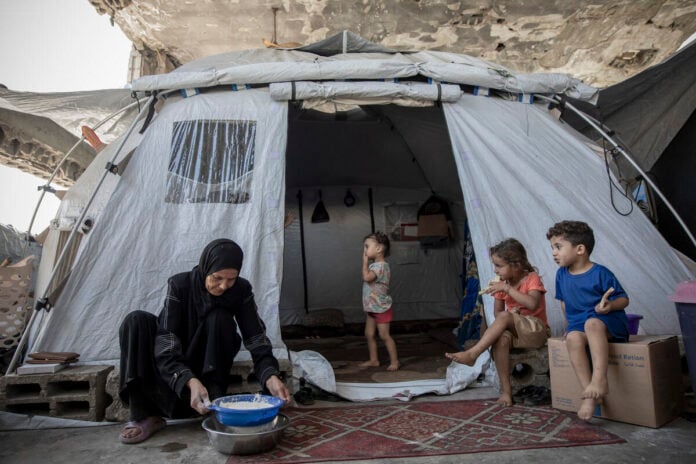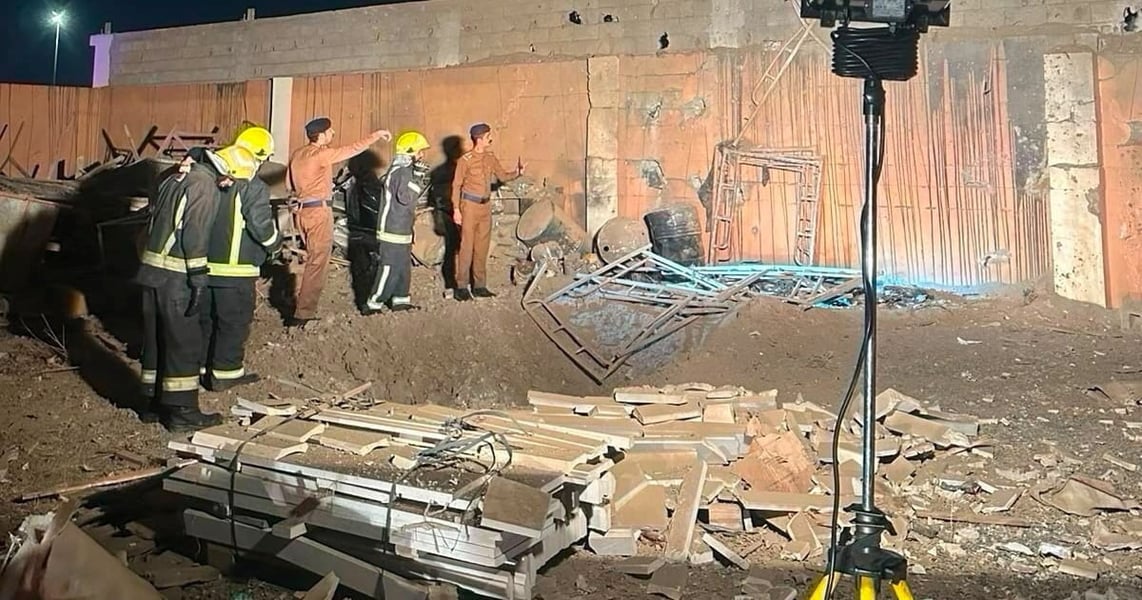

RIYADH — Seventy-three Saudi civilians, including women and children, were wounded on Wednesday after Yemen’s Houthi movement launched its broadest coordinated assault on Saudi territory since the six-month war began. The attack involved dozens of ballistic missiles and drones targeting four cities in the kingdom’s south, setting Saudi Aramco distribution facilities ablaze and prompting the Saudi Energy Ministry to suspend operations at affected oil installations.
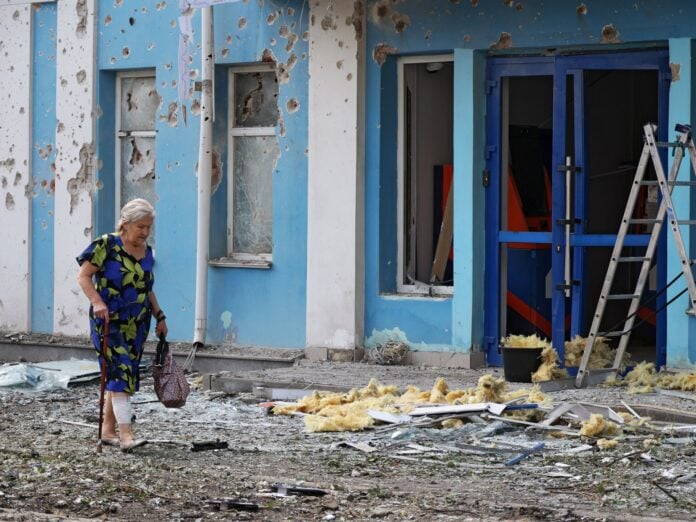
The cities targeted were Abha, Khamis Mushait, Jazan and Najran, all in southwestern Saudi Arabia. The region has faced Houthi attacks for years, but never at this scale or with so many targets struck simultaneously. Major General Turki al-Maliki, spokesperson for the Saudi-led coalition, said the attacks hit “civilian and economic sites” across the four cities, leaving 73 civilians wounded and sparking fires that spread into energy infrastructure before emergency crews brought them under control.
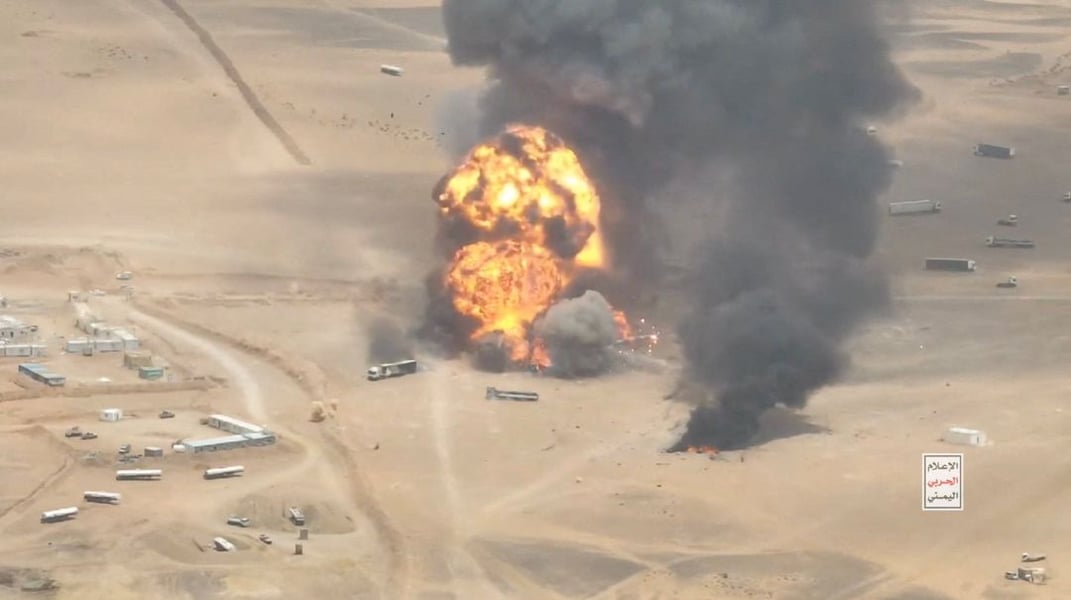
Satellite imagery obtained by regional media showed plumes of smoke rising from a Saudi Aramco distribution centre in Abha shortly after the attacks. Saudi Arabia’s Energy Ministry said in a statement that fires had broken out at several oil facilities and utility sites across the southern region, forcing the temporary suspension of operations. The ministry did not provide a timeline for the restoration of full capacity.
The scale of Wednesday’s assault drew immediate comparisons within Saudi official channels to the 2019 attack on Abqaiq and Khurais. That strike demonstrated the vulnerability of Saudi energy infrastructure to precision aerial attacks. Wednesday’s barrage made no claim to the same level of precision but distributed its damage across a wider geographic area — analysts said this was strategically significant: it is harder to defend four cities simultaneously than a concentrated chokepoint.
The Saudi-led coalition responded within hours. Yahya Saree, the Houthi military spokesman, confirmed that Saudi warplanes had carried out 54 airstrikes on Yemeni territory in the twelve hours preceding his statement — a tempo of operations the Houthis characterized not as deterrence but as the provocation they were responding to.
The United Nations warned Wednesday that the Houthi campaign against Saudi Arabia risks widening a conflict that already spans the Red Sea, the Strait of Hormuz and Iran’s direct confrontation with American forces. A UN official said the attacks raised the prospect of regional escalation with consequences extending beyond the immediate parties to the Yemen war.
The timing of Wednesday’s assault compounded pressure already running through global energy markets. Brent crude had already crossed $100 a barrel on Wednesday following the US destruction of five Iranian tankers in the Gulf of Oman and Iran’s missile barrage against the Al Azraq base in Jordan — a sequence that put supply disruption fears at their most acute level since the war began in March. The four-city Houthi assault added a simultaneous pressure point, targeting Saudi energy capacity on the same day that global markets were already absorbing the loss of Iranian crude from vessels sunk in the gulf.
Saudi Arabia had been building onshore reserves to record highs as Hormuz and Red Sea disruptions made export routes increasingly unreliable. The fires at southern facilities raised a pointed question: whether those reserves — assembled precisely as a buffer against conflict-driven supply shocks — could function as the market’s main stabilizer if the conflict began destroying the infrastructure that processes and distributes them.
What Wednesday left unresolved: whether the Aramco and energy infrastructure damage amounts to a temporary interruption or a sustained loss of capacity in the south; whether the Houthi warning of “harsher and wider” attacks describes a shift in strategy or a rhetorical ceiling; and what the coalition’s response beyond the 54 airstrikes already carried out will look like. The UN’s warning that the conflict risks further widening adds a dimension the kingdom’s air defenses cannot address alone.