
LOS ANGELES — On Friday, Spider-Noir was a canceled television series. By Monday, it was a five-time Emmy winner.
The whiplash was almost cinematic. Three days after Amazon Prime Video pulled the plug on the series, the Television Academy handed it five trophies at the 2026 Creative Arts Emmy Awards — recognizing the same production for stunt coordination, sound editing, special visual effects, cinematography and title design.
The awards arrived just 72 hours after Amazon and MGM+ ended the show following eight episodes and a reported $400 million production budget. The cancellation also closed the first regular television role for Nicolas Cage, who had anchored the series as its Spider-Man variant.
The five wins made Spider-Noir the most decorated title from Prime Video’s 2026 slate at the Creative Arts ceremony, creating an unusual industry paradox: a show being rewarded for its craftsmanship almost immediately after its studio decided it would not continue.
For Amazon, the timing was awkward. For Cage, it appeared to provide a different kind of punctuation.
“For me, one season is perfect, having said what I wanted to say with this dangerous, innovative, pop-art Spider-Man,” the actor said in a statement released after the Emmy wins. “Onwards, upwards, inwards.”
The phrasing was characteristically opaque — part farewell, part artistic declaration, perhaps part deflection. But one thing was clear: Cage did not sound as though he was mourning the show’s cancellation.
The wins arrived against a backdrop that industry insiders had quietly acknowledged for months: Spider-Noir was the kind of show that earns awards and loses platforms. Its 92 percent critics rating put it alongside prestige cable dramas from an earlier era, and its 11 Emmy nominations (the most of any Prime Video series this cycle) made it a genuine contender heading into the fall season. What it lacked, The Hollywood Reporter noted in its cancellation coverage, was an audience willing to carry it past its debut weekend. The series arrived May 25 on MGM+, moved to Prime Video in a simultaneous all-at-once release two days later, and dropped out of the platform’s daily Top 10 rankings earlier than its nomination count would have suggested.

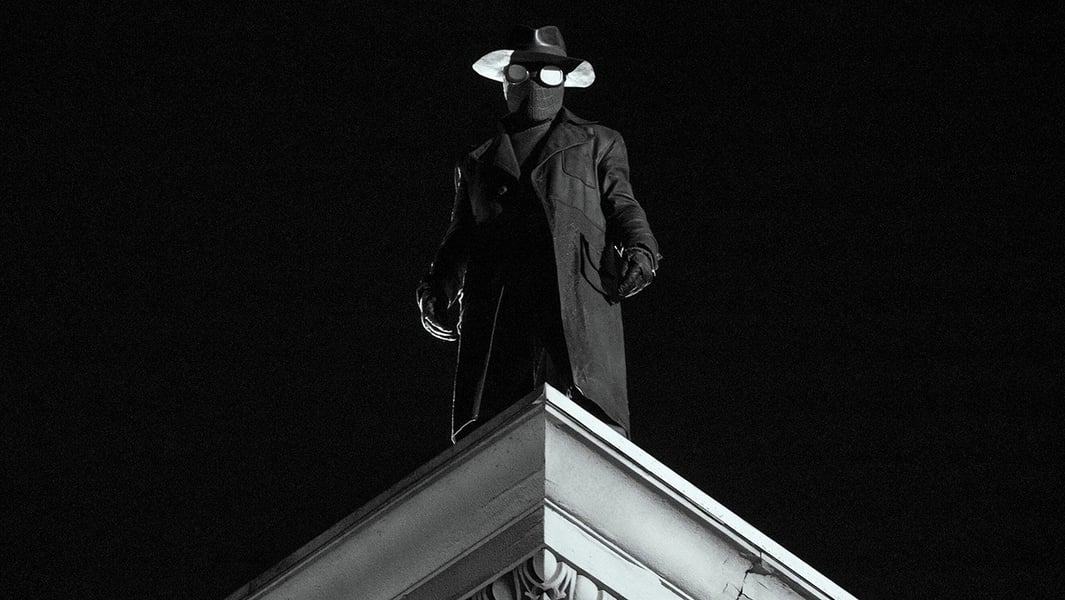
Cage spent much of the post-cancellation news cycle framed as a sympathetic figure, a marquee film actor whose long-awaited television debut ended before a second season could build on the first. What that framing missed was that Spider-Noir was always operating against the commercial logic of the superhero genre. Where franchise IP typically functions as a delivery mechanism for comfortable familiarity, this version of the character existed as a formal exercise: anamorphic lenses associated with noir cinema, a mid-century radio-drama score, a tone closer to Raymond Chandler than to the franchise’s house style. Its five Emmy wins came entirely in craft categories. Not writing, not direction, not acting. That distinction is a precise map of what the show accomplished and where its ambition had been directed.
The stunt coordination Emmy reflected a production philosophy that treated practical stunt work as visual grammar rather than a supplement to CGI. The cinematography trophy, awarded for a single episode, was the one that resonated most in the room: it acknowledged a visual approach with no direct precedent in American superhero television.
None of that changes the fact that the show is finished, though what “finished” means in the current streaming landscape requires a qualifier. The Sony-Amazon-MGM+ licensing structure means the underlying intellectual property remains in play. Whether Spider-Noir surfaces again as a film, a limited run on another platform, or a future Sony streaming initiative depends on commercial calculations that have nothing to do with critics scores or Emmy tallies. What the 2026 awards season established is that the creative work was recognized on its own terms, and that the record will follow it wherever it goes next.
Amazon’s broader strategy has been moving toward content that retains casual subscribers rather than critical enthusiasm. The studio’s expansion into NHL local streaming rights for six teams this fall reflects a different theory of what sustains a subscriber base than a $400 million noir superhero drama. It is not a theory Spider-Noir was built to satisfy.
The 78th Emmy season arrives in a cycle where awards conversation is louder than the viewership numbers it tracks. As this year’s Emmy field made clear, the shows generating the most industry conversation are not always the shows generating traffic. Spider-Noir won five trophies. It did not win a second season.
Cage’s “one season is perfect” formulation reads differently knowing the cancellation came first. Whether he believed it before the call or arrived at it after, the position is now the official version, and not an incoherent one. The show made what it set out to make. The Spider-Man franchise moves forward in other forms: Spider-Man: Brand New Day carries the property into a different kind of sequel, under different commercial conditions and a different creative mandate. The spider has more than one web.
What Spider-Noir leaves behind is a production record that the Television Academy found worth honoring and a streaming platform that found it worth cancelling. Those two facts are not contradictions. They are a reasonably accurate description of how prestige television works in 2026, and what it is ultimately worth.