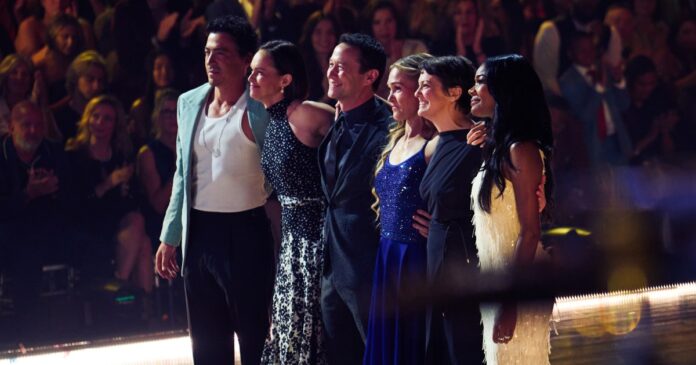

TORONTO — The last time Rebel Wilson brought a film to the Toronto International Film Festival as director, the premiere came after a run of stories about a lawsuit, a controversy, and questions about whether her debut behind the camera could survive the noise around it. The Deb survived. Girl Group, her second feature, arrived at Friday’s Gala Presentation at Roy Thomson Hall without the baggage and with a roster of cast members who read less like a supporting ensemble and more like a pop cultural argument.
The argument goes something like this: a film that puts Melanie C of the Spice Girls, Ashley Roberts of the Pussycat Dolls, and Shaznay Lewis of All Saints in the same scene has already done something the movie musical has rarely attempted, which is to treat a generation’s worth of chart-topping pop acts as the texture of a story, not a stunt.
Wilson writes, directs, produces, and stars as Tassie Young, a pop singer whose attempt at a solo career spectacularly unravels after a DUI conviction. The sentence is community service. The community service is mentoring a group of aspiring young performers who, to varying degrees, are not interested in being mentored. What Tassie rediscovers while attempting to manufacture their talent is, predictably, the thing she had forgotten about her own: that performance is not a career strategy but a relationship with an audience.
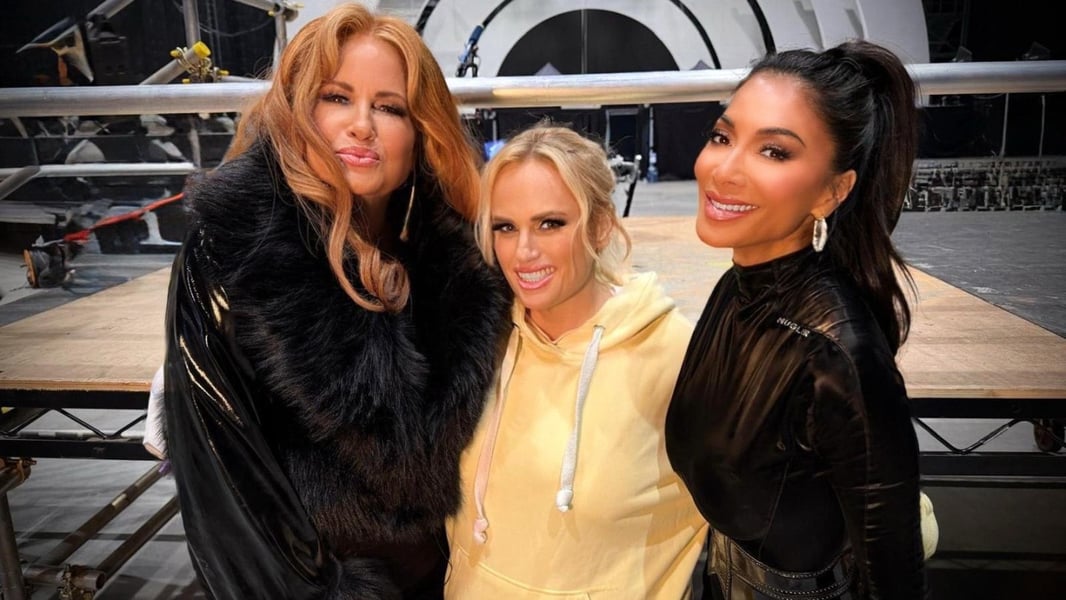
Jennifer Coolidge and Nicole Scherzinger lead an ensemble that also includes Randall Park, Sheridan Smith, Jamie Lee O’Donnell, and Guz Khan, a combination of American and British television that gives the film the multicultural pop crossover credibility a UK-shot musical comedy about a girl group requires. Mel C, Roberts, and Lewis do not merely appear as themselves. They form a fictional group called Girlfriends alongside Wilson’s character, an arrangement that only works if the performances are convincing enough to sell the fiction. According to Melanie C, who described the film to an Australian outlet as “hilariously funny,” they are.
The Hollywood Reporter reported in October 2025 that Coolidge and Scherzinger had signed on after the film’s production in the United Kingdom was confirmed. Production was backed by Live Nation Studios and Future Artists Entertainment, a combination that gives the project the concert-industry infrastructure to sell its soundtrack alongside its theatrical release. The Gala Presentations slot, 5:30 p.m. on Friday at Roy Thomson Hall, marks the second time in three years that TIFF has offered Wilson the program’s particular form of institutional endorsement: these are films the festival considers events, not just submissions.
The Deb, which closed the 2024 festival, generated strong audience response before a distribution deal with Rialto in Australia confirmed its theatrical trajectory. Girl Group arrives with more heat and more moving parts. The difference between a debut and a second feature is, in the industry’s accounting, the difference between potential and pattern. Wilson’s decision to return to the musical form and to the Gala Presentations program suggests she considers both a repeatable bet rather than a one-time experiment.
The ensemble casting reflects a different level of market confidence. Jennifer Coolidge has carried or elevated every project she has joined since The White Lotus transformed her from a familiar face into an industry currency. Her presence in Girl Group is not a cameo. The film’s premise runs partly on the same audience comfort that makes Coolidge’s persona work: warmth as a weapon, absurdism as the vehicle for something honest. Whether the finished film delivers on that combination is what Friday’s premiere begins to answer.
What the premiere does not answer is the commercial question, which is whether a UK-produced musical comedy with an Australian director and an Anglo-American pop-culture ensemble can find its American theatrical audience before the streaming conversation begins. TIFF’s Gala crowd tends to respond generously to exactly this kind of film. The gap between a standing ovation at Roy Thomson Hall and a meaningful opening weekend in the United States is where comedies with serious casts and unserious premises sometimes go quiet.
Earlier this week, Sian Heder’s Being Heumann opened the festival at the same venue. The two films represent the kind of back-to-back programming that TIFF uses to signal the range of its Gala Presentations: one is a documentary-inflected civil rights drama; the other is a pop musical that wears its commercial ambitions openly. The films now going through the TIFF People’s Choice vote include entries across genres, and the audience who shows up to vote often responds most consistently to emotional access and comic momentum.
Wilson has said publicly that she will only direct musicals. After The Deb came out of a difficult production on both legal and creative levels, that declaration read as part manifesto, part self-protection, a claim of territory that preempted any suggestion that the form was accidental. Girl Group tests whether the territory is actually hers to hold, not by surviving the noise the way The Deb did, but by working as a film.
The pop icons who agreed to form a fictional group with her have offered their own endorsement. What the rest of the festival, the critics, and eventually the audiences decide is the part nobody on a Friday evening premiere circuit can yet confirm.