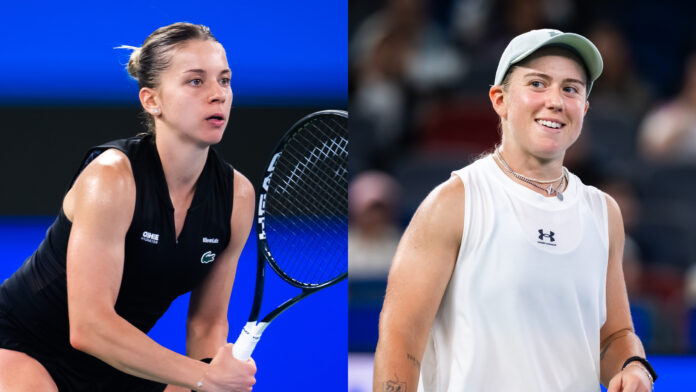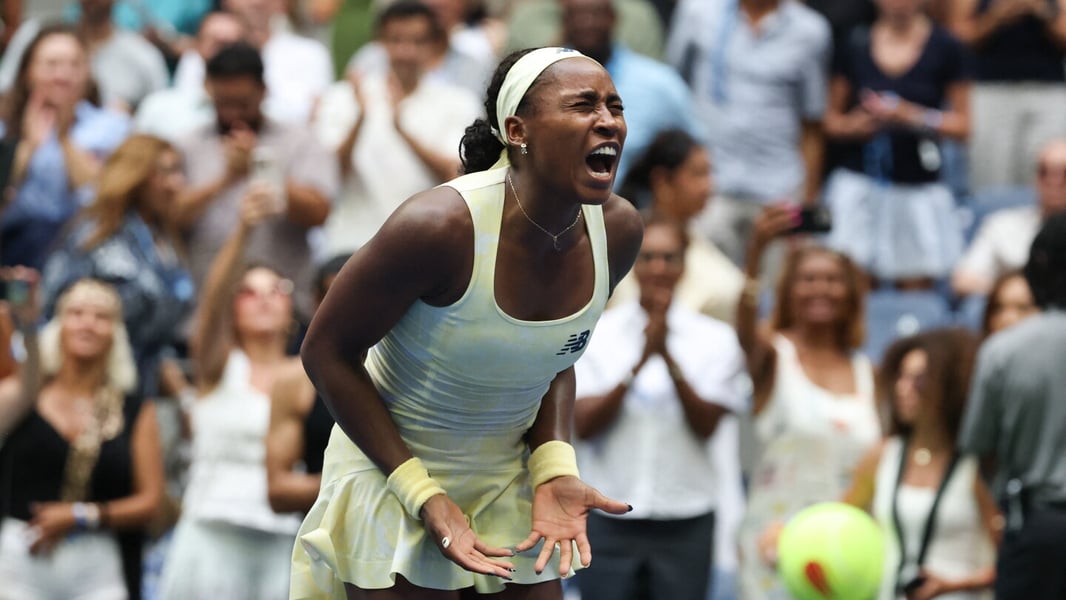

NEW YORK — The break of serve that sent Elena Rybakina to the final came and went in under two minutes. She won the last point with a volley, not a rocket serve. It was the eighth game of the third set, with Coco Gauff serving at 4-5 and Arthur Ashe Stadium already anticipating a tiebreak. A double fault on the first significant point. A forehand long on the match point. And with that, Rybakina, the world’s new No. 1, was in her first US Open final.
The final score was 3-6, 6-4, 6-4. The match ran two hours and 11 minutes. Rybakina has spent a career climbing toward nights like this one; on Saturday she will have the chance to show what she does with them.
“I’m very happy and proud,” Rybakina said on court afterward, when asked to find words for what this fortnight had just produced. “I don’t know, I can’t find other words, but I’m really very happy and proud.”
Before the first ball was struck, Rybakina had already secured the world No. 1 ranking, clinched the previous afternoon when Gauff’s quarterfinal result guaranteed their path to a semifinal. She walked onto Ashe knowing that win or lose, she would finish the year on top of the WTA rankings for the first time. She walked off it with something more tangible: a Saturday final against Aryna Sabalenka, who defeated Jessica Pegula 7-5, 6-2 in the night’s other semifinal to extend her bid for a third straight US Open crown.
Gauff won the first set with the kind of authority that suggested this might be over by 10 p.m. She took 76 percent of her service points in the opening 35 minutes, landed four aces against Rybakina’s single, and had the Kazakhstani scrambling laterally and rarely threatening at the net. Gauff had arrived at Flushing Meadows on an 11-match winning streak, and for a full set that momentum was visible in every service hold. Rybakina won only 60 percent of her service points in the first set, a figure that, for a player who has built two Grand Slam results on her serve’s reliability, read more like an alarm than a data point.
What changed in the second set was not what Rybakina did. It was what Gauff stopped doing.

The third set followed a similar outline until it didn’t. Rybakina led 5-3 and stepped up to serve for the match. What followed was the loudest the crowd had been all night: Gauff broke clean, five points and no deuces, and Arthur Ashe was suddenly alive. But then Gauff served at 4-5, and the game that had felt like a turning point became the final act. A double fault at 15-40. A forehand long. The match was over.
“I thought it was a good match,” Gauff said, sounding steadier than the outcome warranted. “It honestly came down to a couple of service games of mine in both sets, and I didn’t quite hold.”
Rybakina, standing with the courtside microphone, addressed the crowd directly. “I know you guys wanted Coco to win,” she said. Then she smiled, a gesture that read less as concession than as acknowledgment of a room she had just won something significant inside.
Her record in Grand Slam finals now reads three appearances across two surfaces. A Wimbledon title in 2022. An Australian Open final in 2023. And now Flushing Meadows at 26, with a chance to match Sabalenka’s recent dominance of this tournament on her best surface. Sabalenka arrives at the final as the two-time defending champion, the most difficult opponent women’s tennis currently offers on hard courts. Their last four meetings have gone to the player who won the third set. Rybakina is 2-2 in that count. One of them will have to change it Saturday.
Rybakina was asked about facing Sabalenka. She gave a variant of what she had been saying across the fortnight. She would prepare. She would compete. She was not going to pre-play the final in a press tent.
Rybakina ended the match with five aces against Gauff’s four, and two double faults against Gauff’s four. She won 88 points to Gauff’s 82. NBC Sports noted Gauff’s run had been extraordinary coming in, and it was, until Rybakina required it not to be. The rankings, the timing, the winning streak: none of it showed up in the scoreline after the first set. Rybakina dropped a set and then won the next two without needing a tiebreak. That is not an accident. Whether it is enough for a second Grand Slam will be answered Saturday.