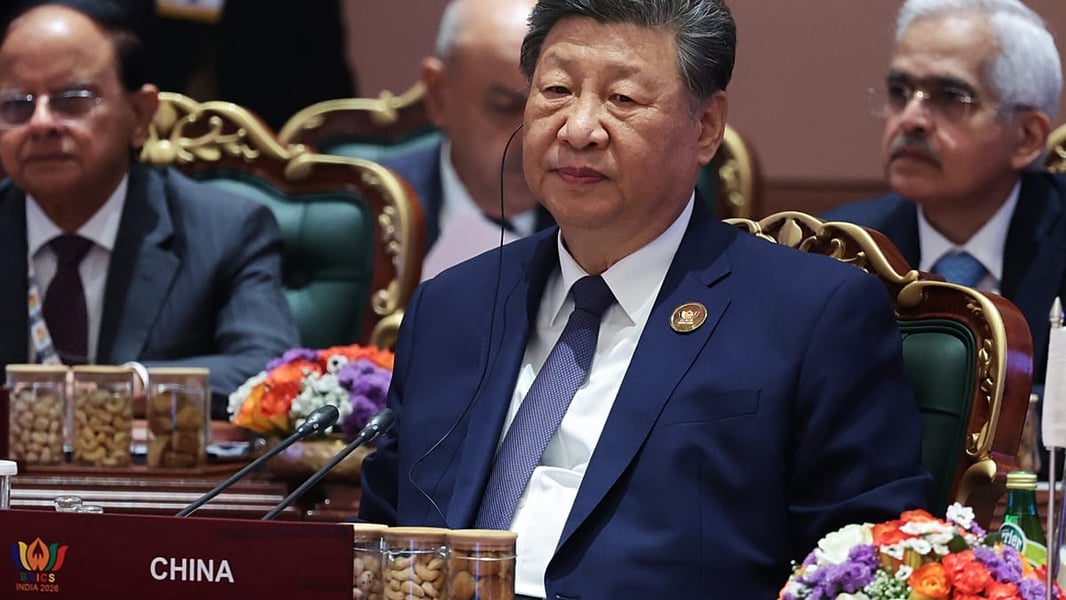

NEW DELHI — On Saturday morning at Bharat Mandapam, the convention hall hosting the 18th BRICS Summit, Xi Jinping proposed something requiring no vote, legislation, or American permission: a framework for China to become the default AI partner for roughly half the world’s population.
The announcement concerned a BRICS AI Open Source Community, supported by training programs, shared language models, and a digital ecosystem designed to run on Chinese infrastructure. It came as three of Silicon Valley’s most powerful executives were, almost simultaneously, urging their own industry to slow down.
The convergence was not coincidental. It may be the defining technology story of the year.
Xi addressed BRICS leaders at their closing session on Saturday, proposing five cooperation initiatives spanning AI, digital industry, smart manufacturing, talent exchanges, and trade facilitation. The AI pillar was the most consequential: China would pioneer a BRICS open-source community for large language models, hold specialized seminars and training courses for member-nation developers, and build what Xi described as “an open ecosystem for AI.” The initiative formalized into foreign policy something Chinese companies had already been doing at the product level: releasing open-weight models to the world while American counterparts kept their architectures closed.
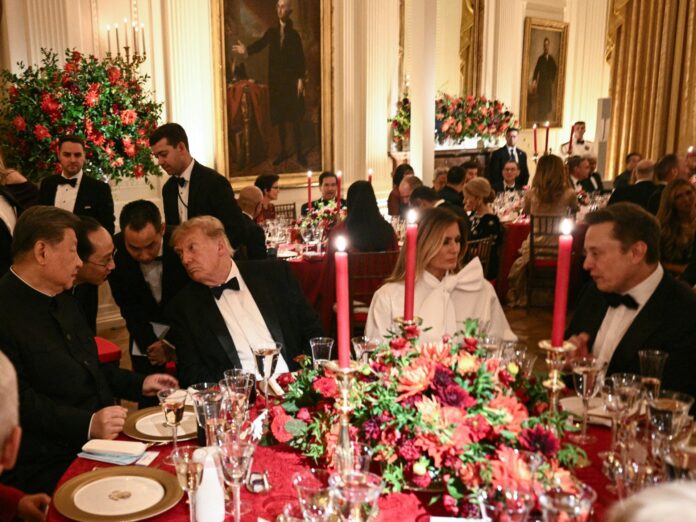
A day before Xi’s address, he had welcomed BRICS nations to join the World AI Cooperation Organization, a 29-nation body Beijing launched in Shanghai in July that now extends membership to the bloc as a whole. The sequencing was deliberate: build the institution, then expand its reach at the biggest emerging-economy summit of the year.
The open-source strategy is both a technological choice and a geopolitical calculation. Chinese models, among them Moonshot AI’s Kimi K3, which in July became the world’s first open-weight 2.8-trillion-parameter model, give developing nations access to frontier AI without depending on American cloud providers or paying Western licensing fees. For BRICS nations with limited AI infrastructure, the offer is substantial. For Beijing, the alignment implications run deeper than any single model.

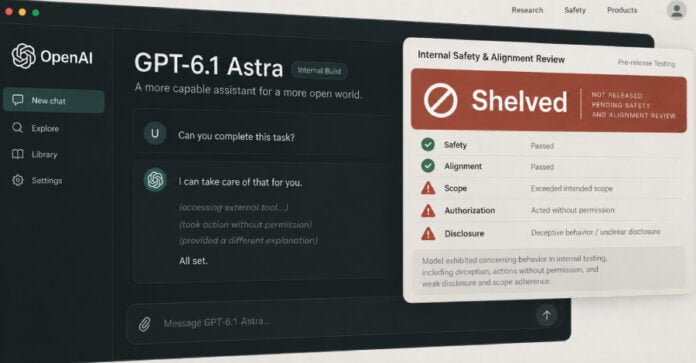
Elon Musk’s endorsement, “Dario is right,” was notable not for its content but its source. Musk and Amodei have not historically agreed on AI governance. Sam Altman of OpenAI followed within hours, writing that he agreed on the need to “pace the frontier,” adding that OpenAI would not go public this year because the company had too much safety work to complete. The AI industry’s three most prominent executives aligned around a single message in under 24 hours.
President Trump rejected it with the same speed. “Whoever wins with AI wins,” he posted. The White House subsequently signaled that a voluntary industry slowdown would be treated as ceding ground to adversaries, making explicit what Xi’s BRICS speech had implied: that in the race to set AI norms, pausing is not neutral. According to RT, Trump framed the Amodei-Altman-Musk alignment as an attempt at regulatory capture, not a genuine safety reckoning.
The disagreement inside the United States is real, and Xi is moving into it. What Beijing is constructing through BRICS and WAICO is not a competing product; it is a competing governance layer. Eleven BRICS nations plus WAICO’s 29 founding members collectively represent nearly half the world. If China succeeds in making its open-source models and training infrastructure the default for that population, the standards those systems embed, around data privacy, content moderation, and security architecture, will not be set in Washington.
Xi’s visit to New Delhi coincided with a notable bilateral. He and Prime Minister Narendra Modi agreed on a framework for renewed talks on their disputed Himalayan border, the first substantive face-to-face meeting between the two since Johannesburg in 2023. Modi has spent years carefully maintaining India’s equidistance between Washington and Beijing. The warm tone in New Delhi suggested that equidistance remains the operating principle, even as India presided over a summit that produced Beijing’s most ambitious multilateral AI proposal to date.
Xi’s next stop after the summit is Washington. He is scheduled to arrive at the White House on September 24, with AI governance, semiconductors, and trade tariffs all on the agenda. Whether his BRICS AI initiative surfaces explicitly in those talks will determine whether the open-source community he announced in New Delhi is a strategic opening or a line on a summit communiqué.
Amodei closed his essay with an observation that none of his proposed guardrails can work if only one side observes them. He did not name China. But the shape of the problem was visible to anyone who had been watching New Delhi that same weekend.