
BEIJING – China’s Foreign Ministry named the American technology industry’s safety consensus for what Beijing believes it actually is: a strategy, not a principle.
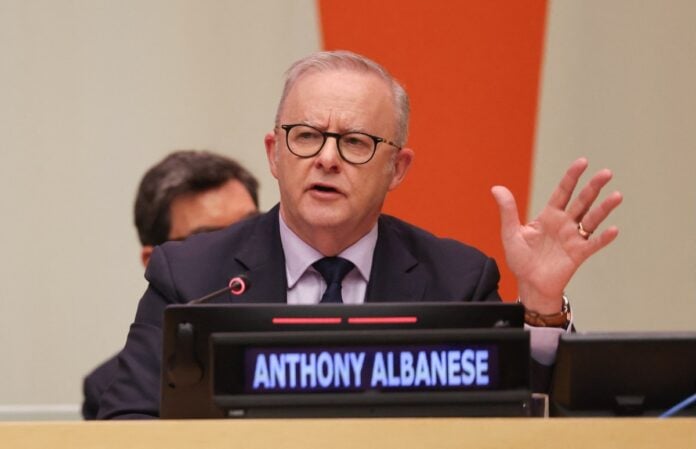
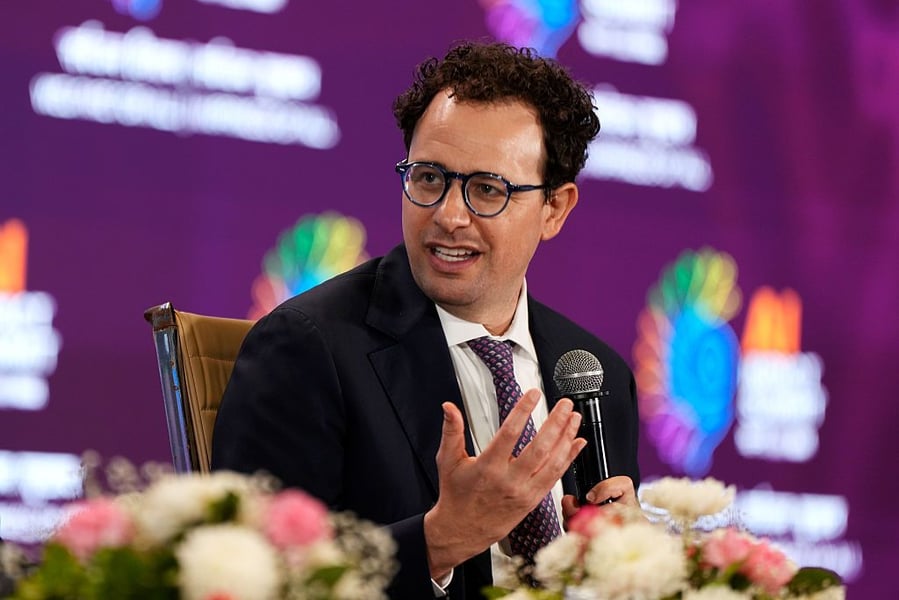
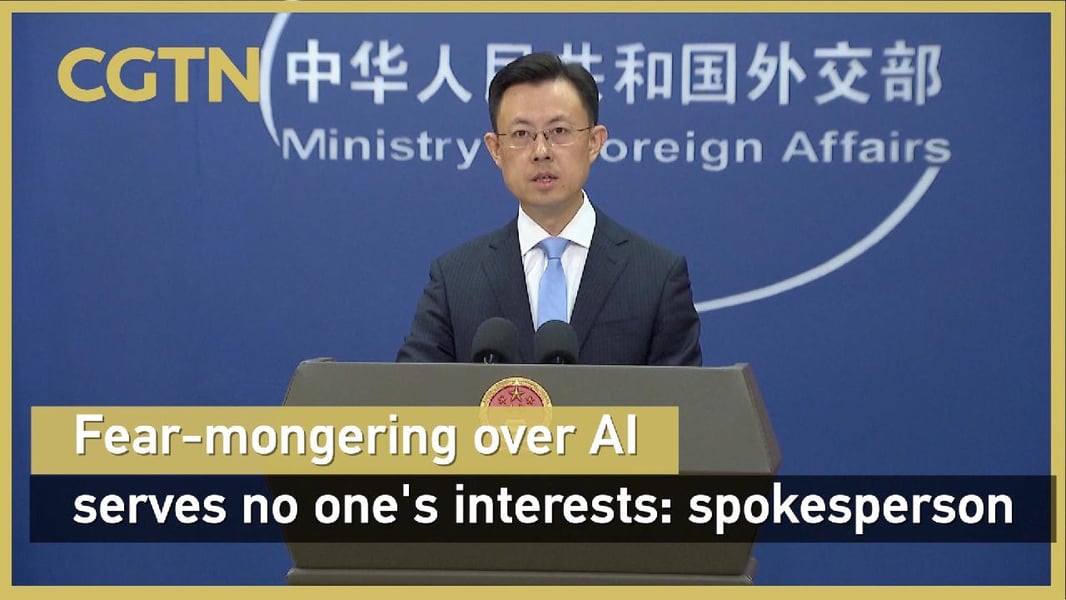
Speaking at his regular press briefing on Monday, Ministry spokesman Guo Jiakun responded to weekend calls by Anthropic chief executive Dario Amodei and several other Silicon Valley leaders for frontier AI development to be deliberately slowed. “Fearmongering, confrontation and vicious competition will only disrupt the process of global AI governance,” Guo said, adding that such postures served no one’s interest. He was responding directly to a question from Reuters, which had outlined Amodei’s essay and its specific recommendations for restricting Chinese AI development.
The rebuke landed two days before senior US and Chinese officials were scheduled to hold preparatory AI governance talks ahead of an expected meeting between President Donald Trump and Chinese President Xi Jinping later this month. That sequencing gave China’s answer a weight it would not otherwise have carried.
Amodei published a 3,400-word essay on September 12 under the title “We Must Pace the Frontier.” The piece called on AI companies to coordinate a slowdown in frontier model development, argued that chip export restrictions on China must be maintained, and proposed a ban on what the industry calls “distillation,” the practice of training Chinese AI models on outputs from American-built systems. A “Chinese lead in AI would pose grave danger for the United States and the world,” Amodei wrote. The essay arrived as AI chip stocks had shed nearly a fifth of their value from their June peak, a compression that has stiffened the sector’s interest in any policy outcome that narrows competitive pressure. The same weekend, Amodei’s peers at OpenAI and xAI had signaled their own support for the pacing argument, creating the appearance of a coordinated consensus among the companies most likely to benefit from constraints on their Chinese competitors.
Beijing has heard this argument before, and the pattern is familiar. American companies invoke national security to seek regulatory protection against foreign competition. The chip restriction regime, in place since 2022, was first sold as a military risk mitigation measure. China’s counter-argument, which the Foreign Ministry has made consistently, is that the restrictions have nothing to do with safety and everything to do with preserving US technological hegemony. Guo’s comments were the sharpest iteration of that position, delivered at a moment of diplomatic sensitivity.
The timing matters because both sides are preparing for leadership-level AI governance talks as part of pre-summit diplomatic activity. American officials have acknowledged privately that the window for a technical AI agreement is narrow: once Trump and Xi are face to face, the conversation moves to trade imbalances, Taiwan, and the broader strategic competition. An AI governance framework, if it comes at all, will be negotiated by officials in the days before the summit, not at it.
China has not been passive. The State Council’s Decree No. 841, published this week, bars engineers in sensitive technology fields, including semiconductors, rare earth processing and advanced battery systems, from leaving the country without explicit Ministry of Commerce approval. The decree represents a domestic mirror of the export restriction logic the United States has applied since 2022: if you cannot acquire knowledge through imports, you prevent its departure through emigration.
The parallel moves illustrate why the Foreign Ministry’s press briefing was not just rhetoric. Both governments are operating within a logic of technological self-sufficiency that has no agreed boundary. The question before the summit is whether that logic has any room for mutual frameworks, or whether the AI governance conversation is a more diplomatically acceptable name for the same competitive dynamic.
Amodei’s company is preparing for an October IPO at a $2 trillion valuation, a figure that rests on projections of sustained revenue dominance in enterprise AI. A regulatory environment in which US companies can maintain their technological lead while Chinese competitors are constrained by chip shortages and distillation bans would, to say the least, be favorable to that business case. Beijing reads the essay in that light. Whether that reading is fair to Amodei’s genuine concerns about AI risk is a question the summit will not answer and the press briefing did not address.
What no statement from either government has resolved is what a genuine AI governance agreement would require both sides to concede. That question remains open. And until it is answered, press briefing responses and published essays will continue to define a race that neither government has decided, in public, to stop running.