
DENVER — The Colorado Avalanche built a Stanley Cup team around the idea that Nathan MacKinnon was the franchise. They were right. MacKinnon won the Cup, won multiple Hart Trophies, and redefined what a hockey team could be built around when the center was genuinely historic. Tonight, Colorado is working on the next question, and it is considerably more complicated.
Oliver Moore is the ninth pick from 2023. The Avalanche drafted him as a center with speed unlike almost anyone in the class and the kind of two-way upside that Colorado’s system rewards. Three years into his career, he is not yet what MacKinnon is, but he is not supposed to be. He is what Colorado is building toward after MacKinnon’s peak years have passed. The CBA gives the Avalanche until midnight to offer Moore eight years. After that, the maximum drops to seven.
The cap context is the first thing anyone asks about when Colorado comes up in extension conversations. MacKinnon’s contract is the largest in NHL history. Mikko Rantanen’s runs through the same era. Cale Makar’s locks up the best defenseman in the league at the top of the market. The Avalanche front office has spent three years managing the window in which those three contracts coexist with a roster capable of competing for another Cup. Moore sits on the other side of that window. He is what Colorado is paying for after the current core reaches the end of its run, which means Moore’s second contract is the most important bet the franchise has left to make tonight.
The Carlsson number has shaped every negotiation in this class. Leo Carlsson, the third pick in 2023, signed a five-year extension with Anaheim in July at $18 million per year. For Moore, who went ninth and whose NHL career numbers are more modest than Carlsson’s in terms of raw production, the Carlsson deal sets a ceiling as much as a floor. Moore’s camp is not negotiating from $18 million down. They are working from what Moore’s market value actually is: a player with elite skating, strong defensive instincts, and three NHL seasons that have not yet separated him from the rest of his draft class in statistical terms. The argument for a long-term deal is trajectory, not present production. Colorado signed into that argument the night they took him ninth.
What Moore has brought to Colorado over three seasons is legitimate. He arrived as the fastest skater in the 2023 class by most measurements, and that speed has translated directly into his NHL game. His defensive tracking in the neutral zone is above average for a player his age. He generates offense through transition, through the chaos that fast forechecking creates rather than through the kind of sustained zone time that separates franchise centers from very good ones. The Avalanche drafted him knowing exactly what they were buying. The question tonight is what three years of that development is worth when multiplied by eight.
Colorado has the cap structure to make this work, though not without planning. General manager Chris MacFarland has moved pieces in each of the past two offseasons specifically to create the flexibility needed for this conversation. It is not an accident that the Avalanche arrive at this deadline with enough room to offer a meaningful number. MacFarland built the roster backward from this moment. Whether the number Colorado can offer matches the number Moore’s camp believes he has earned is the only question left tonight.
Neither MacFarland nor Moore’s representation has said publicly where the talks stand. The Avalanche, like every franchise in this position, have used the same phrase all summer: they want Moore here for the long term. That phrasing covers a range of outcomes from a signed extension to a respectful impasse. What it does not tell you is how close the two sides are to the same number, or whether tonight resolves anything at all.
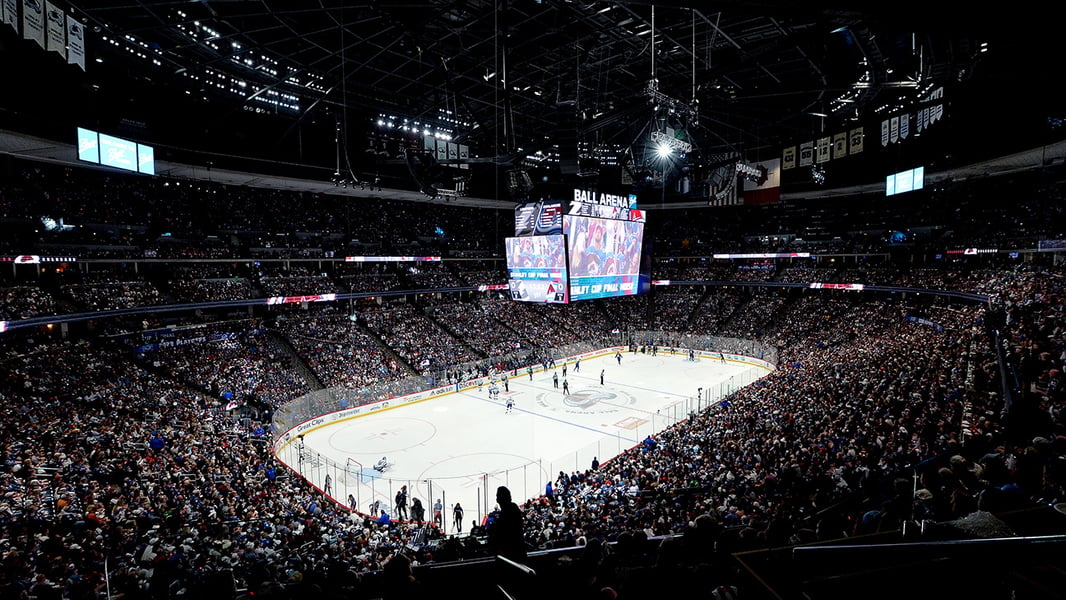
Moore has not said whether he wants to stay in Colorado. He is 21, in the third year of his entry-level contract, playing for a franchise that just spent the past decade demonstrating how to build around a generational center. The Avalanche have given him the best possible context for understanding what the organization does with that kind of player. Whether he has decided that Denver is where he wants to spend the next eight years of his career is not yet public. What is public is that Colorado has done everything in its power to make the answer yes before midnight.
The collective bargaining agreement‘s midnight rule does not account for the specific geometry of Colorado’s situation: the legacy of MacKinnon, the weight of the Cup, or the reality that Moore is being asked to follow the hardest act in the sport. It does not ask whether the nine picks between Bedard and Moore represent a gap in player value that the market can actually price. It asks only whether both sides can agree on a number before midnight. If they can, the next era in Colorado starts tonight with eight years on the clock. If they cannot, MacFarland has until Moore reaches free agency to revisit the question with less leverage and a shorter maximum.