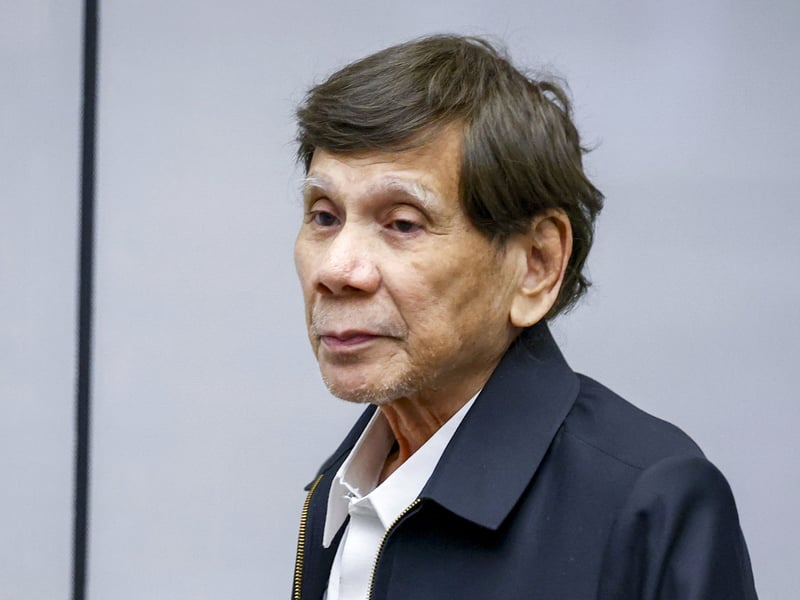

THE HAGUE — For the first time in eighteen months, Rodrigo Duterte sat in a courtroom and said nothing.
The 81-year-old former president of the Philippines appeared in person on Tuesday at the International Criminal Court in The Hague, his chin resting on his hand, headphones on, dressed in a dark suit and white shirt with no tie. He followed proceedings in silence as judges and lawyers discussed evidence disclosures, witness schedules, and the calendar for a trial set to open November 30. Supporters who had gathered outside the court saw him smile and wave before proceedings began. Inside, he showed no emotion and offered no statement throughout a session that lasted just over an hour.
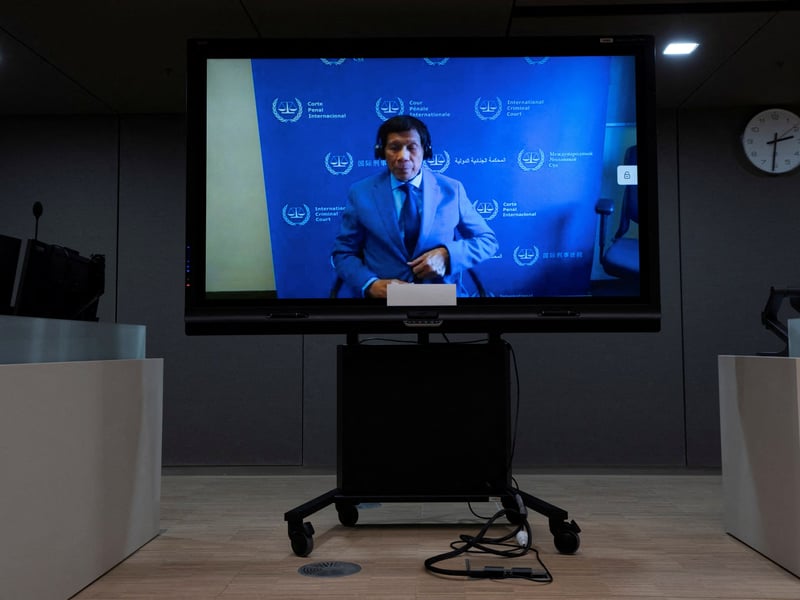
The appearance marked the first time Duterte had physically entered the ICC courtroom since his arrest in the Philippines in March 2025. He had skipped the court’s first two status hearings, citing cognitive decline. When he eventually appeared via video link in earlier proceedings, his lawyers questioned whether he was well enough to stand trial. On Tuesday, that argument came under pressure from what the courtroom itself showed: a former head of state, attending an international tribunal, apparently following every word.
Trial Chamber III ruled at the close of proceedings that Duterte would remain detained at the ICC facility in The Hague. Acting Prosecutor Mame Mandiaye Niang urged the judges to maintain that order, telling the chamber there was nothing in the current record that warranted changing the terms of the accused’s detention. The chamber agreed, ruling that circumstances did not justify release.
Tuesday’s session was the third status conference in the case, a procedural hearing designed to align the parties on logistics rather than argue the merits. The judges addressed the prosecution’s evidence disclosures, the defense’s access to witnesses, and the schedule leading up to November 30. That date was set by Trial Chamber III after Pre-Trial Chamber I confirmed all charges on April 23, 2026, finding substantial grounds to believe Duterte played a direct role in the murders of 76 named individuals and the attempted murder of two others.
What those charges contain is deliberate in its precision. Three counts of crimes against humanity were confirmed, covering not the abstraction of a “war on drugs” as policy language but a killing operation conducted over nearly a decade, from Duterte’s time as mayor of Davao through to the end of his presidency in 2022. Human Rights Watch noted at the time of charge confirmation that the proceedings represented the first ICC trial of a former Asian head of state.
How judges resolve that evidentiary gap will shape the case significantly. The confirmation covered a specific set of named victims, but the broader pattern of killings is central to the prosecution’s argument: what occurred was not law enforcement operating under pressure but a state-directed system.
Duterte made no comment in the courtroom. His earlier claim of cognitive decline drew scrutiny from observers who noted that he had continued giving media interviews from detention and publicly discussing his legal situation throughout the period when he declined to appear in court. His lawyers have not withdrawn the health argument; a fitness assessment ordered by the court has not yet returned a final result.
He was arrested in March 2025 after the ICC issued a warrant in 2023. The Philippines under President Ferdinand Marcos Jr. cooperated with the surrender, a significant shift from Duterte’s own position. He had withdrawn the Philippines from the Rome Statute in 2019 specifically to escape ICC jurisdiction, a maneuver the court ruled insufficient: withdrawal does not extinguish jurisdiction over crimes committed while a state was still a member.
The political fallout extends beyond the former president. His daughter Sara Duterte, who served as vice president under Marcos before their alliance collapsed, faces her own separate proceedings. The Philippine Senate opened an impeachment trial against her earlier this year, underscoring how fully the Duterte family’s political hold on the country had unraveled since 2022. Sara Duterte has denied the allegations against her.
The jurisdiction question is not unique to the Philippines. Venezuela similarly withdrew from the court under Maduro, citing bias, though withdrawal did not end the ICC’s ability to investigate acts committed during the period of membership. The pattern of states attempting withdrawal as accountability closes in has not produced the results those governments sought.
What November 30 will look like depends on questions the September 16 hearing left open. The fitness assessment result is still pending. The defense has offered no formal indication of its trial strategy. Duterte’s lawyers retain the option of challenging the court’s procedural calendar or seeking a modification of the detention order before the trial begins.
What is settled is the threshold already crossed: a former president charged with crimes against humanity will stand trial before an international court. Whether the proceedings run smoothly or face further delays, it is a development that has rarely occurred in the court’s history, and one whose weight extends well beyond the Philippines.