
PHILADELPHIA — Ed Sheeran walked onto the stage at Lincoln Financial Field on Saturday night alone.
The Loop Tour, his first major stadium run in three years, was supposed to feature a rotating roster of supporting artists through its North American leg. Instead, the Philadelphia date began two and a half hours late, with no warmup act and a singer who, before playing a single note, needed to address something that had been building all week.
“The situation in Gaza is catastrophic,” Sheeran told the crowd, standing in the spotlight of a stadium he was filling by himself. “It is unjustifiable. It is disproportionate. This is a humanitarian issue and I cannot hide how I feel about it anymore.” According to Al Jazeera, the statement came before Sheeran played a single song.
The words arrived from a performer who has spent his career cultivating the image of a workingman pop star, someone whose music traces heartbreak, marriage, and the quieter textures of English life with deliberate distance from the news cycle. What changed this week was not Gaza itself, which has been burning for nearly two years. What changed was a cascading boycott that stripped the Loop Tour of every supporting act it had, and turned the concert itself into a question Sheeran could no longer avoid answering.
The sequence started on September 15, when Macklemore, the Seattle-born rapper scheduled to open the North American leg, withdrew from the tour after reporting by The National and NPR indicated that Robert Kraft, the New England Patriots owner and a major stakeholder in tour promoter Messina Touring Group, had pressured Sheeran’s management to cut him. Macklemore released “Hind’s Hall” in May 2024 during campus protests over the Gaza war, naming the Palestinian dead and calling out institutional silence directly. In Kraft’s reported view, that history made Macklemore commercially incompatible with the tour.
Within thirty-six hours of Macklemore’s departure, Beoga, the Galway-based folk quartet who had collaborated with Sheeran for more than a decade, played on the recording of “Galway Girl,” and toured with him through three previous album cycles, announced they were out as well. Their statement was brief and named no individuals. Finneas, the Grammy-winning producer and musician, followed the same day. “This is an act of silencing,” he wrote on social media, “and I will not participate in it.” Violinist Aaron Rowe departed shortly after.
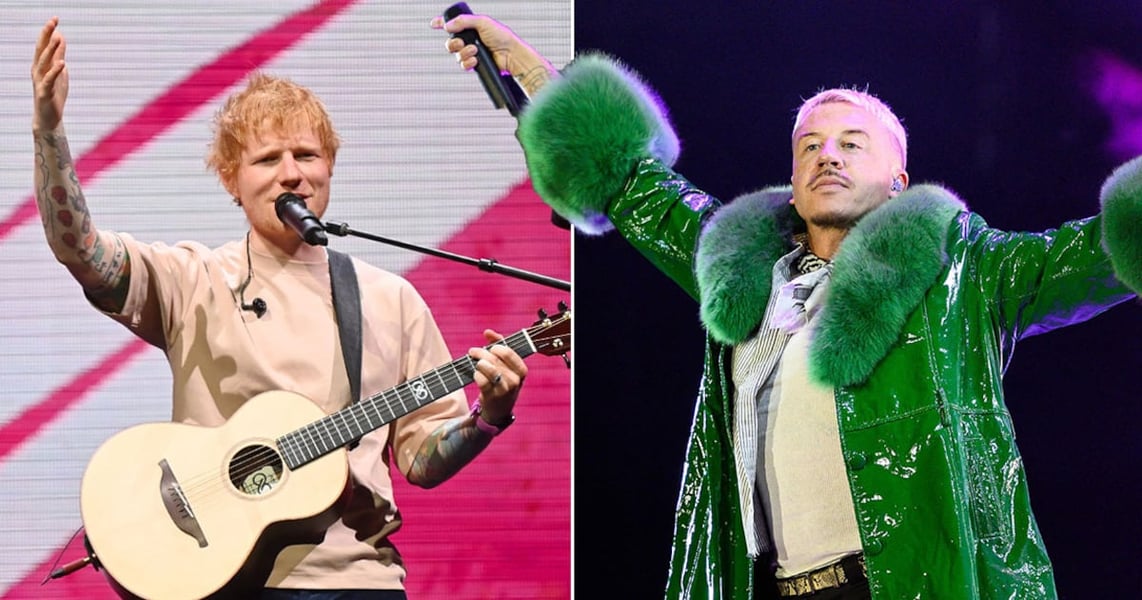
The Loop Tour had been conceived as a showcase for Ed Sheeran’s sixth studio album, supported by the commercial machinery of a career that has produced more weeks at No. 1 on the Billboard Hot 100 than almost any other artist of the streaming era.
But none of that infrastructure was designed to absorb this kind of pressure. With each withdrawal, the same question narrowed around Sheeran: what does he believe, and is he willing to say it publicly?
His answer came Saturday night from the stage at Lincoln Financial Field—not in a statement drafted by a publicist. Sheeran did not mention Kraft or Messina Touring Group, nor did he directly invoke Macklemore or the week’s controversy.
Instead, he described Gaza as a humanitarian emergency rather than a political conflict or a war between symmetrical sides. He then performed for nearly three hours, filling the time his supporting acts would have occupied.
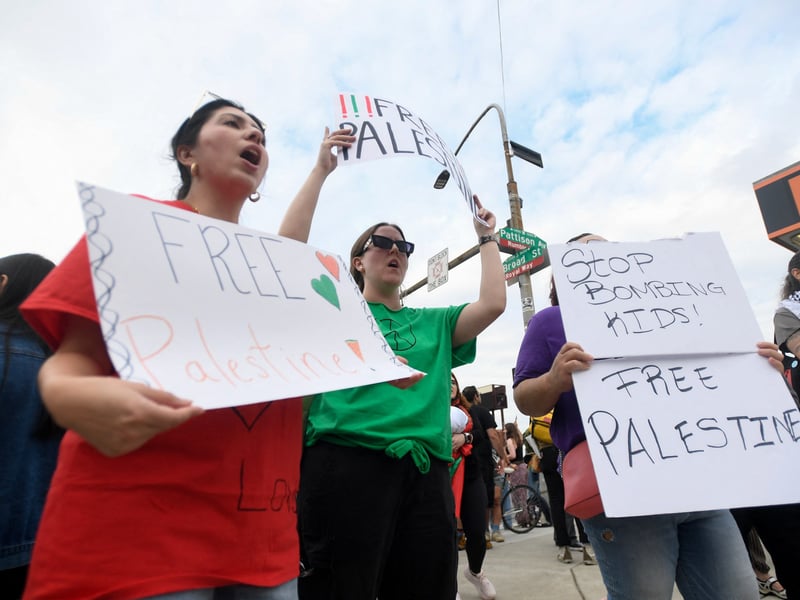
About fifty pro-Palestinian demonstrators gathered outside the stadium before the show, calling on Sheeran to make a public statement and demanding accountability from the tour’s financial backers. The demonstration was peaceful and dispersed before the concert ended.
The Loop Tour’s first solo night placed Sheeran inside a broader pattern. Western governments have shielded Israel from accountability throughout the Gaza campaign, providing diplomatic cover while individual artists and institutions absorb the costs of speaking publicly. In the same week that Sheeran’s tour collapsed around him, Palestinian representatives found the United Nations General Assembly closed to their direct address, even as heads of state from the Gulf and Washington met on the sidelines in New York.
What Sheeran’s Saturday statement means in practical terms is not yet clear. He made no commitment to restore Macklemore or the other departing artists to the lineup. He offered no criticism of Kraft or Messina by name. He described personal distress and delivered it publicly in front of a stadium audience, and then moved on to the music.
The pattern Sheeran joined Saturday night is one his industry peers who spoke earlier on Gaza know well: the statement is only the beginning of the question. What follows, whether his management relationships shift, whether the tour’s commercial backers respond, whether the artists who left are invited back, will determine whether Philadelphia was a turning point or a single night that disappeared quietly into the tour’s back half.
Kraft has issued no public statement on the reported pressure campaign. Messina Touring Group has not confirmed or denied the account of events. Sheeran’s representatives did not respond to inquiries before publication.
The Loop Tour continues next week. For now, Sheeran is its only act.