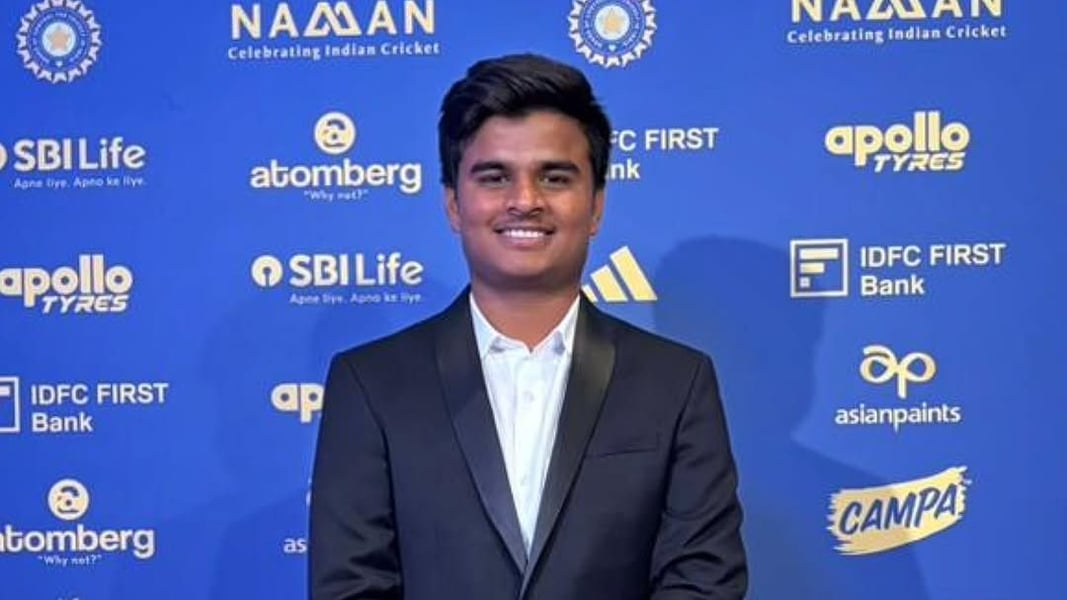
Quick Take — Yashbardhan Chauhan struck 122 off 100 balls and took two wickets in the same match at Niranjan Shah Stadium on Monday, powering India Under-19 to a 103-run win over Australia Under-19 and an unassailable 2-0 series lead. The victory in Rajkot featured contributions from Aaryavir Sehwag — son of Virender Sehwag — and sealed a Youth ODI series defined as much by the legacy on display as the cricket itself.
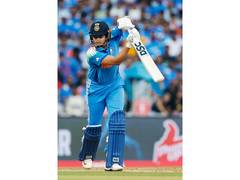
RAJKOT — The number that told the story was 100, arrived at off the 96th ball Yashbardhan Chauhan faced, driven through the covers with a right-handed wristwork that carries no apology. When the ball reached the fence at Niranjan Shah Stadium on Monday afternoon, Chauhan spread both arms, looked at the sky, and the India Under-19 crowd answered. Australia Under-19 had just lost.
Not literally, not yet — but in the way that innings contain their conclusions before they are formally confirmed. Chauhan would go on to 122 off 100 balls, with 15 fours and two sixes, and later return with the ball to take 2 for 56. The match result — India Under-19 won by 103 runs, Australia bowled out for 238 in reply to 341 for 7 — was settled somewhere around the 30th over of the first innings, when it became clear the target was going to be unreachable.
VK Vineeth made 87 off 92 balls, sharing a 132-run partnership for the third wicket with Chauhan that turned an adequate platform into an imposing one. Aaryavir Sehwag opened the batting and contributed 47 off 48 at the top of the order — the kind of innings that costs you nothing in economy and gives the middle order room. Sehwag is the son of Virender Sehwag, the former India opener whose attacking instincts redefined what batting at the top could look like, and the resemblance in tempo is not entirely coincidental. Chigurupati Venkata led the bowling with 3 for 64; Chauhan’s 2 for 56 completed the all-round accounting.
India sealed the three-match Youth ODI series 2-0 with a game to spare. The first match, on September 18, had been a rain-shortened twenty-over encounter that India won by seven runs, with Anvay Dravid — son of former India captain Rahul Dravid — playing an incendiary cameo of 38 off 18 at number six to push the total past what Australia could chase. Two matches into this bilateral, the legacy dimension has been impossible to avoid: the sons of Sehwag and Dravid in the same dressing room, winning for India below the senior team, earning what they carry.
That lineage matters less than the cricket, or should. What the bilateral has demonstrated — beyond the names — is that India Under-19 are producing exactly what the BCCI’s pipeline is designed to deliver: batters who can build totals above 300, all-rounders who contribute across both innings, and batting depth that survives the fall of a top-order wicket without structural collapse. India won the ICC Under-19 World Cup in Harare in February 2026, their sixth title, by 100 runs over England. This bilateral is the first organised test for at least part of that post-tournament generation.
For Australia Under-19, the two-match deficit reflects a gap that outgrows the bilateral. Their batting struggled to build partnerships in both games, and a best score of 43 in Monday’s reply speaks to fragility against India’s pace-and-spin mix that will require structural attention before the next ICC cycle. The third Youth ODI — part of a bilateral scheduled by the BCCI across all three Rajkot fixtures — is on September 24. Australia will have the chance to close with a consolation win, but the series outcome will shape how Cricket Australia assesses this generation’s readiness for the next ICC U-19 cycle.
What Chauhan’s all-round performance opened on Monday is a question the Indian selection system does not yet have to answer: when does a 100-ball century in a bilateral translate into a domestic season with a senior franchise, and from there into the periphery of a national squad? The pipeline is long enough that Monday’s innings registers as evidence rather than proof. At 19, batting first against an Australian attack in Rajkot, evidence is what you are asked to produce. Chauhan produced it.