
Huawei’s foldable phones have moved beyond a small experimental product line, at least by the company’s own shipment tally. An executive says cumulative shipments have passed 20 million units, a milestone that spans several years of devices rather than one year of consumer purchases.
Huawei Central reported on October 12 that Li Xiaolong, chief technology officer of Huawei’s Consumer Business Group, disclosed the figure. The outlet’s headline describes phones as sold, but its account of Li’s statement uses shipped. This article follows the shipment wording because the two measures are not interchangeable.
The tally is a company claim relayed by the specialist outlet, not an independently audited retail-sales total. The report does not provide a model-by-model breakdown or a methodology showing how shipments were counted. It also attributes a market share above 70% in the first half of this year to Huawei without clearly identifying the geography or the basis of that percentage. That figure cannot safely be presented as Huawei’s global foldable share.
Independent market research measures a different slice of the business. In a May 27 summary, TechInsights put Huawei’s global foldable shipment share at 54.4% in the first quarter of 2026 and Samsung’s at 22.8%. A quarterly global estimate is not directly comparable with an unspecified first-half share, but it shows why the denominator and period matter.
The broader category has not grown in a straight line. Omdia reported in August that worldwide foldable shipments reached 18.2 million units in 2025, then fell 21.6% year on year to 5.1 million in the first half of 2026. Huawei’s cumulative 20 million figure therefore should not be compared with those annual or half-year totals as though they cover the same interval.

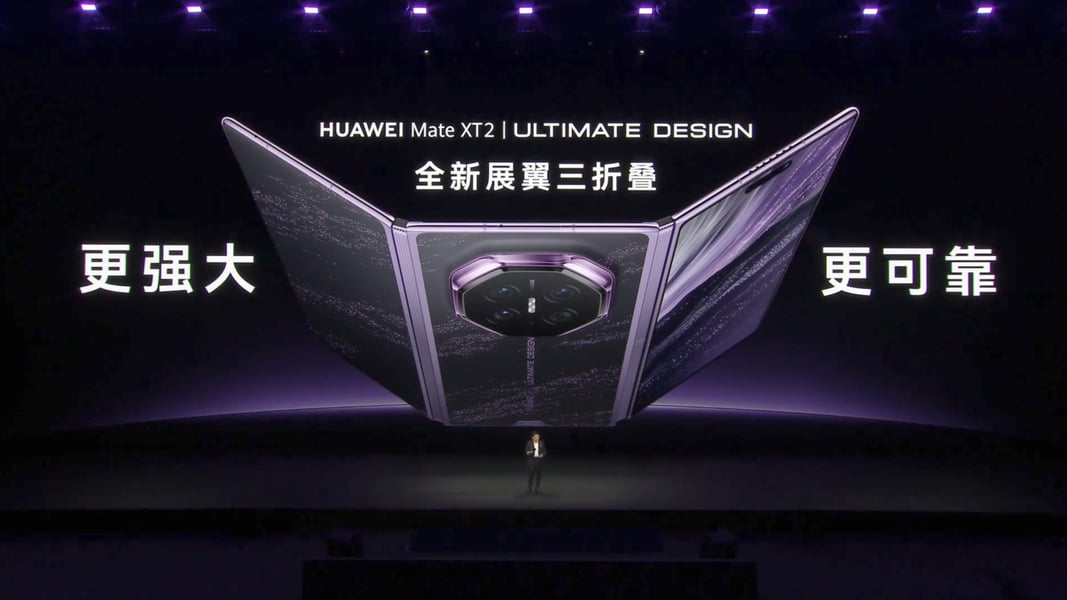
That design race follows years of changes to hinges, displays and foldable phone layouts. Huawei Central dates Huawei’s entry into the category to the Mate X in 2019 and points to the newer Mate XT 2 and Pura X Max as examples of its expanding range. The reported shipment milestone encompasses that longer history, not just the latest launches.
Costs still limit how far the category can travel. Omdia forecasts more than 22 million global foldable shipments in 2026, but says even 45 million units in 2030 would represent less than 3% of the worldwide smartphone market. Large flexible screens, specialized glass and complex hinges keep component costs high. Its forecast is an outlook, not an already achieved shipment result.
For Huawei, passing a cumulative threshold does not answer whether current demand is accelerating, which model generates the most revenue or how many shipped devices have reached end users. Those questions need comparable period-by-period figures. The milestone establishes the scale Huawei says it has reached; the report’s unqualified market-share percentage remains a separate claim requiring clarification.