PASADENA, Calif. — A lander built to carry what NASA says would be the largest commercial payload ever delivered to the Moon has been spun, shaken, deafened, baked and frozen, and NASA says it passed. What the agency has not said is when it flies beyond “later this year.”
Voyager Technologies’ Griffin-1 has finished environmental testing at NASA’s Jet Propulsion Laboratory, the agency announced on October 13. The 2,789-pound (1,265-kilogram) spacecraft is slated to land in Nobile Crater near the lunar south pole and deliver more than 1,100 pounds (455 kilograms) of cargo, which makes it what NASA calls an infrastructure-class lander.
Its manifest is the reason for the care. Griffin-1 carries 10 science and technology demonstrations from six countries, including Astrolab’s FLIP rover, which NASA says would be the largest commercial payload ever delivered to the Moon. It is part of NASA’s Commercial Lunar Payload Services program and the Moon Base effort, which TEH covered when the agency awarded nearly $1 billion in contracts for lunar rovers and landers.
The testing began in July, according to NASA’s account, after the lander made a cross-country trip from Voyager Lunar Systems’ facilities in Pittsburgh. On July 20 it was spun on a table to look for unexpected wobbles. In an anechoic chamber lined with foam spikes it was checked for electromagnetic interference, and during vibration testing hundreds of sensors tracked it as a shaker rattled it in three directions.
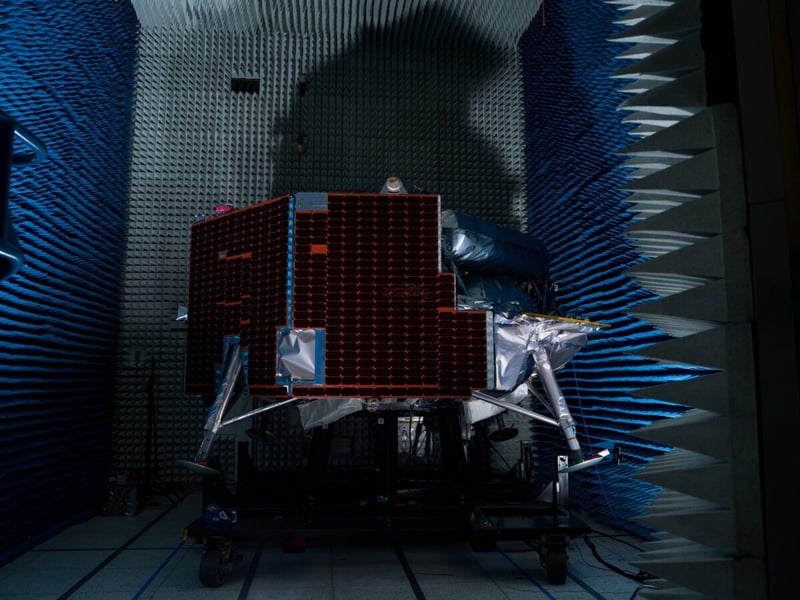
On August 12, giant horns powered by compressed nitrogen blasted it with up to 153 decibels to mimic the roar of launch. The last stage, in the 25-Foot Space Simulator, a thermal vacuum chamber on the National Register of Historic Places, ran about two weeks. There the lander alternately baked at up to 167 degrees Fahrenheit (75 Celsius) and froze at minus 148 (minus 100 Celsius).
“Seeing the spacecraft complete this demanding environmental testing is a major milestone,” said John Thornton, an executive vice president at Voyager. Charles Whetsel of JPL said the lab has been testing robotic explorers since the 1960s.
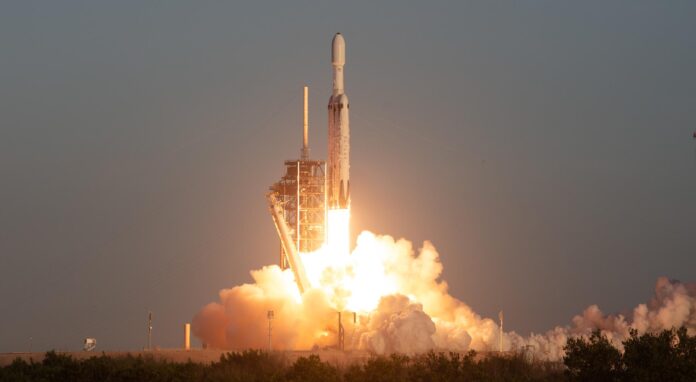
Griffin-1 is back at Voyager Lunar Systems for final assembly, with launch-readiness operations next and then shipment to Cape Canaveral. It is expected to ride a SpaceX Falcon Heavy.
NASA’s account says the tests were passed but gives no margins and no launch date, so the claim that the lander is ready to survive space rests on the agency’s word alone.