HAMPTON, Va. — NASA says small prototype batteries have worked down to minus 80 degrees Celsius in a vacuum chamber, which is still 120 degrees warmer than the night at the Moon’s South Pole.
The cells belong to a project called SPEARS, short for Solid Power for Extreme Environment Adaptability and Resilience in Space, led by NASA’s Glenn Research Center in Cleveland. Their difference from a phone or laptop battery is the electrolyte. A conventional lithium-ion cell uses a liquid that would freeze in lunar cold, stop working in 100-degree lunar day and boil away in vacuum; SPEARS replaces it with a solid ceramic or polymer, NASA said in a release published Wednesday.
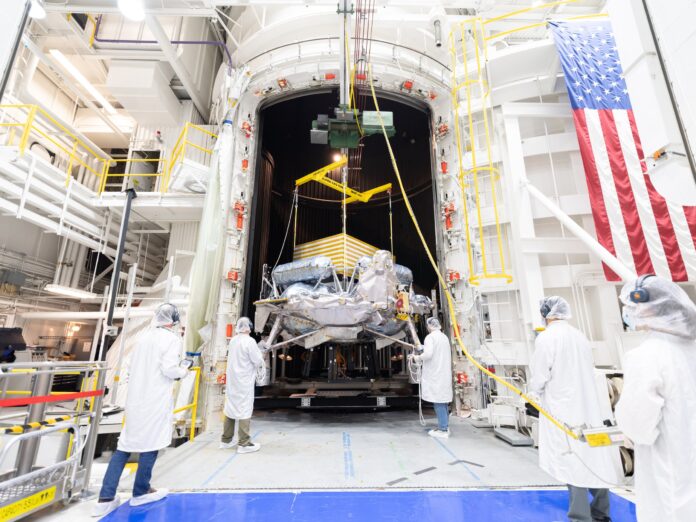
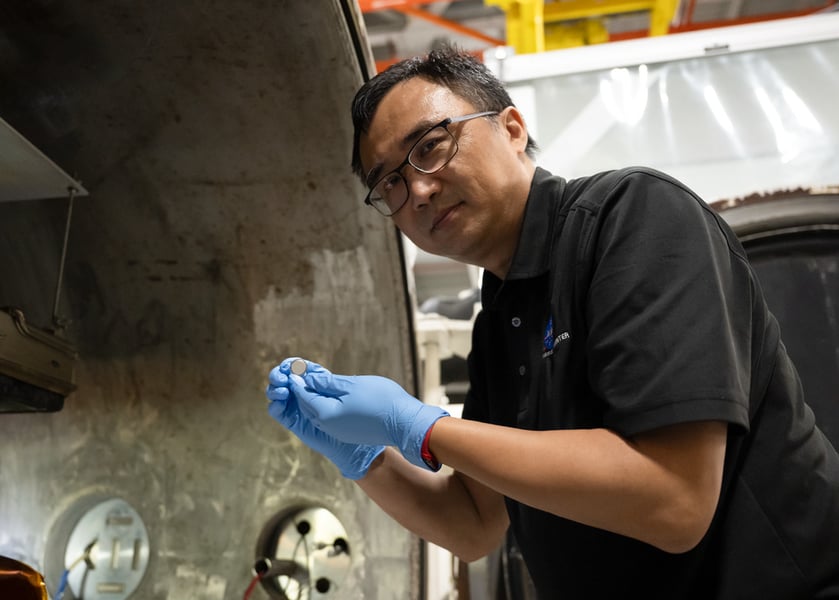
At NASA’s Langley Research Center in Hampton, thermal vacuum tests showed the coin-cell prototypes operating well up to 80 degrees Celsius and down to minus 60, with slightly reduced performance to minus 80. After exposure to extremes from 100 degrees down to minus 170, they were undamaged. “We proved for the first time that these cells can work down to minus 80 degrees Celsius,” said Yi Lin, the project’s testing and research lead at Langley, who added that he is confident the range can be widened.
The numbers also show the gap. NASA puts the South Pole’s night at minus 200 degrees Celsius, colder than anything the cells were reported to have been exposed to, and the release says even solid-state batteries will not function at minus 170, only survive it. Small heaters would bring them back up to operating temperature, which NASA says could still cut the heavy thermal-management hardware that spacecraft and habitats now carry. The release gives no figures for energy density, power or how many charge cycles the cells survive.
What NASA wants them for is concrete: drills in shadowed craters, rovers, astronauts’ emergency power packs and long-duration science instruments. “We will need them on the Moon, too,” said Donald Dornbusch, the principal investigator at Glenn, “and these batteries will be required to operate reliably and safely in this harsh environment.” Ames is developing flight hardware, and the project, which began in 2026, is for now focused on technology development, with a possible shift to commercial partners later.
The timing sits against a schedule that has moved before. TEH reported in June that NASA named the Artemis III crew for an Earth-orbit mission, not a landing. NASA has now scheduled a briefing for October 23 at Kennedy Space Center on how plans to return astronauts to the lunar surface by 2028 are progressing.
A battery that works at minus 80 on a bench has not yet met a night at minus 200, and the release does not say when it will.