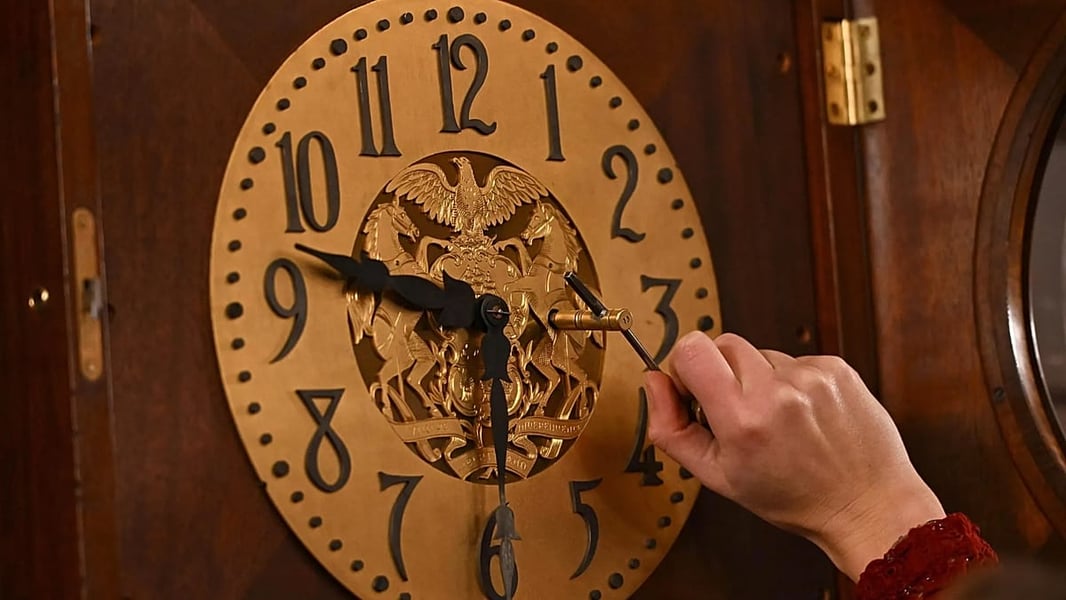

Computer networks and other systems that depend on precise timing will no longer face irregular leap-second adjustments once a new global timekeeping rule takes effect next May. The change does not tell households to move their clocks forward or back an hour.
The General Conference on Weights and Measures adopted the decision in Versailles on October 15. The International Bureau of Weights and Measures published the resolution, setting May 20, 2027 as the start of continuous Coordinated Universal Time, or UTC.
UTC follows atomic time, while UT1 measures Earth’s rotation. The National Institute of Standards and Technology explains that leap seconds keep their difference within 0.9 seconds. The corrections have been irregular because the planet does not turn at an entirely uniform rate.
Euronews reported that 27 leap seconds have been added since 1972, most recently at the end of 2016. An added second makes an exceptional minute last 61 seconds, a small change for people but a difficult event for interconnected machines to handle consistently.
The resolution also points to the prospect of a negative leap second, which would remove a second rather than add one. That has never been applied, and the decision cites the disruption it could cause to infrastructure unprepared for it.

Variations in Earth’s rotation remain scientifically important. Ending leap seconds changes the treatment of those variations in UTC; it does not change the planet’s motion.
The conference had agreed in 2022 to increase the permitted difference in or before 2035. This week’s decision accelerates that timetable. Transport, energy distribution, telecommunications and space projects need uninterrupted UTC, while differing providers’ workarounds can leave systems keeping inconsistent time.
The resolution published by the International Bureau of Weights and Measures increases the maximum permitted UT1-UTC difference to 3,600 seconds, or one hour. It says that margin allows continuity for several centuries. This is a tolerance, not a scheduled one-hour clock jump in 2027.
Seasonal daylight-saving changes are separate. They alter local civil-time offsets, not the leap-second mechanism. The resolution notes that time-zone choices already place some civil clocks more than an hour away from local apparent solar time.
Astronomy and other applications requiring Earth-rotation time will still need the UT1-UTC difference. The resolution says that information remains available through satellite-navigation messages and specialist internet services. Removing repeated adjustments from UTC does not end the measurement of Earth’s rotation.