
Asian stock markets recovered on Monday, November 9, after last week’s sharp sell-off in artificial-intelligence shares, but the rebound lost momentum in parts of the region as investors continued to weigh chip demand, technology valuations and the cost of building AI infrastructure.
Japan’s Nikkei 225 finished 2.3% higher at 58,775.50, according to an Associated Press market report. South Korea’s Kospi, however, reversed its morning advance and was down 0.8% at 5,018.85 in the same account. The divergent moves underscored how quickly sentiment continued to shift after a turbulent week.
Taiwan and Japan lead the recovery
Taiwan’s Taiex was up 4.9% in AP’s later report, with Taiwan Semiconductor Manufacturing Co. gaining 4.7%. The chipmaker’s recovery helped lift a market that had suffered a particularly severe retreat during the previous week.
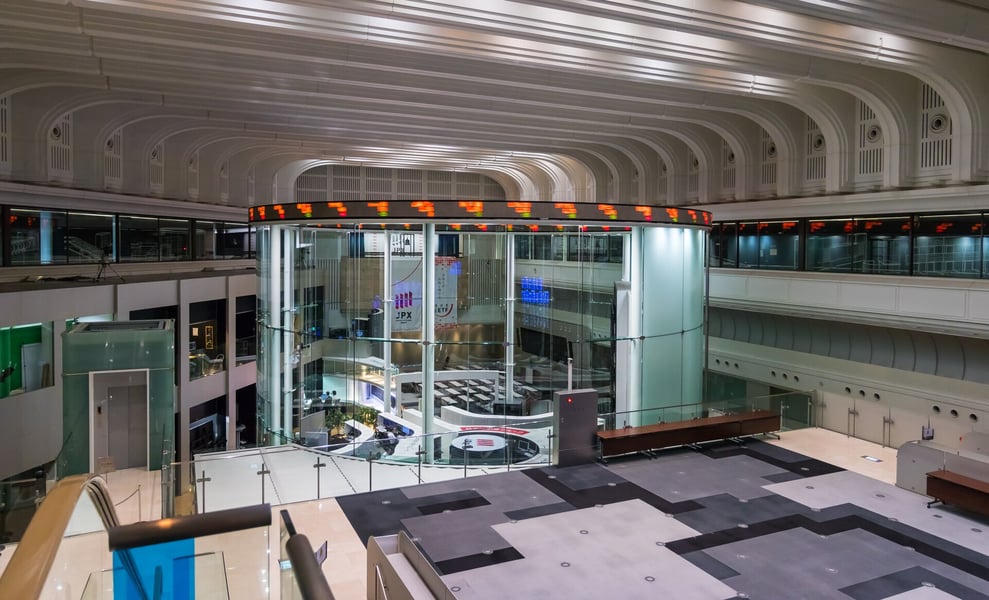
In Tokyo, chip-equipment maker Tokyo Electron rose 2.8%, while semiconductor-testing company Advantest gained 1.3%. Both had surrendered larger advances recorded earlier in the session, according to AP.
Not every major Japanese technology name joined the rally. SoftBank Group fell 4.2% as it sought to salvage a $5.4 billion robotics deal with Switzerland’s ABB after Chinese regulators rejected it, AP reported.
In South Korea, Samsung Electronics gained 0.6% and SK Hynix rose 0.4% even as the wider Kospi moved lower. Those modest individual gains contrasted with the stronger increases seen earlier in the day.
Early gains tell only part of the story
Market readings varied significantly during Monday’s trading. An earlier Reuters report carried by CNA put the Nikkei’s gain at 2.5% and Taiwan’s advance at about 2.5%, while South Korean shares were making small gains.
At that stage, MSCI’s broadest index of Asia-Pacific shares outside Japan was up 0.8%, following a 4.6% fall the previous week. Taiwan had just recorded its heaviest weekly decline in two decades, Reuters reported.
Those earlier readings are intraday snapshots, not closing results. In particular, South Korea’s subsequent reversal means the session cannot be described simply as an uninterrupted rally across the region.
AI spending remains the central question
The recovery followed a partial rebound in AI-related shares on Wall Street on Friday. AP linked the earlier selling to concerns that Democratic victories in the US midterm elections could slow construction of AI data centres.
Reuters reported that rising interest rates had already put pressure on the AI trade before the election results intensified worries about regulation of artificial intelligence and data centres. Investors were also questioning whether demand for chips and infrastructure would justify the sector’s investment commitments.
That leaves upcoming corporate results as an important test. Reuters identified CoreWeave, Applied Materials and Cisco Systems among the technology companies due to report during the week, with their results expected to offer further evidence about AI-related demand and profitability.
Other regional markets post smaller moves
Hong Kong’s Hang Seng edged up 0.1% to 24,507.83 in AP’s later account, while the Shanghai Composite added 0.3% to 3,660.79. Australia’s S&P/ASX 200 was 0.1% higher at 9,029.70. These readings reflect the reporting snapshot and should not all be treated as final closing levels.
Capital.com analyst Kyle Rodda cautioned in the Reuters report that markets were not yet clear of danger. He pointed to regulatory risk following the US elections and an underwhelming earnings season as reasons the broader momentum remained vulnerable.
Monday’s recovery therefore offered relief rather than a settled verdict on the AI investment cycle. Gains in Japanese and Taiwanese chip shares showed renewed buying interest, while the South Korean reversal demonstrated that a rebound after heavy selling does not necessarily mean confidence has returned across the market.