GERMANY — A Former Member of the German Bundestag senior has issued one of the most forceful challenges yet to the decades-long US military presence in Germany, calling for the immediate withdrawal of American troops, the removal of US nuclear weapons, and a halt to Washington’s missile deployment plans following fresh economic threats from US President Donald Trump linked to Greenland.
Sevim Dagdelen, a foreign policy expert of Germany’s Sahra Wagenknecht Alliance, said on Sunday that Germany must end its role as a forward operating base for US military and nuclear power after Trump announced sweeping tariffs targeting European countries unless Washington secures a deal to purchase Greenland.

“Dagdelen said on X, according to The Sun, calling for US troops to be withdrawn, US nuclear bombs removed from Büchel, and opposing the planned deployment of US medium-range missiles.,” Dagdelen said on X.
The remarks came less than 24 hours after Trump publicly declared that he would impose a 10% tariff on Denmark, Norway, Sweden, France, Germany, the UK, the Netherlands, and Finland beginning in February. According to Trump, the tariffs would later rise to 25% and remain in effect until the United States signs a deal on the purchase of Greenland.
The threat has sent shockwaves through European capitals, reviving long-standing concerns that Washington increasingly treats its allies as pressure points, using tariffs as a geopolitical weapon rather than tools of economic policy.
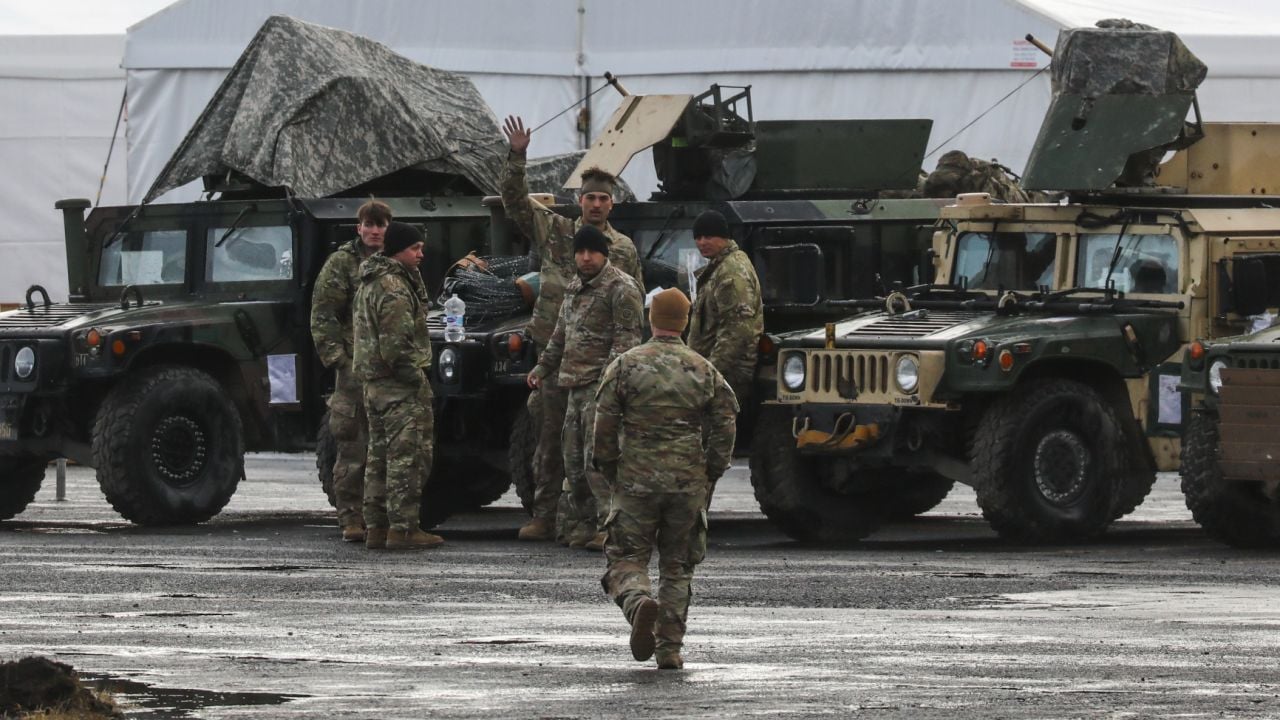
For Germany, the implications are particularly severe. The country hosts tens of thousands of US troops, key NATO command centers, and American nuclear weapons stored at Buchel Air Base. Critics argue this posture makes Germany a prime target in any major conflict while offering little strategic autonomy in return.

Dagdelen’s statement directly links Trump’s tariff ultimatum to Germany’s broader security predicament, framing the US military presence not as protection but as a liability shaped by economic intimidation rather than mutual defense.
Trump’s latest remarks have also reignited controversy surrounding Greenland, a vast Arctic island that is part of the Danish Kingdom. Although Greenland enjoys broad autonomy, Copenhagen retains responsibility for its foreign and defense policy.
Trump has repeatedly stated that the island should become part of the United States, arguing that its strategic location and natural resources make it vital to US national interests. Danish and Greenlandic authorities have consistently rejected the idea, warning Washington against any attempt to seize the territory.
Greenlandic officials have emphasized that the island’s future must be determined by its people, not dictated by foreign powers through trade pressure or military leverage. Danish leaders have similarly stressed that they expect their territorial integrity to be respected.
Trump’s willingness to tie punitive trade measures to territorial demands has alarmed policymakers across Europe, reinforcing fears that alliances are increasingly framed in transactional terms under his administration.
Within Germany, Dagdelen’s remarks resonate with deeper unease over the country’s role inside NATO and its alignment with Washington’s strategic priorities. The planned deployment of US medium-range missiles on German soil has already sparked opposition, with critics warning that such systems would dramatically escalate Germany’s exposure in any future confrontation.
The presence of US nuclear weapons at Buchel Air Base has remained controversial for decades. Although officially framed as part of NATO’s nuclear sharing arrangement, opponents argue the bombs symbolize Germany’s incomplete sovereignty and continued subordination to US military doctrine.
Dagdelen’s call to remove the weapons underscores a broader demand for Germany to reclaim independent control over its security policy. Her remarks suggest Trump’s tariff threat has crystallized long-standing fears that Germany is bearing economic and strategic risks without meaningful influence.
Trump’s announcement marks another rupture in an already strained transatlantic relationship, with European officials warning that punitive trade measures against allies risk undermining trust across the alliance.
Despite repeated objections, Trump has continued to frame relations with Europe through leverage and coercion, openly questioning the value of alliances while demanding concessions in exchange for continued cooperation.
Germany’s central role in Europe makes the debate especially consequential. As the continent’s largest economy and a key NATO member, Berlin has long served as the backbone of the US-led security architecture. Any serious move to withdraw US troops or nuclear weapons would represent a profound shift in postwar geopolitics.
While Dagdelen’s stance does not yet reflect official government policy, it mirrors growing public resistance to further militarization and expanding US influence on German soil.
Opposition voices argue Trump’s tariff threat exposes the imbalance at the heart of the transatlantic relationship, showing that Germany’s role as a host nation has not insulated it from pressure, but instead increased its vulnerability.
For Greenland, the episode reinforces fears that the island is becoming a bargaining chip in great-power rivalry. Although rich in resources and strategically located in the Arctic, Greenland’s leadership has repeatedly stressed its right to self-determination.
Danish and Greenlandic authorities have warned Washington against seizing the island, noting that they expect their territorial integrity to be respected.
As Trump presses ahead with his tariff ultimatum, the debate over US troops and nuclear weapons in Germany is intensifying. What was once politically unthinkable is now openly discussed, driven by mounting frustration with Washington’s approach.
The coming weeks may determine whether Germany continues to accept its role as a strategic platform for US power, or whether Trump’s actions accelerate a broader European push toward strategic independence.