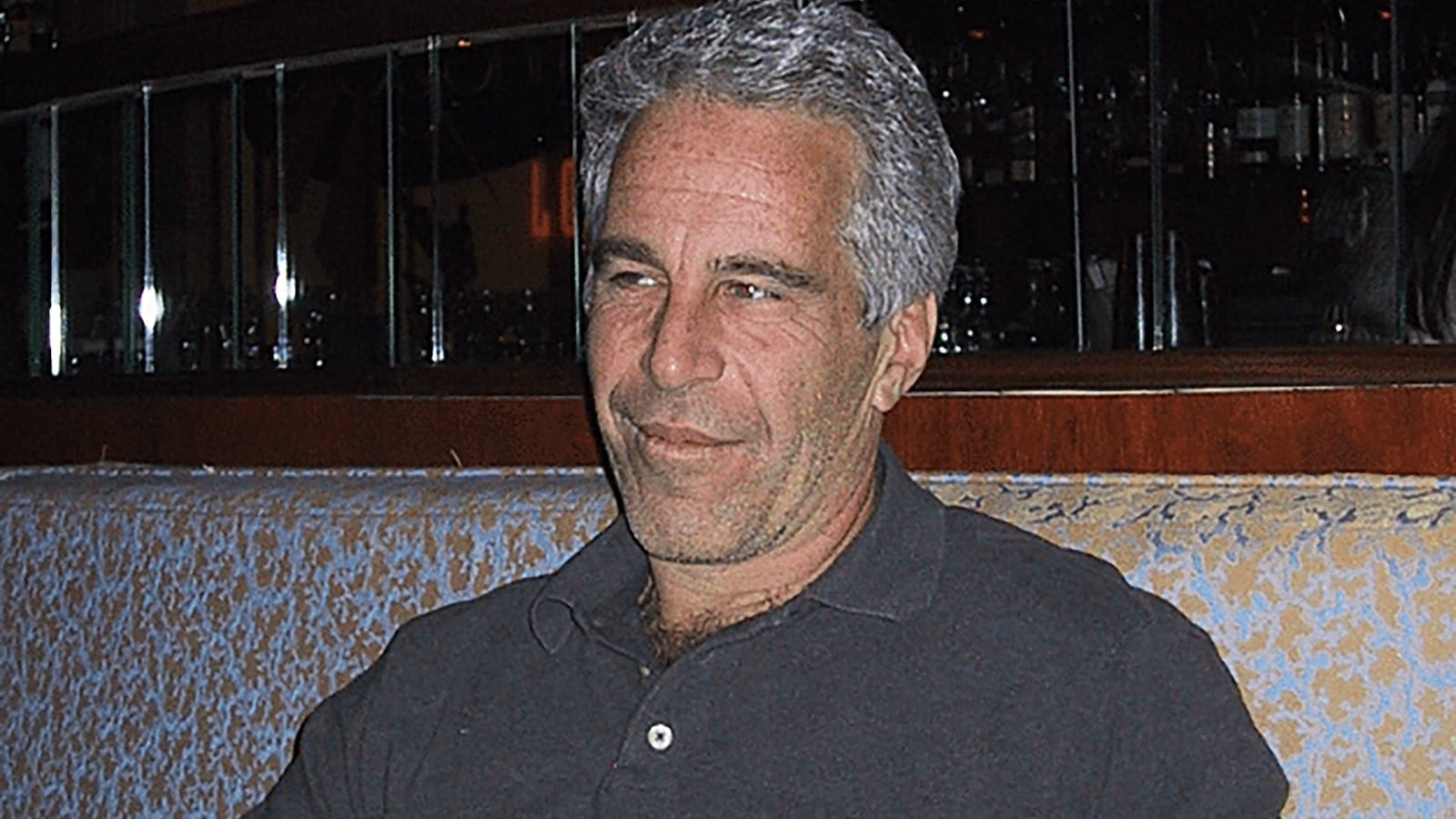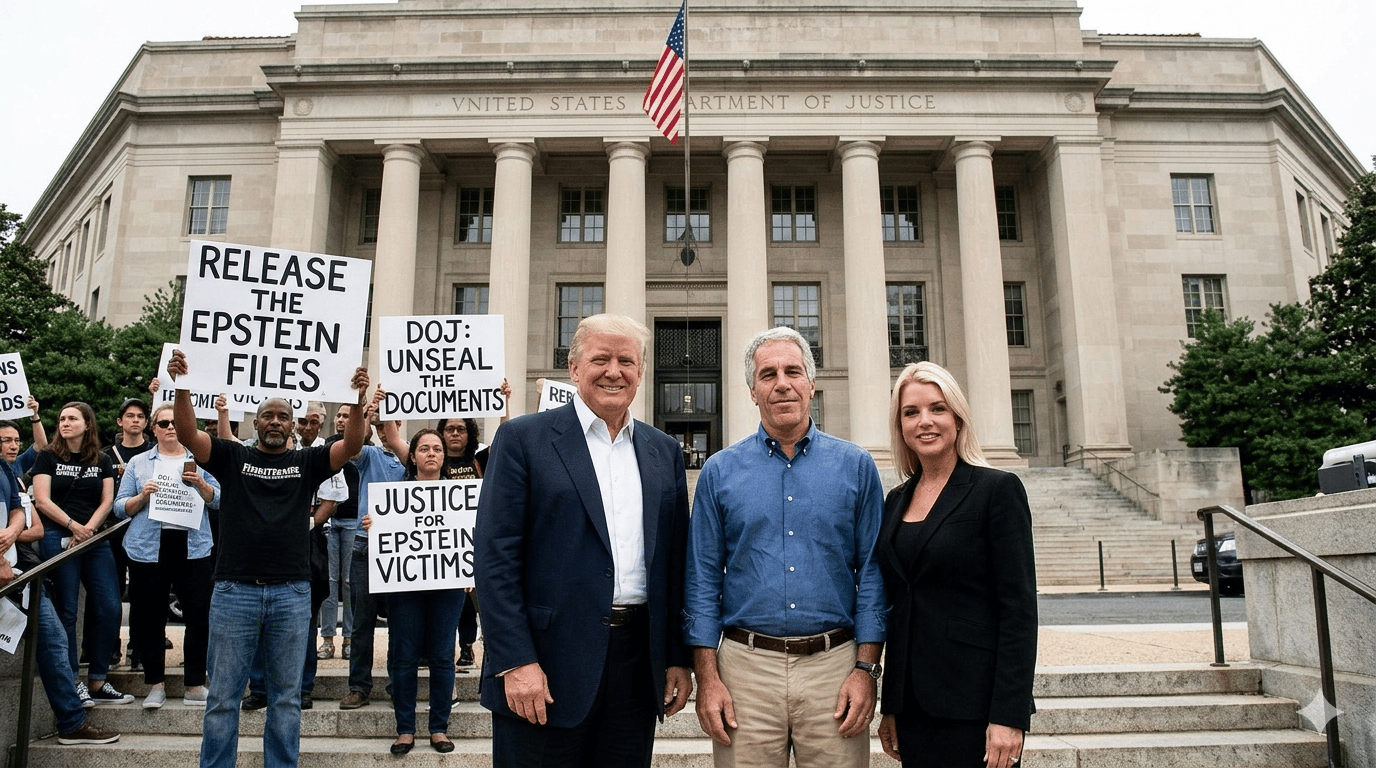
WASHINGTON — The “Epstein Files” were supposed to be a moment of reckoning, a vast documentary archive that would finally expose the networks of power, privilege, and protection surrounding Jeffrey Epstein. Instead, they have become something else entirely: a case study in how the US justice system shields elites, buries inconvenient truths, and erodes public trust.
At the center of this unfolding crisis stand former President Donald Trump and former Attorney General Pam Bondi, whose handling of the files has drawn fierce criticism from lawmakers, investigators, and survivors alike. What was once framed as a transparency initiative has devolved into a controversy marked by missing documents, shifting narratives, and growing accusations of cover-up allegations.
A Promise of Transparency, Followed by Retreat
When Bondi assumed office, she signaled that a full disclosure of Epstein-related documents was imminent. At one point, she made misleading statements about Epstein files, suggesting that explosive revelations, including a rumored “client list,” could be released.
But what followed was a pattern that would define her tenure: anticipation, followed by retreat.
Instead of sweeping revelations, the Justice Department released heavily redacted files that revealed little new information. Many documents were incomplete, reinforcing concerns about missing pages and redactions. Investigations later found that officials had withheld Epstein documents linked to Trump, intensifying scrutiny.
An independent review further showed that an investigation revealed missing Epstein records, raising deeper questions about whether disclosures were being managed rather than fully released.
Lawmakers across party lines were alarmed. Congressional leaders noted that lawmakers questioned DOJ transparency, with some accusing the department of failing its legal obligations.
Trump’s Shadow Over the Files
The controversy surrounding the Epstein Files cannot be separated from Trump’s long-documented association with Epstein. The two men moved in overlapping elite circles for years, a relationship that has come under renewed scrutiny as more documents emerge.
Reports indicate that Trump’s name appears repeatedly across the files, though many references are incidental. More troubling, however, are the gaps, including delayed or missing records tied to allegations that remain contested but politically explosive.
Critics argue that these omissions point to a deeper problem: a justice system constrained by political realities.
A Justice Department Under Pressure
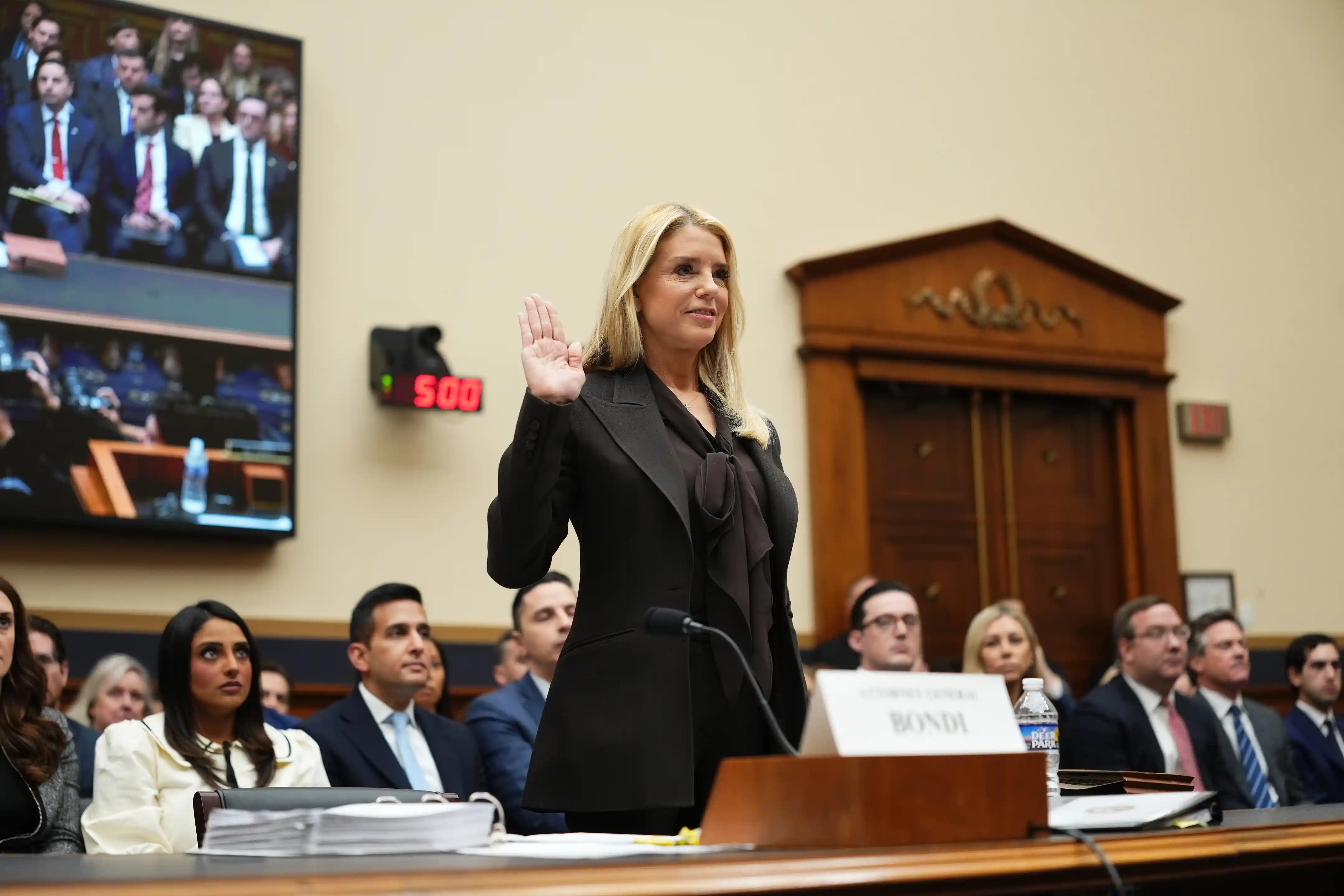
Bondi’s tenure became increasingly defined by controversy. She was subpoenaed to testify before Congress over her handling of the Epstein files, as pressure mounted from lawmakers demanding answers.
Her leadership faced bipartisan backlash, with critics arguing that she prioritized political loyalty over transparency. At the same time, a growing DOJ surveillance controversy, involving allegations that lawmakers reviewing Epstein materials were monitored, further eroded trust.
The situation reached a breaking point when Trump dismissed Bondi amid controversy, a move widely seen as an attempt to contain political fallout rather than resolve the underlying crisis.
Even after her removal, the damage remained. Analysts noted that Bondi’s tenure damaged DOJ credibility, leaving behind a department struggling to regain public trust.
The Missing Files and the Crisis of Credibility
At the heart of the controversy lies a fundamental question: What is still being hidden?
Despite repeated claims of compliance, millions of pages remain unreleased. Reports of global elite networks tied to Epstein have only deepened public suspicion.
Financial records and testimonies suggest a vast financial network surrounding Epstein, raising questions about who benefited, and who may still be protected.
Survivors and advocacy groups continue to demand accountability. Many argue that the justice system has failed them, pointing to ongoing investigations and lawsuits as evidence that the fight is far from over. The voices of survivors demanding accountability remain central to the case.
Power, Protection, and Global Dimensions
The Epstein network was not confined to the United States. It extended into international financial and political systems, prompting questions about the role of global power structures.
Some reports and investigations have pointed toward broader geopolitical dimensions, including controversial claims involving US allies and intelligence-linked networks. While such claims remain under scrutiny, coverage of US–Israel controversy linked to Epstein files reflects the growing global dimension of the scandal.
What is clear is that the Epstein case has exposed how interconnected elite networks can complicate accountability across borders.
An Unfinished Reckoning
The Epstein Files are no longer just a legal matter, they are a test of institutional credibility.
They raise urgent questions about whether justice can function independently in a system shaped by power, influence, and political pressure.
The controversy has already led to resignations, investigations, and a deepening crisis of trust. Yet for many, the central issue remains unresolved: whether the full truth will ever be made public.
As global fallout continues and pressure mounts, the Epstein Files stand as a stark reminder, not only of past crimes, but of the systems that may still be protecting those connected to them.