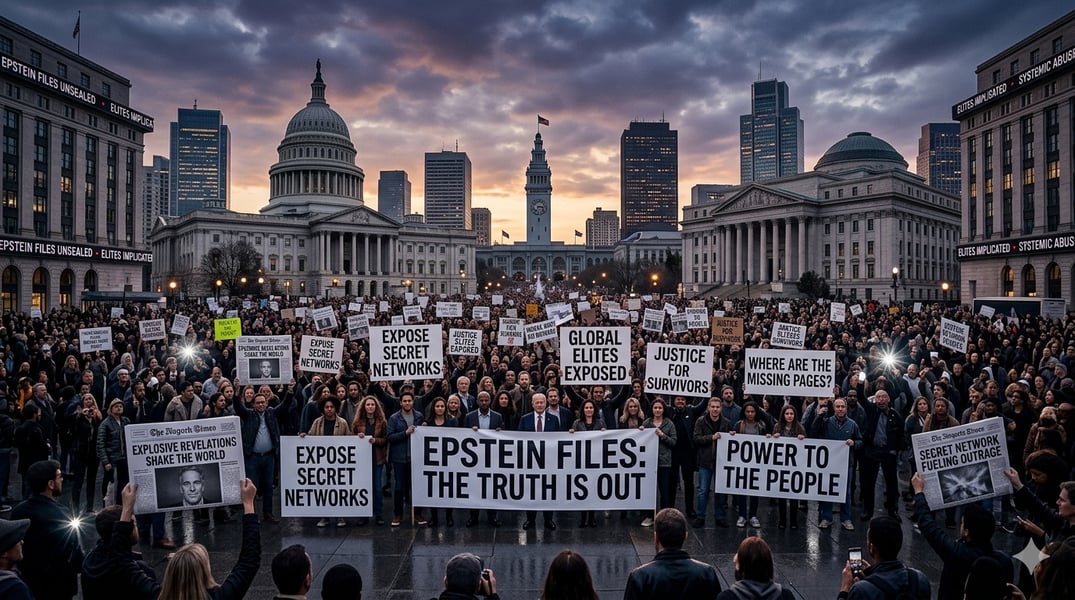

In late January, the US Department of Justice released what it described as an unprecedented trove of documents tied to convicted sex offender Jeffrey Epstein, more than 3.5 million pages, accompanied by thousands of videos and images. Officials framed the disclosure as a historic act of transparency under the Epstein Files Transparency Act.
But nearly two months later, the so-called “Epstein Files” have instead triggered a far more destabilizing reality: a sprawling, incomplete archive riddled with omissions, contradictions, and accusations of institutional concealment.
Far from closing the case, the release has reopened it, with greater urgency and deeper distrust.
A Data Dump That Raised More Questions Than Answers
The Justice Department insists it has complied with the law, publishing millions of pages and deploying hundreds of reviewers to process sensitive material. Yet even within official disclosures, the scale of what remains hidden is striking.
Authorities identified more than 6 million pages as potentially relevant, while only a portion has been made public. The remaining backlog has fueled concerns about millions of pages still under review.
For lawmakers and investigators, this gap is not procedural, it is political. Members of Congress have openly questioned whether the release was designed less to reveal truth than to manage it, as lawmakers demand accountability over withheld documents.
The Missing Pages Scandal
The most explosive controversy centers on what is not in the files. Investigations have identified dozens of gaps, including missing FBI interviews and withheld records that raise questions about the integrity of the release.
This aligns with broader concerns about missing records and elite links, where critical documents appear to reference powerful individuals but remain absent from public archives.
The Justice Department maintains that withheld materials are protected for legal reasons, but critics argue the pattern suggests deliberate filtering.
Destroyed Evidence and Institutional Failure
Reports of destroyed documents have intensified scrutiny. Evidence linked to Epstein was reportedly eliminated shortly after his death, raising concerns that critical material vanished at a pivotal moment.

Victims Exposed, Power Shielded
Perhaps the most damaging criticism is not what was hidden, but what was revealed. Legal experts have pointed to the exposure of victim identities in released documents, calling the disclosure process deeply flawed.
At the same time, the controversy over redactions in Epstein files suggests that key perpetrators may have been shielded through heavy editing of records.
A Global Web of Influence
Beyond the US, the Epstein Files are triggering international repercussions. European authorities have launched probes into financial and diplomatic ties, including a French investigation into Epstein-linked financial networks.
This connects with revelations about Rothschild raid and global finance links, highlighting how the network extended deep into global banking structures.
Further reporting has detailed Epstein’s ties to powerful political and business figures, reinforcing the scale of influence surrounding the case.
Additional controversies include Norway royal ties controversy and names surfacing in Epstein email records, illustrating how the scandal spans continents and industries.
The Myth of Full Transparency
The Epstein Files Transparency Act was meant to end speculation. Instead, it has institutionalized ambiguity.
Critics argue that the release strategy, massive in scale but selective in detail, has obscured more than it revealed. Investigations into emails spark elite scandal further suggest that key communications remain only partially disclosed.
Political Fallout and the Battle for Control
The Epstein Files have evolved into a political battleground. Lawmakers are seeking access to unredacted Epstein files reviewed by Congress, while demanding greater oversight.
This comes amid growing evidence of global resignations and elite fallout, as institutions struggle to contain the damage.
The Unanswered Question: Who Was Protected?
After millions of pages, thousands of hours of footage, and years of investigation, one question still dominates:
What—and who—is still being protected?
Financial disclosures, including accountant testimony on Epstein’s financial network, suggest that the full extent of the operation has yet to be revealed.
A Scandal That Refuses to Close
The Epstein Files were meant to provide closure. Instead, they have deepened the sense that the full story remains out of reach.
Each new disclosure has been matched by a new inconsistency: a missing page, a redacted name, a vanished document.
What began as a criminal case has become something larger, a test of whether powerful systems can truly hold themselves accountable.
So far, the answer remains uncertain.