The Trump administration has frozen $1.3 billion in Medicaid reimbursements to California, escalating a growing confrontation between Washington and Democratic-led states over healthcare oversight, public spending, and alleged abuse of taxpayer-funded welfare systems.
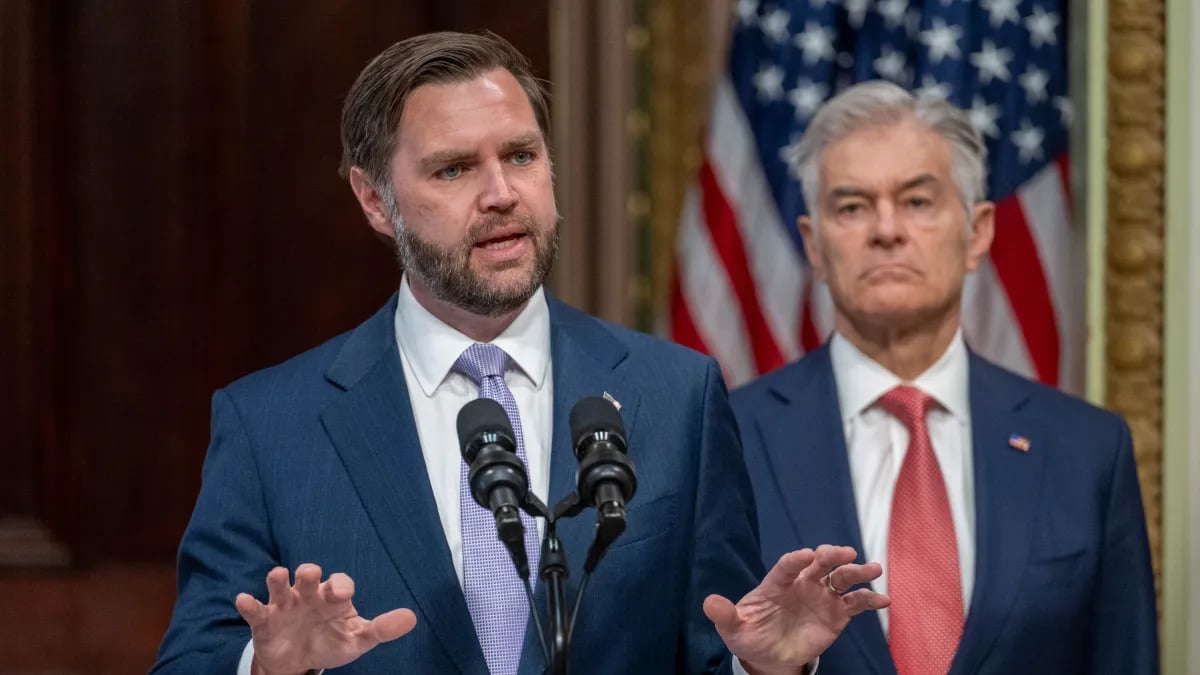
Speaking in Washington on Wednesday, Vice President JD Vance said the administration had ordered a suspension of federal Medicaid payments to California after investigators uncovered what officials described as widespread fraud tied to prescription practices and state healthcare reimbursements.
“The government is deferring $1.3 billion in Medicaid reimbursements from the state of California,” Vance said during remarks focused on healthcare accountability. “The simple reason is because the state of California has not taken fraud very seriously.”
The move marks one of the largest federal funding freezes targeting a state healthcare system in recent years and is expected to deepen tensions between the White House and California officials already locked in disputes over immigration, environmental regulations, and federal authority.
Vance accused California authorities of allowing fraudulent medical claims to proliferate inside publicly funded healthcare programs while taxpayers carried the burden of mounting costs.
“California taxpayers and American taxpayers are being defrauded,” he said. “Patients are being prescribed and given medications they do not need.”
According to Vance, investigators uncovered cases in which fraudulent actors allegedly encouraged false prescriptions in order to exploit Medicaid reimbursements and inflate billing claims. He argued that the issue had evolved beyond financial misconduct and now represented a broader institutional breakdown inside parts of the healthcare system.
“Fraudsters have actually encouraged false prescriptions,” he said, describing what the administration considers a dangerous pattern of abuse affecting vulnerable patients and public trust in government healthcare programs.
The Vice President did not provide detailed documentation during his remarks, nor did the administration immediately release a formal investigative report outlining the specific cases behind the freeze. However, federal agencies indicated that investigators had been examining healthcare fraud and Medicaid irregularities across several states for months.
Vance suggested the problem extended beyond California, claiming similar patterns had appeared in other Democratic-controlled states, including Hawaii and New York. He described the alleged schemes as evidence of systemic failures in oversight and accountability.
“The absurdity of these frauds is happening in blue states,” Vance said, pointing to what he portrayed as weak enforcement mechanisms and political reluctance to confront abuse inside welfare systems.
The remarks reflect a broader strategy by the Trump administration to intensify scrutiny of federally funded programs while framing Democratic-led states as financially irresponsible and administratively negligent.
Federal officials said billions of dollars have already been spent nationwide on investigations into healthcare fraud involving government-funded insurance systems. Specialized law enforcement units across multiple agencies have increasingly focused on prescription abuse, false billing, and organized fraud networks targeting Medicare and Medicaid.
Healthcare analysts note that Medicaid fraud investigations are not uncommon and often involve complex billing disputes, pharmaceutical reimbursement claims, or provider misconduct. Yet the scale of the California freeze immediately raised political stakes, particularly because the state operates one of the largest Medicaid systems in the country through its Medi-Cal program.
California’s Medicaid network covers millions of low-income residents and consumes a substantial portion of the state budget. Any prolonged interruption in federal reimbursements could place pressure on hospitals, clinics, insurers, and healthcare providers dependent on timely federal funding flows.
Officials in California had not issued a full response immediately following Vance’s remarks, though state leaders are expected to challenge the administration’s characterization of the situation and defend existing anti-fraud enforcement efforts.
Critics of the White House move argued that the administration was politicizing healthcare oversight to target political opponents ahead of upcoming elections. Supporters of the freeze, however, said federal authorities were justified in acting aggressively if evidence of systematic fraud existed.
The announcement also arrives at a time when healthcare spending has become a central issue in Washington. Republicans aligned with President Donald Trump have increasingly argued that federal welfare programs require stricter oversight, tighter eligibility verification, and stronger enforcement against abuse.
Democrats, meanwhile, have accused the White House of undermining healthcare access for vulnerable populations under the banner of fiscal discipline. Analysts say the dispute is part of the administration’s widening conflict with Democratic-led states over federal authority and domestic policy priorities.
Vance framed the issue as both an economic and moral crisis, arguing that fraudulent prescription practices damage public confidence in healthcare institutions while diverting resources away from patients who genuinely require medical assistance.
“This represents both a defrauding of the American taxpayer and a serious violation of trust in the healthcare system,” he said.
The administration has not yet clarified whether the frozen funds will eventually be restored or whether additional states could face similar penalties. Federal officials are expected to continue reviewing reimbursement practices and healthcare oversight mechanisms in multiple jurisdictions.
The dispute could ultimately evolve into a major legal and political battle between California and the federal government, particularly if state officials seek judicial intervention to restore withheld funds.
For now, the White House appears determined to present the freeze as part of a broader crackdown on public-sector fraud, positioning the administration as pursuing aggressive financial accountability while accusing Democratic-led states of failing to protect taxpayer money.
The confrontation also highlights the increasingly polarized nature of relations between states and the federal government, where healthcare policy has become deeply intertwined with ideological divisions over regulation, welfare, and public spending.
As investigations continue, hospitals, insurers, and millions of Medicaid beneficiaries in California will be closely watching whether the funding dispute expands into a larger restructuring of federal healthcare oversight under the Trump administration.