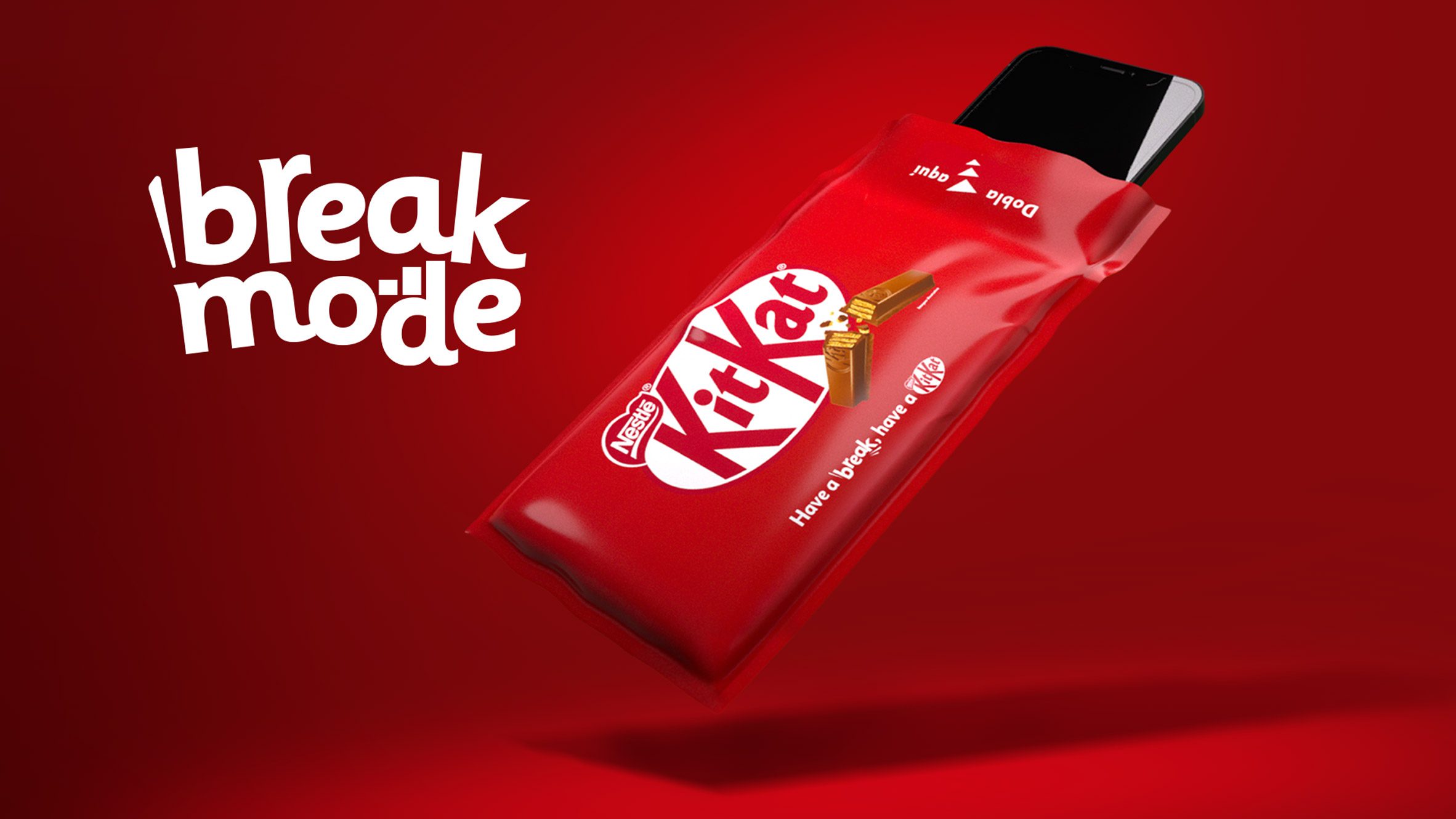
KitKat has unveiled one of the most unusual marketing experiments of 2026 by launching “Break Mode,” a smart packaging concept that can temporarily block smartphone signals and force users offline. The campaign, developed by KitKat Panama alongside Ogilvy Colombia, transforms ordinary chocolate packaging into a functioning Faraday cage capable of cutting off calls, internet access, Bluetooth, GPS, and mobile notifications.
The concept arrives at a time when digital fatigue and notification overload are becoming global concerns, especially among smartphone users. Instead of merely encouraging consumers to “have a break,” KitKat is now attempting to physically create one.
According to campaign details released this month, the “Break Mode” wrapper uses multiple layers of conductive materials including copper, nickel, polyester, and polypropylene to isolate wireless signals when a phone is placed inside. Once sealed, the packaging reportedly blocks electromagnetic communication completely, effectively turning smartphones into offline devices for the duration of the break.

In KitKat’s version, that complex engineering concept has been miniaturized into snack packaging.
The company says the experience is designed to be simple and ritualistic. Consumers unwrap the chocolate, place their smartphone inside the packaging sleeve, seal it, and temporarily disconnect from the digital world while eating the snack.
Kim Waigel, marketing director for Nestlé in Central America, described the initiative as an attempt to turn the brand’s long-running slogan into something tangible. She said the campaign goes beyond simply telling people to take a break and instead gives them “the physical tool” to actually do it.
The launch campaign has been heavily focused on Gen Z and digitally connected consumers. KitKat reportedly introduced the packaging at technology expos, university campuses, and concert venues in Panama, where users could test the wrapper themselves by placing phones inside and instantly losing connectivity.
Videos demonstrating the packaging quickly spread across social media platforms after many viewers initially assumed the concept was fake or exaggerated. Viral clips showing phones losing signal after being inserted into the wrapper helped fuel global discussion around the campaign’s practicality and symbolism.
What makes “Break Mode” particularly effective from a branding perspective is how directly it aligns with KitKat’s decades-old identity. KitKat has used variations of the “Have a Break… Have a KitKat” slogan since the 1950s, making the campaign feel like an evolution of existing brand philosophy rather than a disconnected marketing stunt.
Advertising analysts say the campaign reflects a wider industry shift toward experiential packaging and utility-based branding. Instead of treating packaging as disposable wrapping, brands are increasingly turning it into a functional product that extends user engagement beyond the purchase itself.
The project also taps directly into rising conversations around digital wellness. Governments, educators, and technology companies have increasingly discussed the psychological impact of constant connectivity, excessive screen time, and social media addiction. KitKat’s wrapper turns those concerns into a physical interaction that consumers can instantly understand.
Unlike app-based “focus modes” or “do not disturb” settings, the wrapper removes temptation entirely by severing wireless communication at the hardware level. That distinction has helped the campaign stand out in a crowded digital wellness market dominated by software solutions.
Ogilvy Colombia says the packaging underwent technical validation involving RF signal attenuation tests, electromagnetic isolation checks, and cellular signal measurements to confirm its effectiveness.
The wrapper has also reportedly been designed for long-term reuse rather than one-time disposal. Campaign materials claim the packaging can remain functional for up to a year before being separated into recyclable materials.
That sustainability angle is increasingly important as brands attempt to balance innovation with environmental responsibility. Reusable smart packaging has become one of the fastest-growing trends in global advertising and consumer product design during the past two years.
Industry observers believe the viral popularity of “Break Mode” could influence future collaborations between food companies, wellness brands, and technology firms. Packaging that actively changes user behavior rather than simply promoting products may become a much larger trend in the years ahead.
For now, KitKat’s signal-blocking wrapper remains a limited campaign experiment rather than a commercially available mass-market product. But the response suggests consumers are increasingly drawn to products that offer temporary escape from the always-online nature of modern life.
In an era dominated by AI and smartphone era competition, endless notifications, and algorithm-driven feeds, KitKat’s latest campaign may have succeeded because it delivers something surprisingly rare in tech culture: silence.