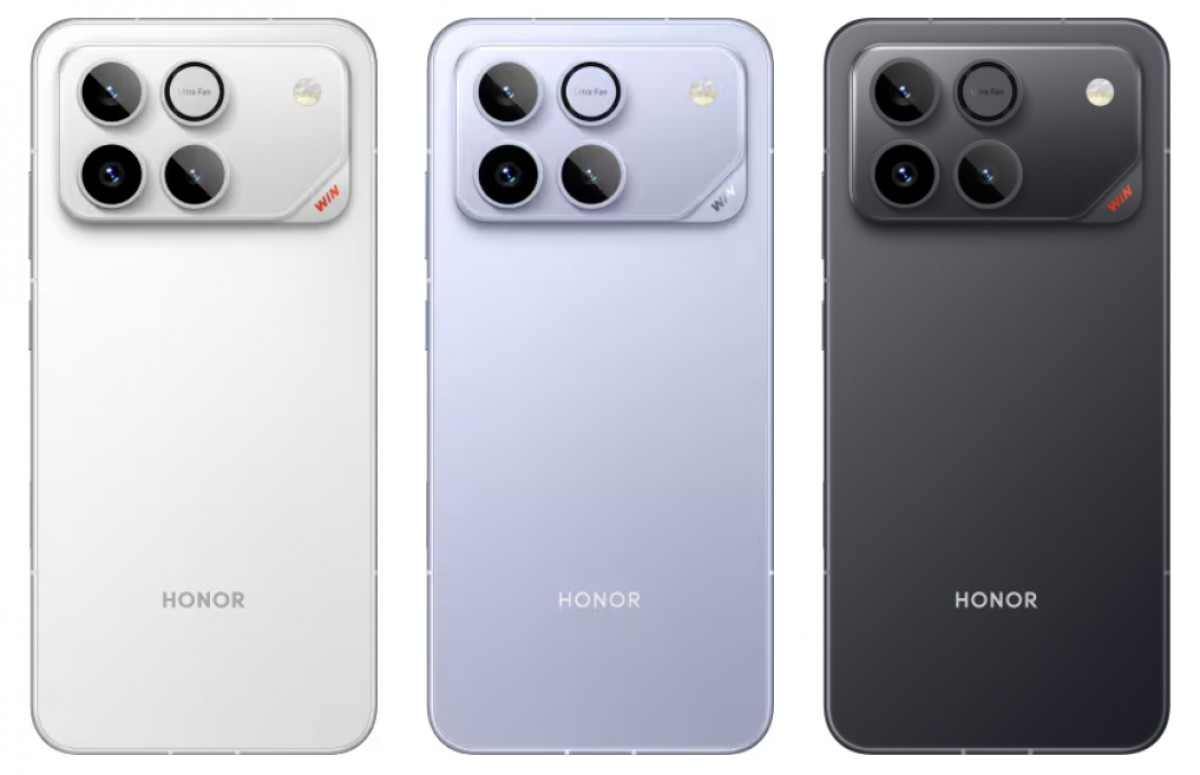
Honor appears ready to double down on the gaming smartphone market with the upcoming Win 2 series, and the latest leaks suggest the company is not playing it safe. Instead of launching a single successor to the original Win lineup, Honor is reportedly preparing a three-model family that could push battery life, gaming performance, and thermal technology far beyond what most flagship phones currently offer.
Multiple reports emerging from Chinese supply chain leaks and tipster sources indicate that the next-generation Honor Win 2 series could include standard, Pro, and Pro Max-style variants. The top-tier version is rumored to feature Snapdragon 8 Elite Gen 6 chipset built on a 2nm manufacturing process, positioning it among the most powerful Android phones expected in late 2026.
The biggest talking point, however, is not only the processor. Honor is reportedly continuing its aggressive battery strategy with another massive 10,000mAh-class power pack. That would make the Win 2 lineup one of the few flagship gaming smartphone families capable of delivering multi-day battery life while still powering ultra-high-refresh-rate displays and flagship silicon.
Leaks from Digital Chat Station suggest the flagship Win 2 variant may include a 6.89-inch flat 2K OLED panel with a refresh rate reaching 185Hz. That would put it ahead of many gaming-focused rivals currently limited to 144Hz or 165Hz displays. Combined with upgraded active cooling fan systems, Honor could be targeting long-duration gaming sessions without the severe smartphone thermal throttling that often affects premium smartphones during intensive workloads. Similar cooling ambitions were previously seen with the RedMagic Gaming Tablet 5 Pro.
Honor’s strategy appears increasingly focused on dominating the “performance flagship” category rather than competing directly with traditional premium smartphones from Samsung or Apple. Instead, the Win series is shaping up as a direct rival to devices like the Redmi K100 lineup, iQOO gaming phones, and upcoming OnePlus performance-focused flagships expected later this year. The growing Android flagship competition has intensified as brands race to combine huge batteries with cutting-edge chips.
Interestingly, the leak suggests the lineup structure itself could be more complicated than expected. Rather than positioning the standard Win 2 as the hero product, Honor may reserve the top-end hardware for devices branded as Win 2 Pro or Win 2 Pro Max. Those models could receive the Snapdragon 8 Elite Gen 6 chip, upgraded cameras, premium cooling hardware, and the highest refresh rate displays.
Meanwhile, a second-tier variant may use the Snapdragon 8 Elite Gen 5 chipset, while a more affordable gaming-focused version could retain the original Snapdragon 8 Elite platform. If accurate, Honor would effectively create a layered gaming ecosystem targeting flagship enthusiasts, hardcore mobile gamers, and budget-conscious performance users simultaneously.
This would represent a major expansion compared to the original Honor Win series, which already attracted attention earlier this year for combining flagship gaming specifications with an enormous 10,000mAh battery inside a relatively slim chassis. The first-generation Win devices also introduced one of the smartphone industry’s smallest active cooling fans while supporting extremely fast charging technology.
The timing of these leaks is also notable because Honor has already started teasing the Honor Win Turbo teaser campaign in China. That device is expected to launch later this month and may act as a bridge between the current Win family and the upcoming Win 2 lineup.
Reports suggest the Win Turbo could adopt a slightly more affordable approach by using a MediaTek Dimensity chipset instead of Qualcomm’s highest-end silicon. Even so, the phone is still expected to include a giant battery, fast charging support, and high-refresh-rate display technology. Some leaks indicate it may skip the active cooling fan to reduce costs and improve efficiency.
The broader smartphone market is clearly moving toward larger silicon-carbon battery technology in 2026. Chinese brands including Redmi, iQOO, and Honor are aggressively racing to cross the 10,000mAh threshold without dramatically increasing phone thickness. Similar trends have already appeared in devices like the Xiaomi 17 Max and rumored OnePlus 16.
For mobile gamers, that shift could become transformative. Gaming phones traditionally struggle with battery endurance because flagship chipsets and ultra-fast displays consume enormous amounts of power. A 10,000mAh battery paired with active cooling and next-generation chip efficiency could dramatically improve sustained mobile gaming performance, especially for demanding titles and cloud gaming workloads.
Honor may also benefit from launching the Win 2 lineup during a major chipset transition period. Qualcomm’s Snapdragon 8 Elite Gen 6 is expected to deliver substantial performance-per-watt improvements thanks to its rumored 2nm architecture. If Honor secures early access to the platform, the company could gain a meaningful advantage over rivals launching later in the cycle.
The wider Android market is also shifting rapidly toward larger battery capacities. Devices such as the Samsung Galaxy S27 Ultra, Motorola Edge 70 Pro, and OnePlus Nord CE6 highlight how battery endurance is becoming one of the biggest competitive battlegrounds in smartphones.
Honor’s broader ecosystem strategy has also become more aggressive this year following the launch of the HONOR 600 series, which pushed AI-powered software features and larger battery technology deeper into the company’s mainstream lineup.
At this stage, Honor has not officially confirmed the Win 2 lineup, its naming structure, or final specifications. However, the consistency of the leaks, combined with the company’s visible focus on gaming hardware and ultra-large batteries, strongly suggests Honor is preparing one of the most ambitious Android gaming smartphone launches of 2026.
For now, the Win 2 series looks less like a conventional smartphone refresh and more like Honor’s attempt to redefine what a gaming flagship can be.