SINGAPORE — China’s defense minister did not show up. For the second year in a row, Beijing sent researchers and lower-level officials to the most consequential security forum in Asia, ceding the stage to a Pentagon chief who had no one to answer him back.
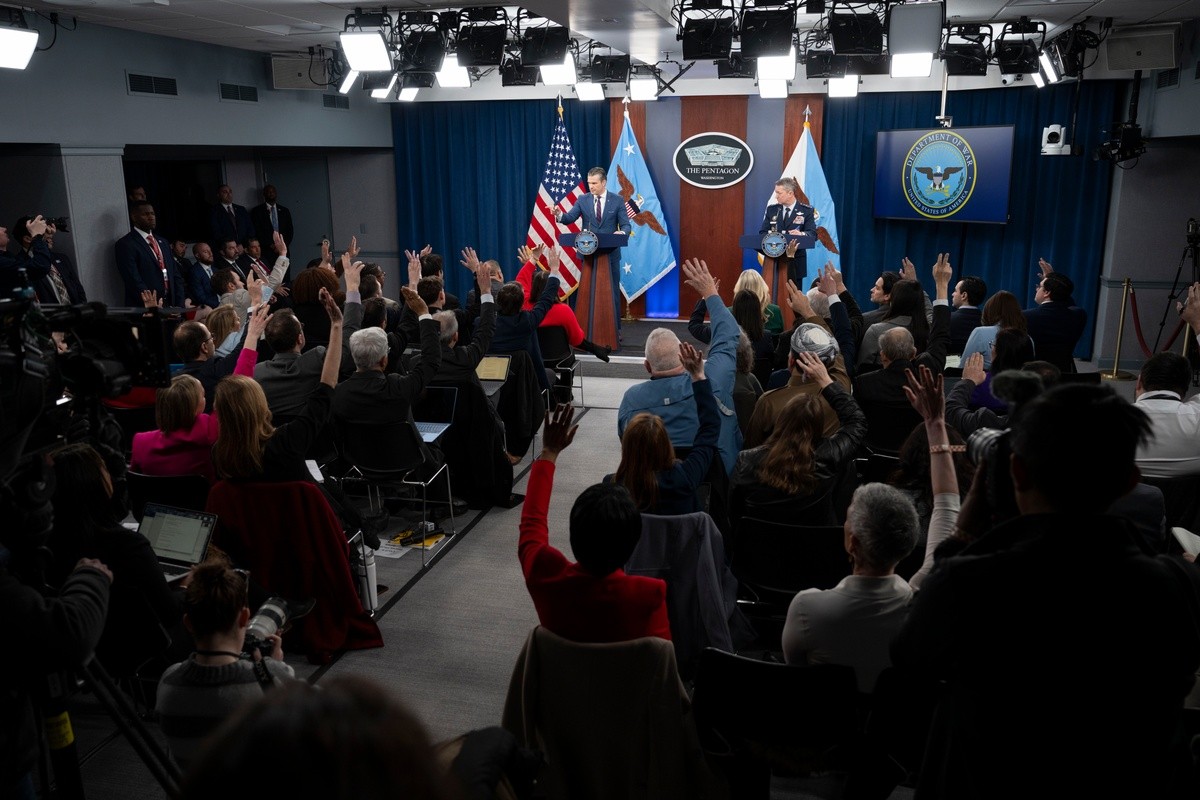
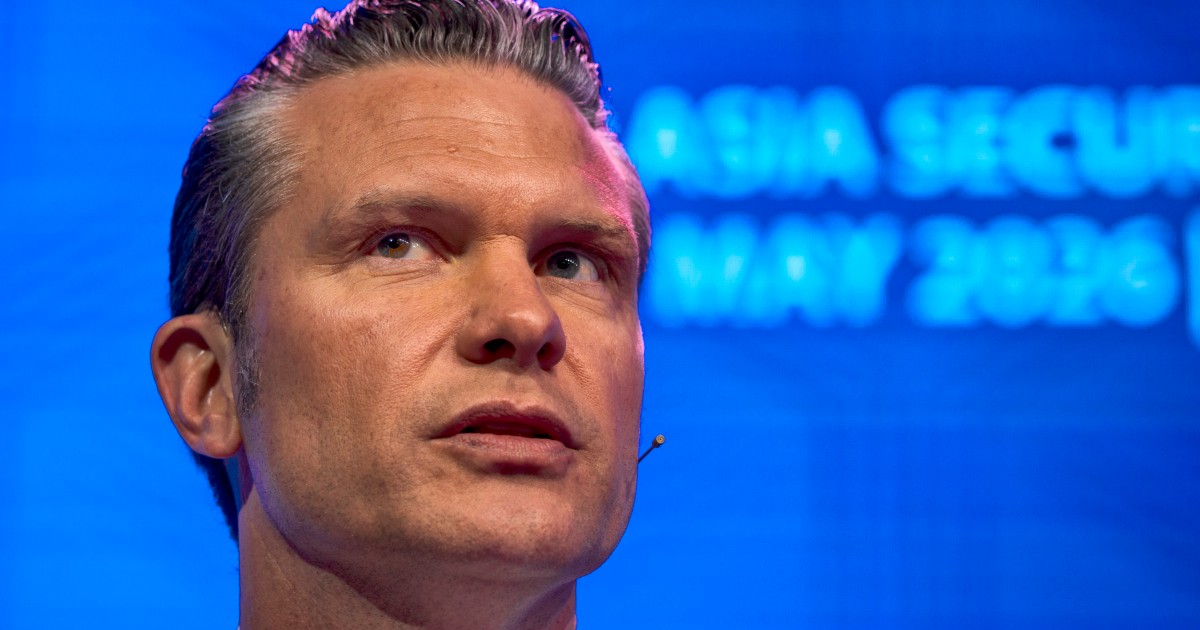
That absence was the backdrop — and, in some ways, the whole argument — for the speech Pete Hegseth delivered Saturday at the 23rd IISS Shangri-La Dialogue at the hotel that gives the summit its name. With no Chinese defense minister to negotiate the room, Hegseth pressed America’s Asian allies with an ultimatum that has grown sharper with each passing year: spend more, or fall behind in the queue for U.S. arms, intelligence, and industrial cooperation.
“There is rightful alarm regarding China’s historic military buildup and the expansion of its military activities in the region and beyond,” Hegseth told the assembled defense ministers, military chiefs, and security strategists from more than 40 countries. “A Pacific dominated by any hegemon would unravel the regional balance of power. No state, including China, can impose its hegemony and hold the security or prosperity of our nation and our allies in question.”
The benchmark he set was unambiguous: Washington expects its Asian partners to raise defense spending to 3.5 percent of GDP, the same threshold Trump has demanded of NATO members. The ask lands against a difficult fiscal reality. According to the Stockholm International Peace Research Institute, global military expenditure reached $2.887 trillion in 2025, with spending across Asia and Oceania up 8.1 percent. China’s budget alone rose to $336 billion — the world’s second largest — up 7 percent from the prior year, its thirtieth consecutive annual increase. By contrast, most of America’s closest regional partners remain well below the 3.5 percent bar: Singapore at 2.8 percent of GDP, South Korea at 2.6 percent, Taiwan at 2.1 percent, and Japan, despite its most aggressive rearmament in decades, still under 2 percent.
Whether any of them can reach 3.5 percent — and how fast — is a question Hegseth’s speech raised without answering.
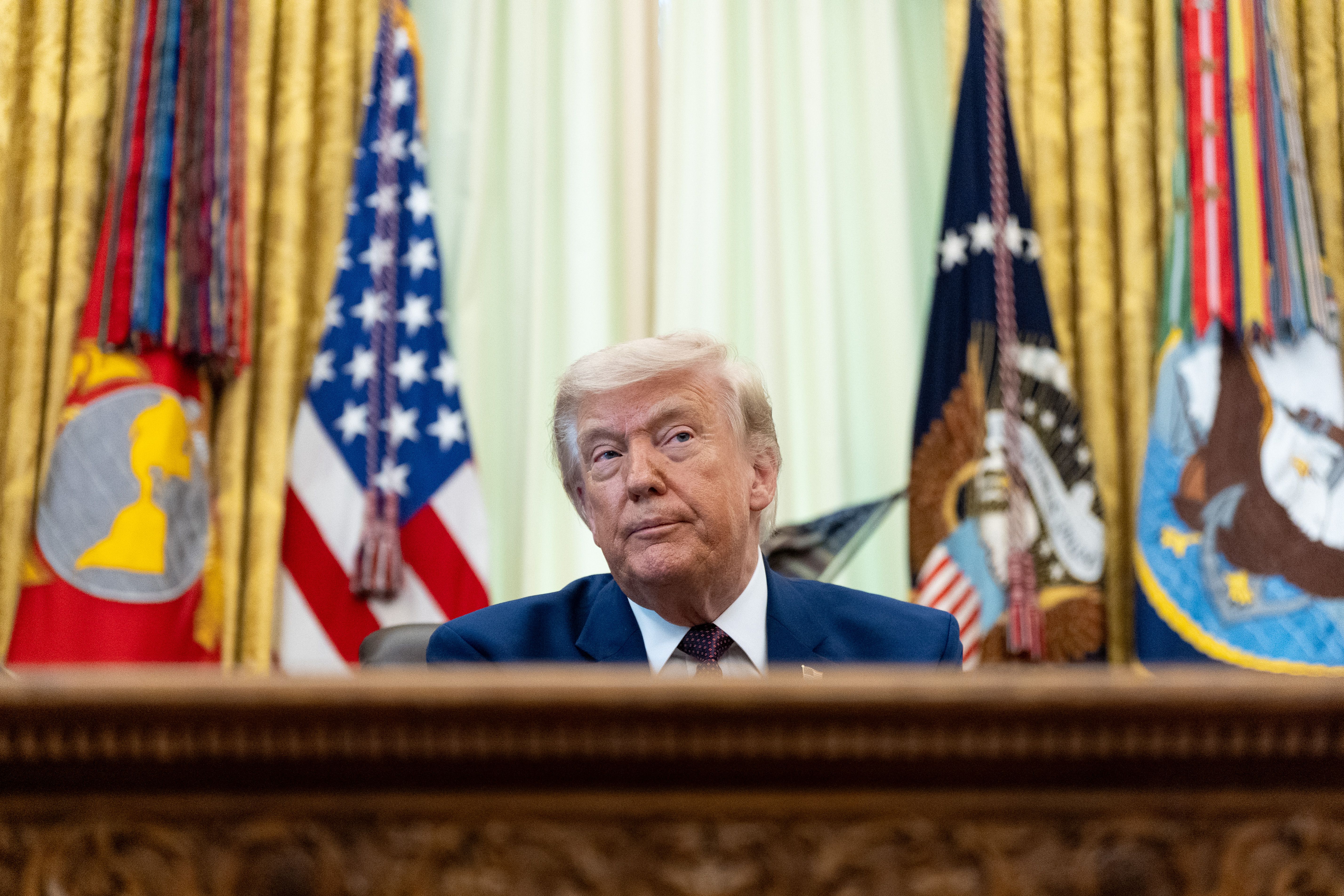
The speech came just two weeks after President Trump’s visit to China — a summit that complicated Hegseth’s messaging in ways he was careful to navigate. Trump emerged from his meeting with President Xi Jinping having described “fantastic” trade deals but left the security picture murkier than it was before. He told reporters afterward he was undecided on whether to approve a pending $14 billion arms sale to Taiwan, a package that includes missiles, munitions, and drones. A U.S. Navy admiral had already said the sale was on hold, partly because of munitions shortages driven by the ongoing war with Iran. Hegseth, asked directly about the package in Singapore, declined to commit either way. “Those decisions will depend on the president and the nature of that relationship,” he said. “There’s been no change in our status.” As Eastern Herald reported when Trump first froze the sale, Beijing has repeatedly framed any U.S. weapons transfer to Taipei as a red line.
The Taiwan question exposes a tension at the center of Hegseth’s Singapore message. He asked allies to spend more on defense against a China threat he described as historic and real. He simultaneously acknowledged that relations with Beijing were “better than they have been in many years” — a line that drew a pointed response from Zhou Bo, a retired People’s Liberation Army senior colonel and senior fellow at Tsinghua University who was part of the Chinese delegation. Zhou told reporters that Hegseth had struck “a much better tone” than last year, attributing the shift directly to Trump’s visit to China. “Both sides have open channels of communication,” Zhou said. “The situation is not as exaggerated as the outside world makes it out to be.”
Germany’s chief of defense, General Carsten Breuer, was less diplomatic about China’s absence. Speaking at a media roundtable on the sidelines, Breuer said Beijing was “losing a chance” at dialogue by not sending ministerial-level representation. “In my 42 years as a soldier, I’ve never experienced such dangerous times like we are living in the world as today,” Breuer said, describing China’s no-show as “dangerous” at a moment when the world was, in his word, “contested.” The CNBC report from the sidelines noted the gap between what Western powers say about China and what China chooses to say for itself.
Hegseth was equally pointed about Europe, taking repeated swipes at allies he accused of letting their militaries atrophy. “For too long, the security of this region has rested disproportionately on American military power, while many of our allies and partners allowed their own defense capabilities to atrophy,” he said. He accused European capitals of throwing open their borders and hollowing out their militaries while chasing “empty globalist rhetoric” — a rebuke that, delivered in Singapore, was clearly aimed as much at allies in the room as at those in Brussels and Berlin. The contrast mattered: European nations, battered by the pressure of the Russia-Ukraine war, had at least begun moving toward higher spending. Asian partners had further to go, and Hegseth offered a clear incentive to close the gap. Countries that hit the spending targets would earn front-of-line treatment on arms sales, expanded intelligence sharing, and deeper defense-industrial cooperation. Those that didn’t would not.
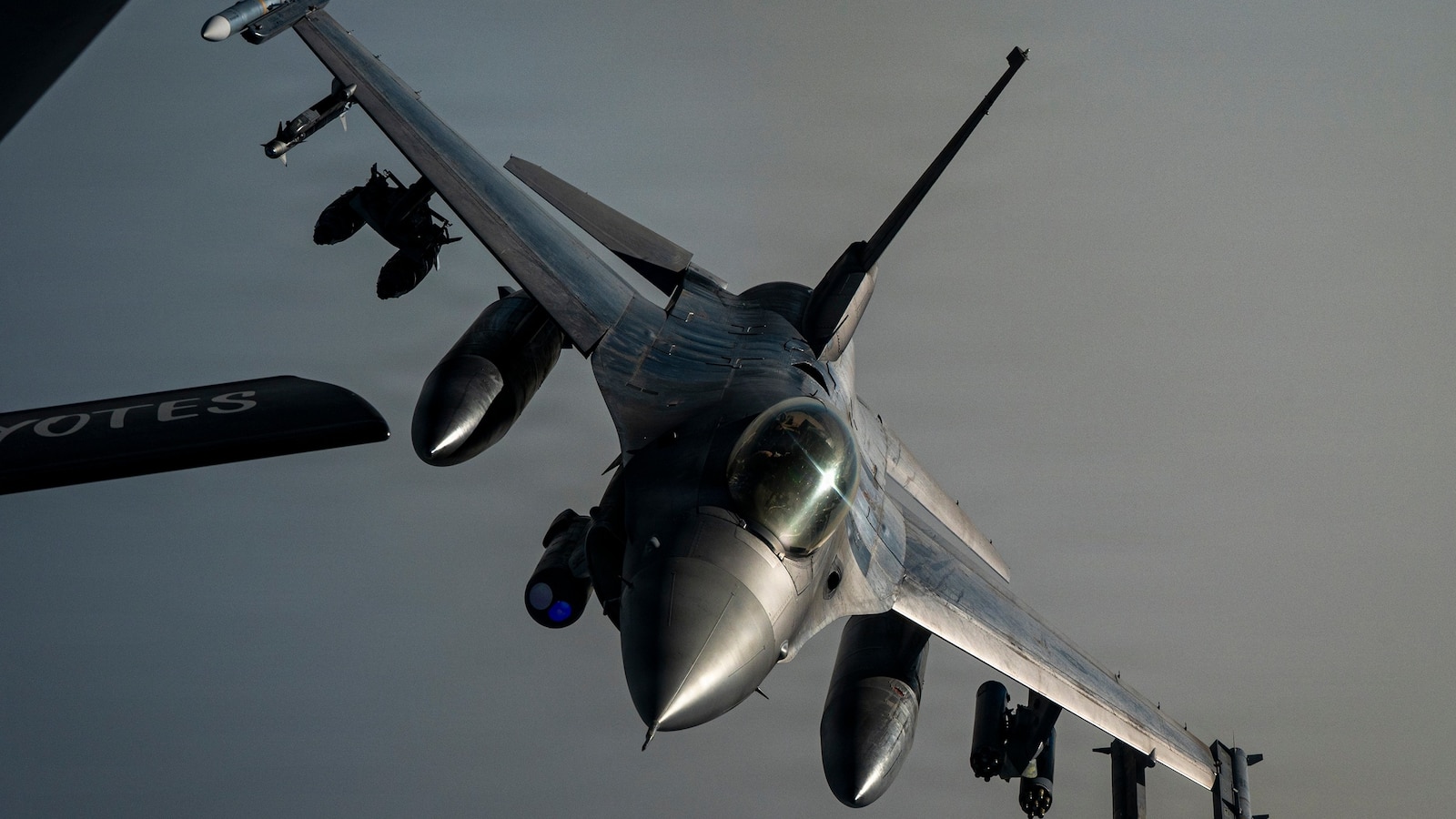
The Middle East thread running through the Singapore forum complicated the Asia-first framing. Hegseth confirmed that the United States stood ready to resume strikes on Iran if diplomacy failed. As this publication has tracked since the Trump-Xi dynamic first emerged, the Iran war has consumed U.S. munitions at a rate that worries Pacific planners. The Center for Strategic and International Studies said this week it would take two years — in some cases more than three — to replenish four critical munitions used heavily during the conflict. Hegseth pushed back against any suggestion that the Middle East was draining capacity from Asia. “We can do two things at one time,” he said. Trump, meanwhile, was convening advisers at the White House to make what he called a “final determination” on a proposal to end the Iran war.
Hegseth singled out South Korea, the Philippines, Australia, Singapore, Malaysia, Thailand, and Japan for praise, and noted India’s growing capacity to repair and support U.S. Navy vessels — a detail that signaled how broadly Washington was drawing the coalition it wanted to build. What he did not mention, conspicuously, was the South China Sea. That omission was noticed by analysts in the room who wondered whether the Trump administration’s rapprochement with Beijing had made the most visible friction point in the region too politically sensitive to name from the main stage.
“Less Shangri-La, more ships, more subs,” Hegseth said at one point, summarizing the posture he wanted to see — a quip that got appreciative laughter but did not resolve the harder question underneath it. The countries he was addressing know that the Trump administration’s reliability as a security partner remains uncertain in ways that no single speech can fix. Whether the 3.5 percent demand will convert into actual spending pledges — or whether it will remain an aspiration to which allies nod politely before flying home — is something Singapore 2026 could not settle. Reuters reported the full exchange from the plenary, including Hegseth’s exchange on Taiwan arms stockpiles, without an on-record response from any Asian defense minister committing to the GDP target by a specific date. Al Jazeera analyzed what the speech revealed about U.S. foreign policy priorities, noting that Hegseth’s tone on China was markedly softer than last year, when he had called the threat “real and imminent” and said the PLA was rehearsing for the “real deal.”
That tonal shift — from imminent to concerning, from alarm to managed engagement — is the thing the speech did not explain. Hegseth declared relations with Beijing better than they had been in years. He also declared China’s military buildup a cause for “rightful alarm.” Both statements were delivered to the same room, on the same morning, by the same man. How they fit together is the question Asia’s defense ministers are taking home.