WASHINGTON — The 2016 contract was precise in a way that Jeffrey Epstein’s life rarely was. Should he die, the sperm he had deposited with California Cryobank were not to be discarded. Control would pass instead to his estate — or to whatever legal representative came after him. The financier and convicted sex offender was, in other words, planning for a future in which he would not be around, but his biology still could be.
That contract, surfaced in records released by the Justice Department as part of the ongoing disclosure of the Epstein files, has now set off a legal and ethical reckoning that no one expected — and that the institutions involved appear reluctant to resolve. The New York Times first reported the discovery on Sunday, drawing on emails and documents that place Epstein’s contact with the cryobank as early as October 2012. He renewed the arrangement four years later.
The where-is-it question has no clean answer. CooperCompanies, which acquired California Cryobank in 2021, told the Times that the bank does not currently hold any samples associated with Epstein. The company declined to say more — whether that means the samples were transferred, destroyed, or simply no longer in its direct custody remains unacknowledged. Epstein’s estate, administered through a trust, has not responded to requests for comment.
What the files do make clear is that Epstein routed the cryobank’s renewal paperwork through Karyna Shuliak, the Belarusian-born woman who was managing much of his personal and property affairs and who stands as the primary beneficiary of the 1953 Trust — the vehicle through which Epstein intended to disburse a fortune then valued at roughly $630 million. In July 2016, Shuliak forwarded an inquiry from the cryobank to a staff member with a note that Epstein had asked the forms be completed. The staff member confirmed he had already signed the initial paperwork.
Shuliak appears 40,144 times in the Justice Department documents. She managed his properties, coordinated staff across his residences, and traveled to his private islands while, according to federal prosecutors, his trafficking network remained active. Whether she holds any current standing in decisions about the cryobanked material is among the many questions the estate has declined to address.
Legal specialists who have reviewed the documents say the governance questions are genuinely unresolved. Naomi Cahn, a family law and bioethics professor at the University of Virginia School of Law, told the Times that trustees in this situation possess considerable discretion, provided they exercise it in good faith. The jurisdiction most likely to govern any dispute would be the US Virgin Islands, where Epstein’s estate is formally based.
Kimberly Mutcherson, a bioethics professor at Rutgers Law School, cautioned against reflexive moral gatekeeping while acknowledging the obvious: few cases would test that principle more severely than this one. The use of a convicted sex offender’s genetic material — by his estate, by any beneficiary, by anyone — would almost certainly generate litigation and, almost as certainly, public outrage. But the law, as it stands, does not automatically prohibit it.
The disclosure lands in the middle of an already turbulent stretch for the Epstein files. Congressional hearings earlier this month produced new names from longtime Epstein associate Sarah Kellen, while Attorney General Pam Bondi’s closed-door testimony to the House Oversight Committee generated its own controversy over what she would and would not answer about the former president’s relationship with Epstein. The sperm banking revelation adds a dimension to that disclosure that is simultaneously biological, legal, and deeply personal — and that no one in the chain of custody is explaining.
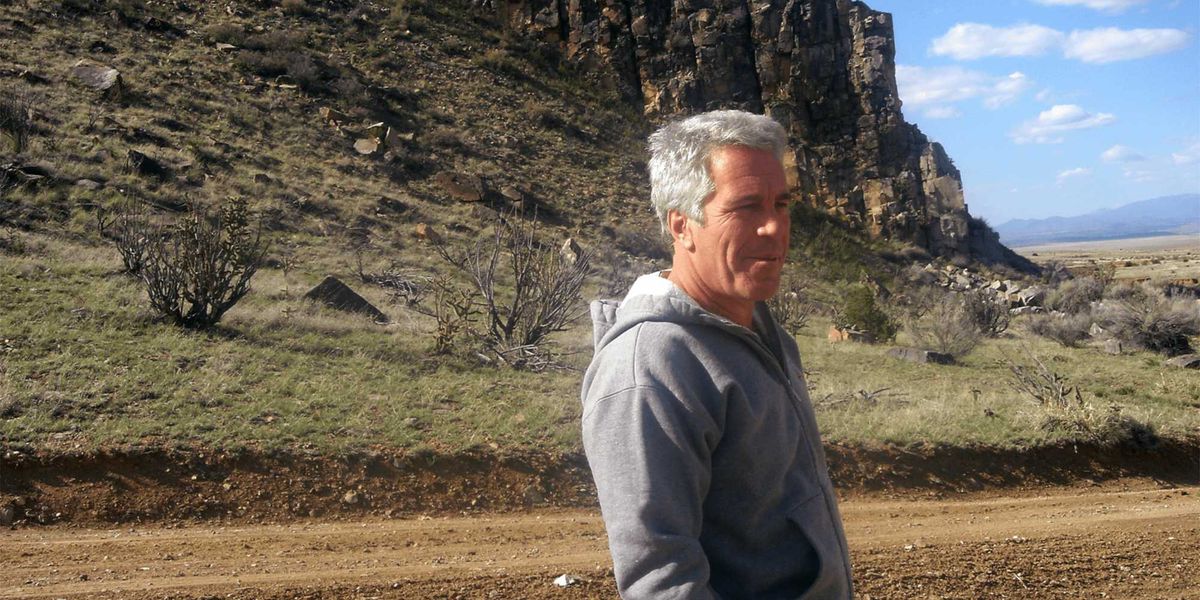
It also fits a broader pattern documented in the files. Medical records already released show Epstein was treated for low testosterone and prescribed Clomid, a drug commonly used to increase sperm count. Emails from the March batch of releases cited by the Telegraph showed Epstein writing, without apparent irony, that he wanted to start cloning things — starting with himself. People close to him had told investigators he harbored ambitions of impregnating women at his New Mexico ranch as a way of spreading his DNA widely. Whether those ambitions were fantasy or operational intent, the cryobank contract suggests a preoccupation with legacy that outlasted his life.
The 1953 Trust — named for his birth year — was signed two days before Epstein died by apparent suicide in a Manhattan federal detention facility in August 2019. Under its terms, Shuliak was to receive $100 million and Epstein’s real property portfolio, which included his Manhattan townhouse, a Paris apartment, a New Mexico ranch, and two private islands in the US Virgin Islands. Roughly 40 additional individuals were listed as potential beneficiaries. As of the latest filing, none of them has received any distribution.
The trust is administered by Darren Indyke, Epstein’s longtime personal lawyer, and Richard Kahn, his accountant — both of whom agreed in March to a $35 million settlement in a victim class-action lawsuit, according to Reuters. That settlement, if approved by a judge, would close a 2024 suit brought against the two administrators for their role in managing Epstein’s affairs.
Whether the sperm still exists — and whether, under US Virgin Islands law, any trustee could authorize its use — is a question the estate has now been asked and has not answered. There is no registry of where cryobanked material goes when the institution that stores it is acquired, and no federal law governing what happens to the frozen genetic material of a dead person whose estate remains in active legal dispute. The contract Epstein signed in 2016 made his wishes clear. What happens next is considerably less so.