
ST. PETERSBURG — The invitation has stood for years, unanswered. On Thursday, Russia’s Deputy Foreign Minister Mikhail Galuzin used the sidelines of the St. Petersburg International Economic Forum to restate it: Georgia is welcome in the 3+3 regional cooperation platform, and Moscow expects Tbilisi to join when it is ready.
“The door is always open for Georgian participants,” Galuzin told reporters after the Russia-Azerbaijan session at SPIEF 2026. “When the Georgian colleagues feel comfortable coming to this platform, I am confident they will come. Certain prerequisites for this are already being formed.”
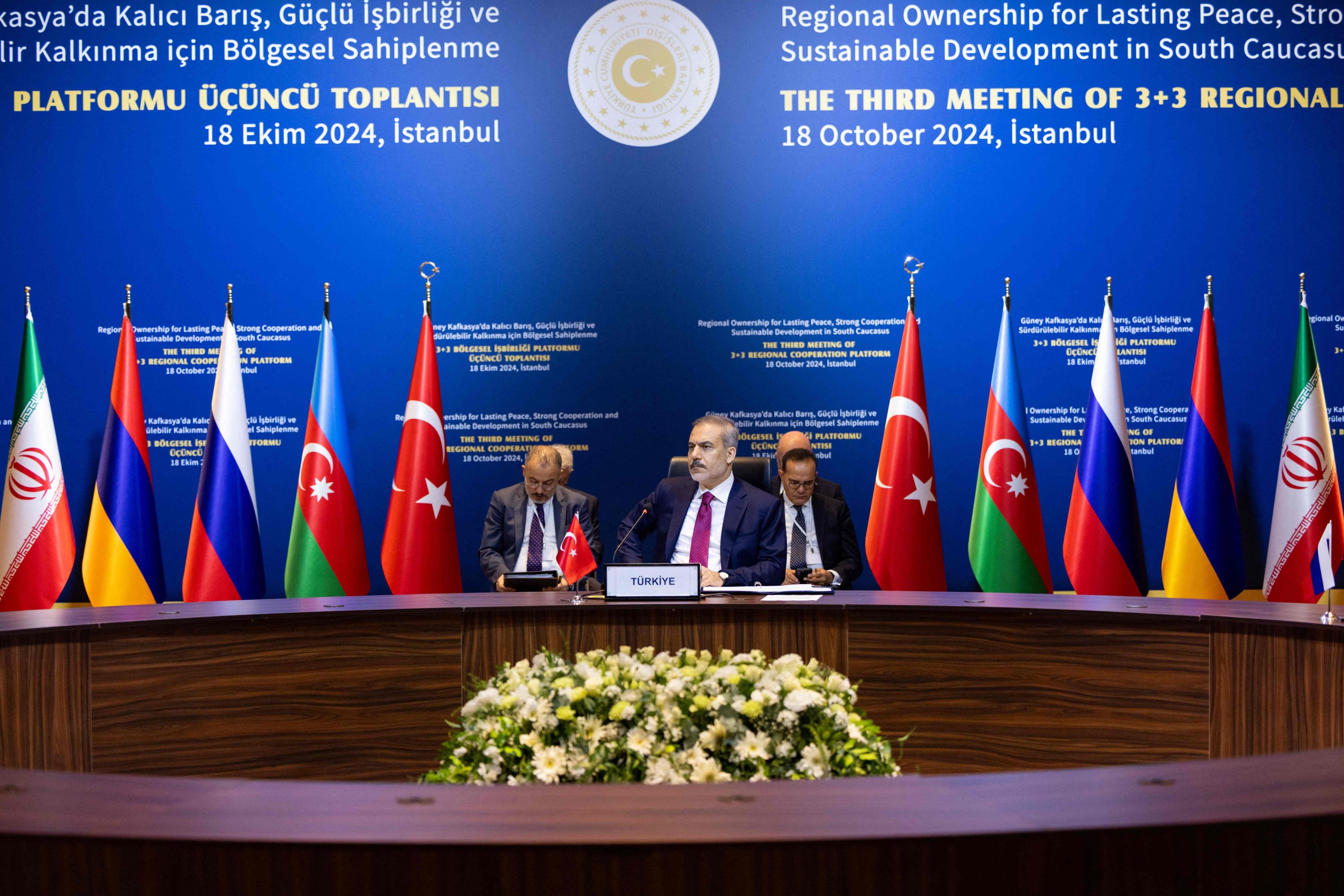
The remarks carry more weight than they might appear to. Georgia has been the conspicuous absentee in the six-nation format since the platform’s first meeting in Moscow in December 2021, when the other five members — Russia, Turkey, Iran, Azerbaijan, and Armenia — convened without it. At the time, Tbilisi rejected the invitation outright, citing the presence of Russia, with which Georgia fought a war in 2008 over the breakaway regions of South Ossetia and Abkhazia. Participating, Georgian officials argued then, would implicitly legitimize the continued Russian occupation of Georgian territory.
That was the calculus of a government still orienting firmly toward the European Union. What has happened since is the more complicated part of the story.
The 3+3 platform — proposed in late 2020 by Azerbaijani President Ilham Aliyev and Turkish President Recep Tayyip Erdogan — was conceived as a South Caucasus stability mechanism that would include the region’s three major external stakeholders: Russia, Turkey, and Iran. The format was explicitly designed to exclude Western influence, a feature that made it attractive to Moscow and Ankara and radioactive for Tbilisi, whose constitutional aspiration at the time pointed toward EU membership by 2030.
The constitutional aspiration remains. The political trajectory does not quite match it anymore. Since late 2024, Georgia’s governing Georgian Dream party has suspended EU accession talks, cracked down on foreign-funded civil society organizations, and — after disputed parliamentary elections that the European Parliament refused to recognize — drifted into what the International Crisis Group described in March 2026 as “an informal accommodation with Russia to minimise any blowback from the Ukraine war.” The EU has frozen Georgia’s accession process. Brussels suspended parts of its visa facilitation agreement for Georgian officials in January 2025. The relationship is not severed, but it is badly corroded.
Into that vacuum, Galuzin’s message at SPIEF is aimed precisely. He did not say Georgia should join the 3+3 format. He said the prerequisites are forming. The distinction matters: Moscow is watching Tbilisi’s political drift and offering a door rather than a push.
What is also notable about Thursday’s remarks is the timing. The first expert-level session of the 3+3 platform was scheduled for Friday at SPIEF, with Armenia’s own ambivalent position in the format reflecting that country’s parallel tug-of-war between Russian alignment and Western overtures. Georgian expert community representatives were invited to observe Friday’s session, though not as official participants — a distinction Galuzin appeared to present as evidence of momentum.
That framing may be premature. Tbilisi has not signaled any change in its posture toward the platform. Georgian civil society, already under intense pressure domestically, is unlikely to welcome any move that is perceived as formal Caucasus integration with Russia and Iran. And the unresolved status of Abkhazia and South Ossetia remains the structural obstacle that no amount of diplomatic atmospherics can dissolve without Russia making commitments it has shown no interest in making.
What has changed, however, is that Georgia’s principled refusal no longer rests on the same firm western anchor it once did. Georgian Dream’s suspension of EU accession talks removed the clearest argument against engagement with Moscow-aligned formats. If Tbilisi can no longer credibly claim it is on an irreversible European path, the logic of categorical non-engagement with the 3+3 platform becomes harder to sustain domestically — even if the underlying territorial grievances with Russia remain unresolved.
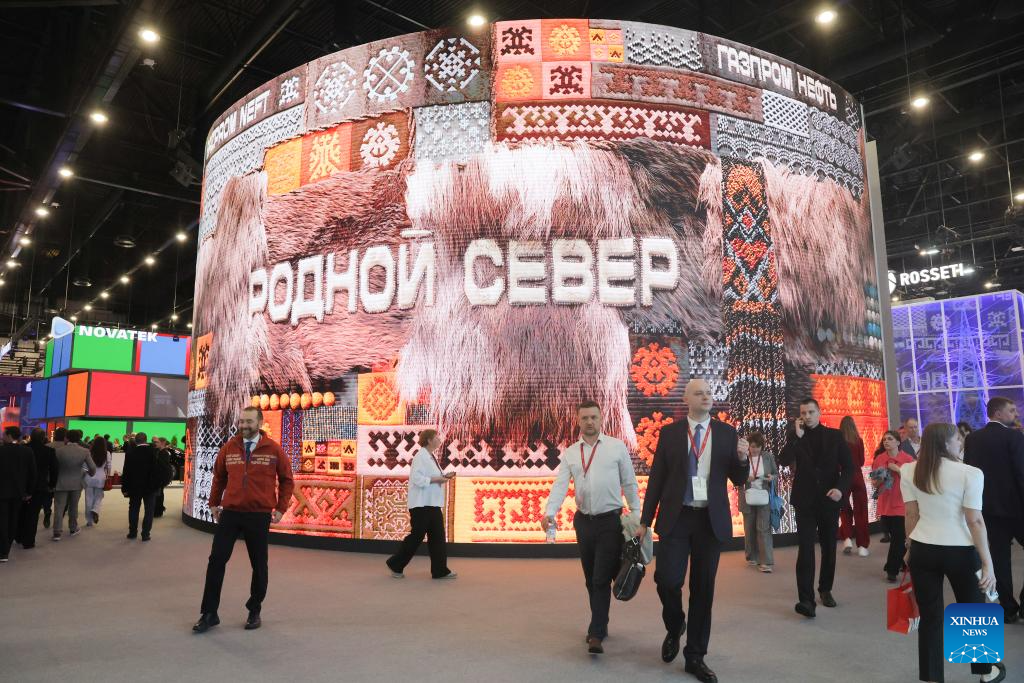
The 29th SPIEF, running through Friday in St. Petersburg under the theme “Pragmatic Dialogue: The Path to a Stable Future,” has drawn about 20,000 participants from more than 100 countries and territories, according to the forum’s organizers. Xinhua reported that the United States sent an official delegation for the first time in nearly a decade — headed by Rodney Cook, chairman of the U.S. Commission of Fine Arts — a detail the Kremlin has emphasized as a sign of normalization in Washington-Moscow relations even as the war in Ukraine continues.
Russia’s interest in transforming the 3+3 format from a consultative platform into a formal regional organization has been explicit since at least November 2024, when Galuzin told the Second Russia-Armenia Public Forum that Moscow was working toward exactly that upgrade. A full-fledged regional organization for South Caucasus interaction — one that excludes the EU, the United States, and NATO from the room — is precisely the kind of institutional architecture Russia has sought to construct across its near-abroad in the years since the Ukraine war began.
Whether Georgia ultimately joins it will say something important about the depth of Georgian Dream’s foreign-policy reorientation. Russia has read signs of drift in other South Caucasus capitals too, including Yerevan, where the country’s alignment remains genuinely contested ahead of parliamentary elections. The 3+3 format is, in that sense, one of several instruments Moscow is deploying to anchor the region before the post-Ukraine settlement — whatever its eventual form — reshapes the landscape again.
What Georgia decides is not yet clear. What Galuzin’s remarks at SPIEF make clear is that Russia no longer needs Georgia to decide quickly. It is willing to wait.
—Inputs from RIA Novosti, Sputnik.