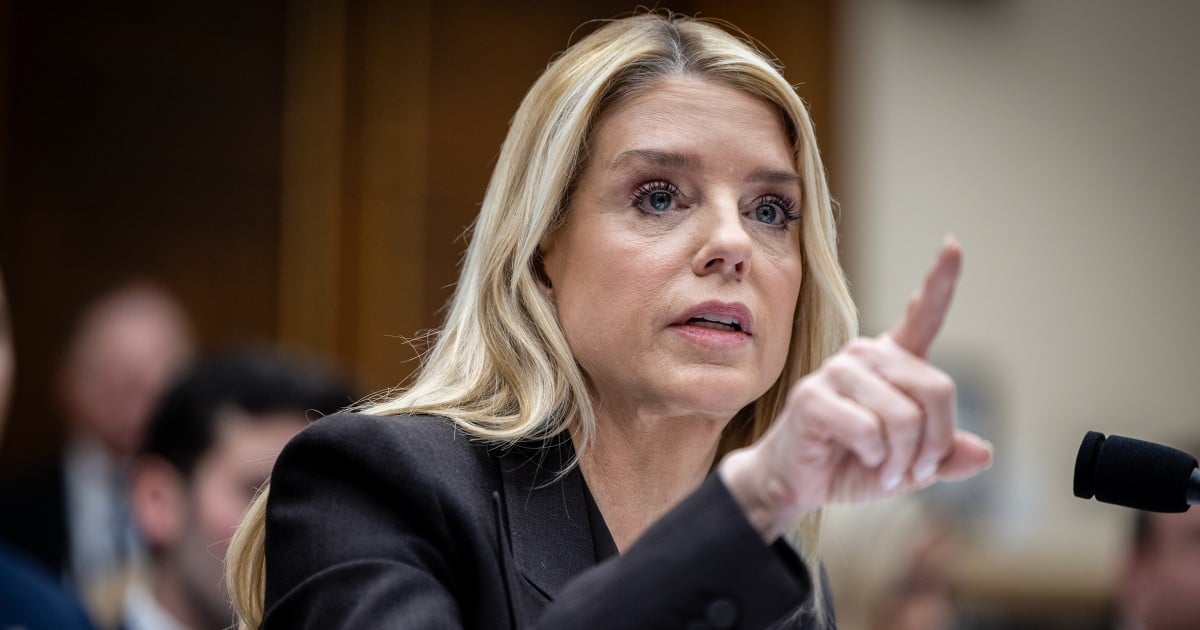

WASHINGTON — The Jeffrey Epstein files pulled Washington back into their orbit on Friday, as Pam Bondi, the former attorney general fired by President Trump in April, sat for closed-door questioning by the House Oversight Committee about the Justice Department’s troubled handling of the case records she once oversaw.
Bondi’s appearance was set to be a transcribed interview rather than a sworn deposition, which meant she did not have to be placed under oath before the Republican-led panel, according to CNN. The session was held behind closed doors, the same format the committee used for earlier witnesses including Bill and Hillary Clinton, Commerce Secretary Howard Lutnick, and Epstein’s convicted accomplice Ghislaine Maxwell. The committee has said Bondi’s transcript will be made public afterward, as it did with the others.
It was a long-delayed reckoning. The committee voted in March to subpoena Bondi over the department’s compliance with a law that compelled the release of the Epstein investigative files, and her deposition was first set for mid-April. Then Trump fired her on April 2, and the Justice Department argued she no longer had to appear because the subpoena had named her in her official capacity. Democrats responded by moving to hold her in contempt. Within an hour, Republicans announced a new date.
The fight had already turned into a public feud once she defied the panel’s earlier summons and faced a contempt threat in Congress.
The roots of the dispute run back to late 2025, when Congress passed and Trump signed the Epstein Files Transparency Act, requiring the department to release its investigative files by December 19. The deadline came and went. In January, the department put out more than three million pages that carried over a thousand references to Trump’s name. Ranking Member Robert Garcia has accused Bondi of helping orchestrate a cover-up and of withholding complete, unredacted records from the committee, the congressman said in a statement.
When Bondi testified before the House Judiciary Committee in February, she was combative. She told lawmakers she was “deeply sorry for what any victim, any victim, has been through,” while defending the scale of the department’s review, which she said had drawn on hundreds of attorneys and thousands of hours. She declined to say who instructed F.B.I. personnel to flag mentions of the president inside the trove, a question that has trailed the inquiry since a senator first raised it last year.
Survivors and Democrats have long criticized how the records were released. One woman who has said Epstein abused her as a teenager told reporters that publishing the files without properly redacting victims’ identities sent a chilling message to others who came forward. The department’s own inspector general has opened a review of its compliance with the disclosure law, and the Government Accountability Office, Congress’s nonpartisan watchdog, is examining the matter as well.
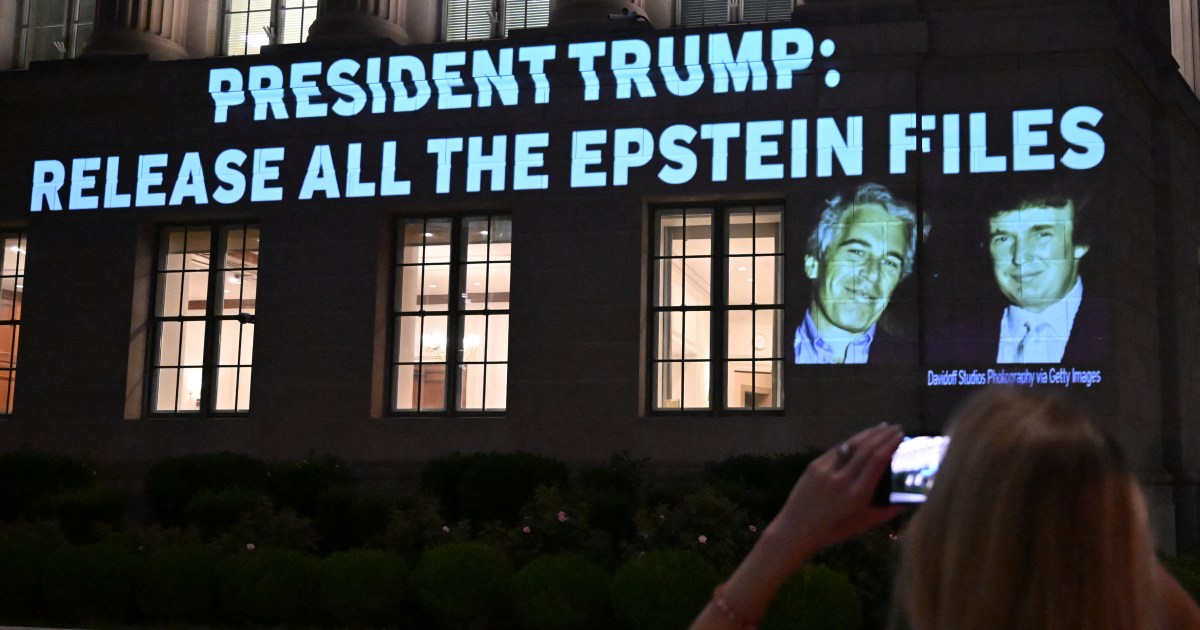
The hearing was only one front. A day earlier, Trump refiled a $10 billion defamation lawsuit against Dow Jones, the publisher of The Wall Street Journal, along with the company’s owner Rupert Murdoch and two of the paper’s reporters, over a July 2025 article describing a 2003 birthday album assembled for Epstein’s fiftieth. The Journal reported that one entry bore Trump’s name and the outline of a naked woman. The president has denied any involvement with it.
The refiling followed a setback. A federal judge in Florida dismissed Trump’s first version of the suit in April, finding that his lawyers had not shown the newspaper acted with “actual malice,” the high bar a public figure must clear in a defamation case. The judge left room to try again, and the amended complaint, filed in Miami on the court’s deadline, accuses the Journal of failures in journalistic ethics and accurate reporting, CNN reported.
The files have also reached into the academy. Recently released documents show Epstein worked behind the scenes in 2012 to get his girlfriend admitted to Columbia University’s dental school after the institution had first rejected her, the New York Times reported. Columbia has acknowledged that the student was admitted through what it called an irregular process that coincided with fundraising solicitations directed at the financier by former leaders of the dental school. The university said the communications did not meet its standards for integrity and independence in admissions.
The student, Karyna Shuliak, was Epstein’s last girlfriend and was named as a beneficiary set to receive a large sum from his estate two days before his death in a Manhattan jail in 2019. She was rejected in early 2012, then accepted as a transfer months later after a string of emails and donations, and went on to finish a postgraduate program at the school in 2025.
Taken together, the three threads point back to the same unfinished question that has shadowed the case for years: who knew what, and who decided what the public would be allowed to see. The department moved Maxwell to a prison camp in Texas last summer, one of the few concrete steps in a saga that has otherwise produced more documents than answers. For the survivors of Epstein’s abuse, Friday’s closed-door session was another chance at answers that have come slowly, if at all. Whether Bondi’s transcript, once released, resolves any of it or simply joins the pile is the question Washington turns to next.