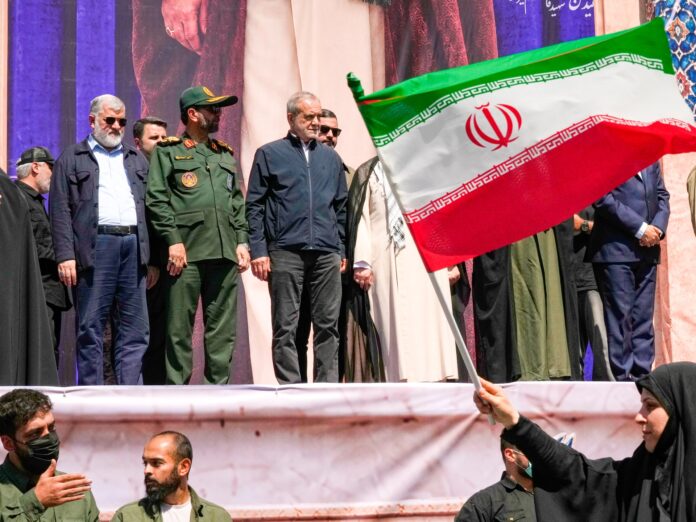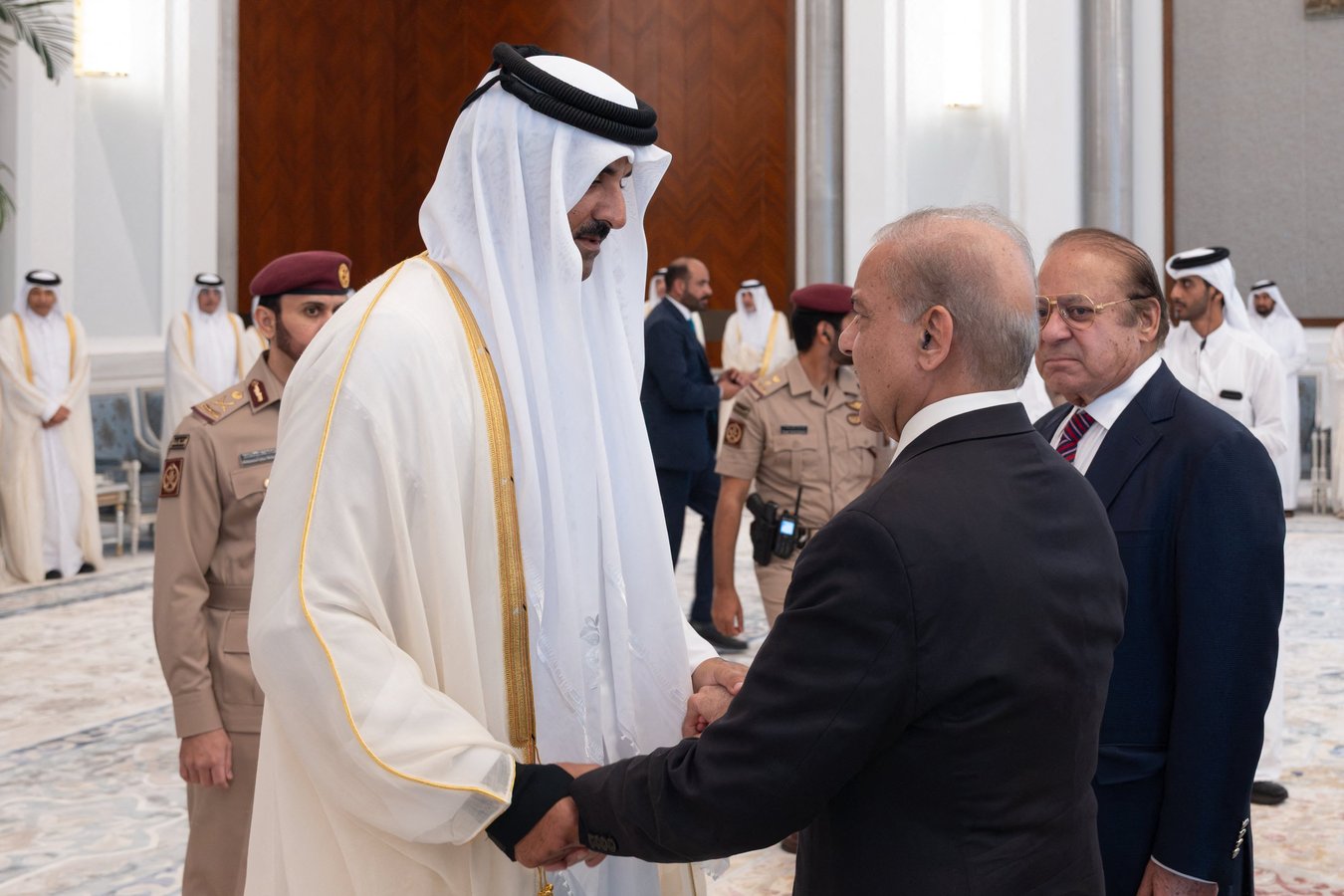

DOHA – Over two days of receiving rooms at Lusail Palace, Sheikh Tamim bin Hamad Al Thani has greeted a procession of leaders that, in almost any other context, would not have shared the same corridor. Egypt’s president arrived the morning after Syria’s new head of state. The Crown Prince of Saudi Arabia called from Riyadh while Pakistan’s prime minister sat in Doha. FIFA’s president flew in the same day as the Crown Prince of Bahrain. What brought them together was the death of the man who had, over 18 years, made their simultaneous presence in Qatar conceivable: Sheikh Hamad bin Khalifa Al Thani, who died Sunday at 74.
The visits began Monday and extended through Tuesday, as Qatar’s three-day official mourning period continued. By midday Tuesday, leaders who had traveled to Lusail Palace or sent senior representatives included heads of state and government from at least 15 countries, spanning the Gulf, North Africa, Europe, sub-Saharan Africa, South Asia, and Central Asia. Al Jazeera’s running tally of arrivals passed two dozen names by Tuesday morning. The encounters were brief, by protocol, and what was said in the private exchanges has not been disclosed.
But who showed up tells a story about what Sheikh Hamad built.
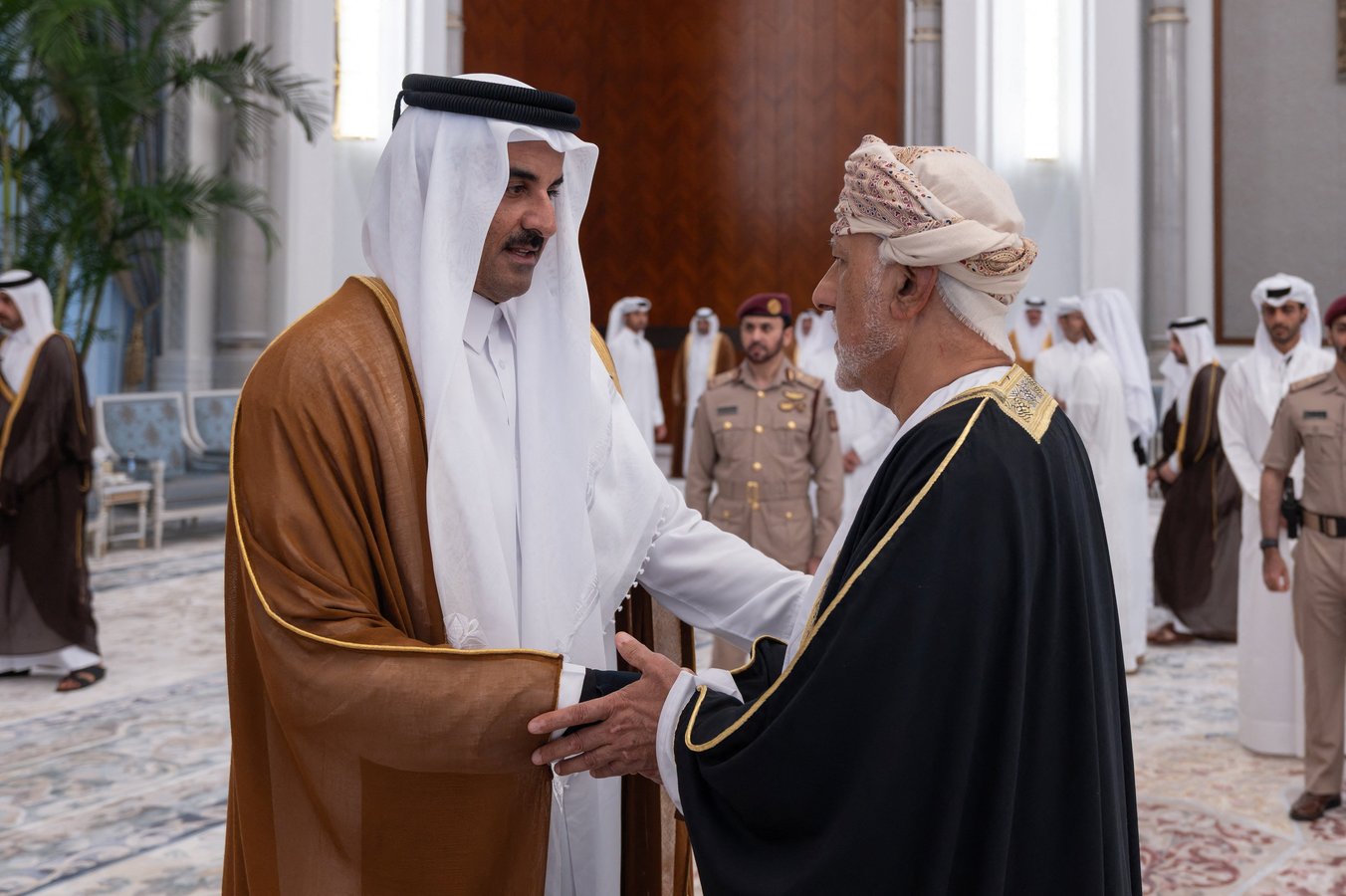
The Gulf was first. Bahrain’s Crown Prince Salman bin Hamad Al Khalifa arrived Monday, as did Kuwait’s Crown Prince Sheikh Sabah Khalid Al-Hamad Al-Sabah. The UAE sent its Deputy Prime Minister Sheikh Saif bin Zayed Al Nahyan. Saudi Arabia’s Crown Prince Mohammed bin Salman called Sheikh Tamim directly by phone, a choice that carried its own weight: the two countries had spent years in a bitter diplomatic rupture that Riyadh led, breaking relations with Qatar in 2017 and restoring them in 2021. That the call came Monday, without delay, signaled something about how the relationship now stands. Oman’s Deputy Prime Minister Sayyid Shihab bin Tarik Al Said arrived Monday evening, consistent with Muscat’s posture of quiet, steady presence throughout the Gulf’s shifting politics.
Syria’s President Ahmed al-Sharaa came Monday, a notable presence given that the new Syrian government has not yet settled its relationships with most regional actors and that Qatar had maintained contacts with various Syrian factions throughout the civil war. Iraq’s president and the Kurdish region’s leader both arrived Monday as well. Egypt’s President Abdel Fattah el-Sisi arrived Tuesday morning, followed by Lebanon’s President Joseph Aoun, Libya’s dual-leadership team, and the secretary-generals of both the Arab League and the GCC.
Italy’s Prime Minister Giorgia Meloni made the trip from Rome on Tuesday. Switzerland sent its Vice President Ignazio Cassis. The presence of two European leaders in Doha for the condolence rounds reflects how central Qatar has become to European energy calculations: Qatar has been a primary LNG supplier to European markets since 2022, a role Sheikh Hamad’s investment in gas infrastructure in the early 2000s made possible. Gianni Infantino, FIFA’s president, came Monday evening, a recognition of a different kind. The 2022 World Cup, hosted at Lusail and other Qatari venues, required everything Sheikh Hamad had spent decades assembling.
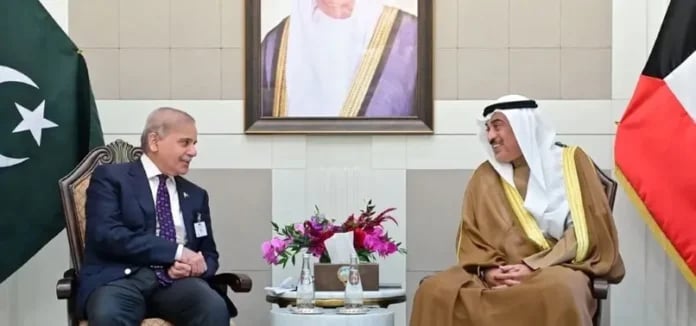
From Africa, Rwanda’s President Paul Kagame arrived Monday morning. Ethiopia’s Prime Minister Abiy Ahmed came Monday night, as did Mauritania’s President Mohamed Ould Ghazouani and the Comoros’ President Azali Assoumani, who arrived Tuesday. Pakistan’s Prime Minister Shehbaz Sharif was among the first to arrive Monday, a reflection of how significant Doha has remained for Islamabad during periods of economic stress. India sent Kiren Rijiju, the Minister of Parliamentary Affairs, whose expected arrival Tuesday fell below head-of-state level, a calibration that diplomatic observers will likely note given the regional affairs in which Qatari channels are engaged. Kazakhstan’s President Kassym-Jomart Tokayev arrived Monday evening, pointing toward Qatar’s expanding economic ties in Central Asia.
In the days since the simple burial at Lusail Cemetery, the procession of condolence visitors has made the case that Sheikh Hamad’s influence was real and extensive, not merely purchased. Small states accumulate this kind of draw through sustained, credible effort: by being present in negotiations others would rather not join, by channeling resources into institutions that outlast any single deal. The leaders assembling in Doha came because a relationship existed before this week, not because it was conjured by grief.
The gap in this picture is what happened in those private rooms. Egypt and Syria at Lusail Palace on the same visit, Saudi Arabia and Qatar on a Monday phone call that could not have been imagined in 2017, Pakistan and India sending delegations of notably different weight: these encounters took place in the same building where Qatar has historically provided neutral ground for contact that cannot happen in formal settings. Whether any of those conversations produced anything of substance has not been announced. It may not be for weeks or months, if ever.
Sheikh Tamim remains the host. The mourning period runs through Tuesday. After the last delegation departs, the diplomatic architecture Sheikh Hamad spent his reign constructing will continue operating under a ruler who has managed it for 13 years. The visitors have now confirmed they know where to find it.