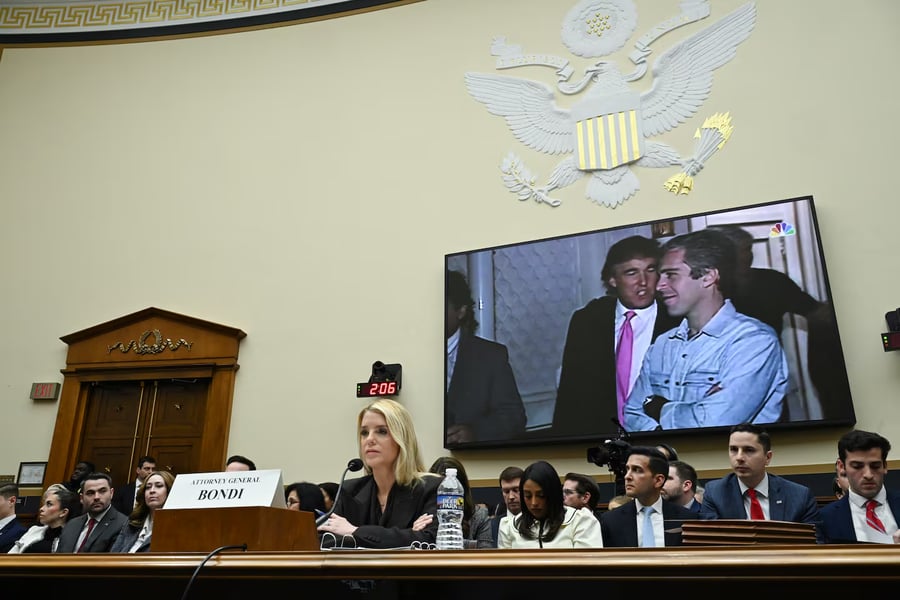

In a move that underscores the volatility at the heart of his administration, President Donald Trump abruptly dismissed Attorney General Pam Bondi on Thursday, a decision that reflects not only internal dysfunction but a widening Epstein Files crisis surrounding the Justice Department’s actions.
The decision to fired Attorney General Pam Bondi followed weeks of escalating backlash tied directly to the handling of the Epstein Files, a controversy that has shaken Washington and exposed deep fractures inside the US justice system.
Bondi’s removal comes after mounting criticism over the DOJ handling of the Epstein Files, particularly the release of heavily redacted records and unresolved questions about missing disclosures. Critics across the political spectrum accused the department of a profound lack of transparency that only deepened public distrust.

At the center of the backlash were concerns about redacted records and missing disclosures, which lawmakers argued undermined the credibility of the investigation. Congressional pressure intensified rapidly, with subpoenas issued and hearings scheduled to examine what many described as systemic failure.
Beyond procedural failures, the controversy has revived broader concerns about Justice Department’s independence, as critics point to a pattern of political interference and selective enforcement.
Bondi’s tenure had already drawn scrutiny for what analysts described as Trump’s influence over the Justice Department, with key investigative priorities reshaped to align with political objectives. The Epstein Files episode, however, exposed the limits of that strategy.
The administration initially framed the files as a pathway to exposing elite wrongdoing and institutional failure. Instead, the rollout became a case study in institutional breakdown, where the pursuit of political advantage collided with the demands of justice.
Reports indicate that Trump’s frustration extended beyond transparency concerns. According to multiple accounts, he viewed Bondi’s performance as insufficiently aggressive in pursuing political adversaries, adding another layer of political pressure that ultimately sealed her fate.
Bondi herself faced criticism over mistakes in handling and redactions, further eroding confidence in her leadership. The controversy surrounding Bondi’s handling of Epstein-related material became the defining issue of her tenure.
Trump has since moved quickly to install Deputy Attorney General Todd Blanche as acting head of the Justice Department, a decision widely interpreted as signaling continuity rather than reform. Blanche, a longtime Trump ally, is expected to maintain the administration’s current legal posture.
The broader implications of the crisis remain uncertain, but the consequences are already clear. The episode has intensified scrutiny of Justice Department’s lack of transparency and raised fundamental questions about the balance between political authority and judicial independence.
Even as Bondi exits, the controversy shows no signs of fading. Investigations are expected to continue, with lawmakers now turning their attention toward the decisions made at the highest levels of government.
The unfolding situation reflects a deeper crisis within the US political system, where the intersection of power, secrecy, and accountability continues to generate conflict. What began as a promise of transparency has instead evolved into a defining test of institutional credibility.
And as the Epstein Files remain under scrutiny, the central question persists: whether the machinery of justice is serving the public interest, or the priorities of those who control it.