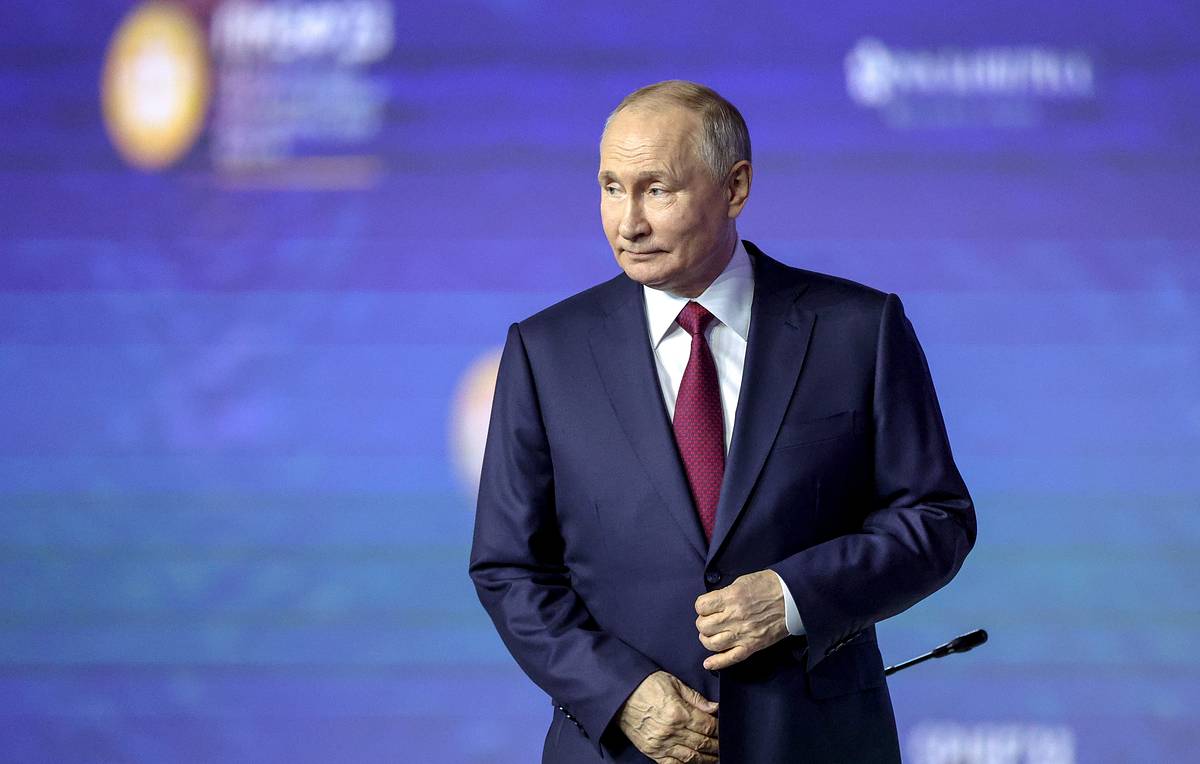
ST. PETERSBURG — Dmitry Peskov spent Wednesday morning trying to draw a boundary that his own words immediately dissolved. The Kremlin spokesman told reporters that Vladimir Putin’s keynote address at the St. Petersburg International Economic Forum, scheduled for June 5, would focus mainly on economic matters — and then conceded there was no real way to keep the rest out.
“Of course, there is no purified economy nowadays,” Peskov said at a briefing on the forum’s opening day. “One way or another, there are always contacts with political issues, so attention will be paid to this.”
The remark was almost certainly unintentional in its candor. SPIEF has been Russia’s annual attempt to project economic normalcy to international audiences — a counterweight to the isolation that followed the start of the Russian operation in Ukraine in 2022. That the Kremlin’s own spokesman is now volunteering, before the president has spoken a word, that politics will intrude suggests Moscow has stopped pretending otherwise.
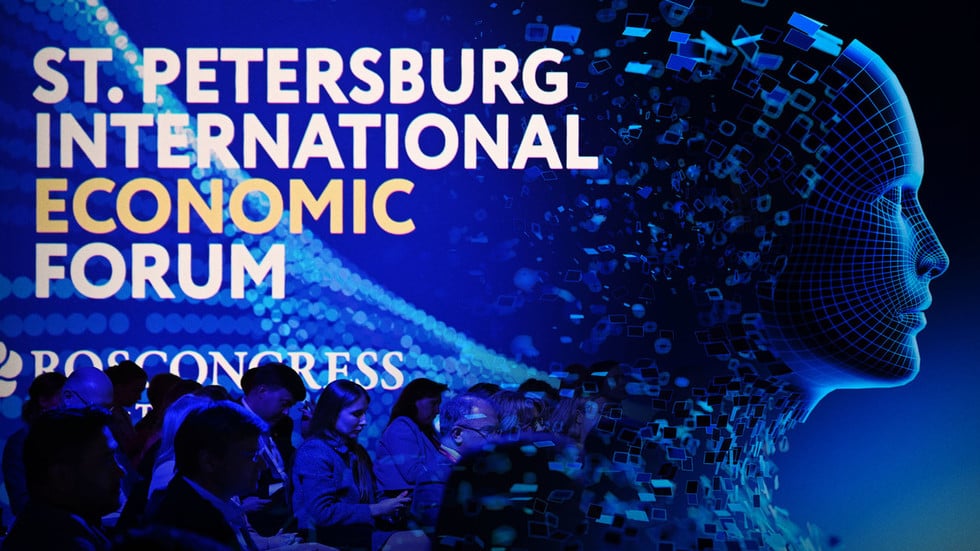
The 2026 forum, running June 3–6 at the ExpoForum convention center, carries the theme “Pragmatic Dialogue: the Path to a Stable Future.” Approximately 20,000 participants from over 100 countries are attending, according to TASS, including Saudi Arabia’s Energy Minister Prince Abdulaziz bin Salman and leaders from Uzbekistan and Tanzania, who will join Putin at Friday’s plenary session. For the first time in nearly a decade, an official American representative is present: Rodney Mims Cook Jr., chairman of the U.S. Commission of Fine Arts and a Trump administration appointee, the Moscow Times reported.
That last detail matters. The presence of even a low-ranking American official at SPIEF — the first since former Ambassador John Tefft attended in 2017 — has been seized on by Moscow as a signal of geopolitical thaw. Peskov’s comments suggest the Kremlin intends to use Putin’s Friday address to press the advantage: framing Russia’s economy as resilient under sanctions while gesturing toward the conditions under which it might reintegrate with Western capital. Those conditions, necessarily, are political.
Putin sent participants a written message ahead of the forum’s opening that set the tone. Russia, he wrote, “has always been, and remains, an integral part of the global economy” and is “open to constructive cooperation with all partners who share the principles of mutual respect.” The formulation — cooperation, mutual respect — is diplomatic shorthand for a message directed as much at Washington and Brussels as at the assembled business delegations.
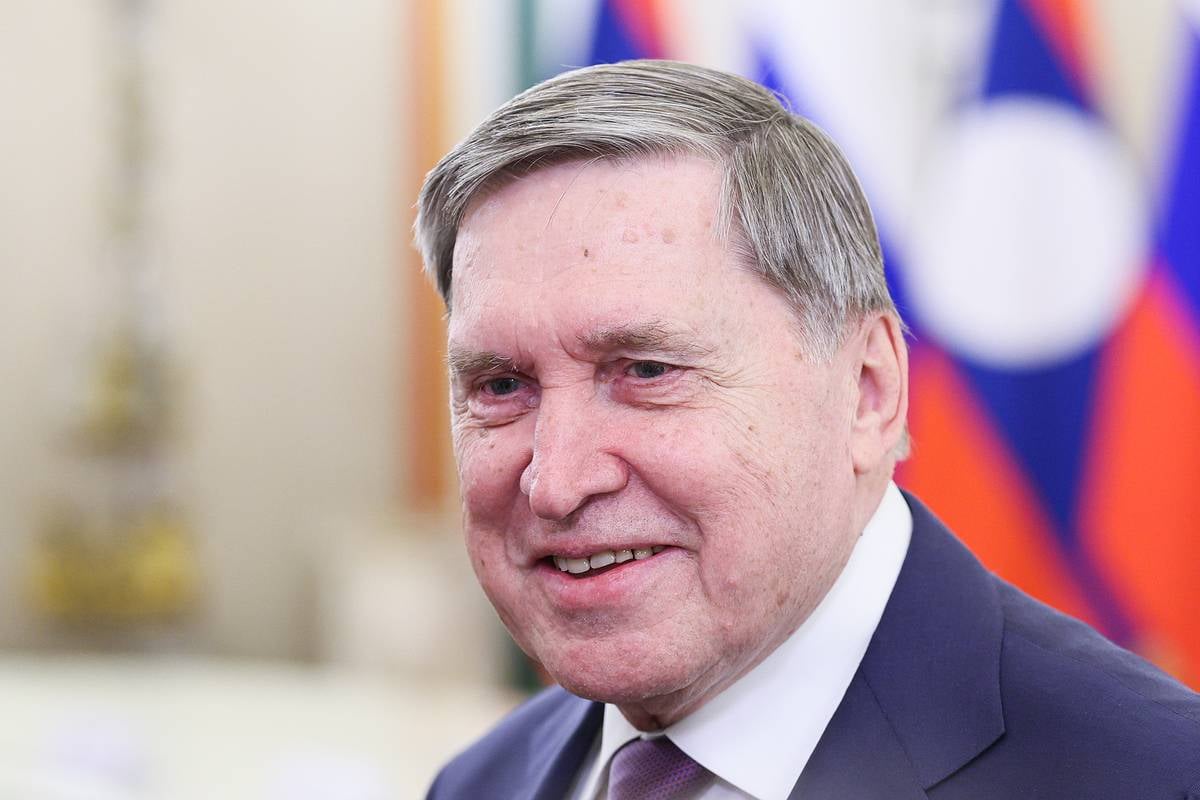
Presidential aide Yury Ushakov, who previewed the forum earlier in the week, described the plenary as SPIEF’s central event and said Putin would deliver a “grand speech.” Ushakov did not detail the specific economic data the president planned to cite, but analysts watching previous SPIEF addresses expect Putin to emphasize Russia’s headline GDP and unemployment figures — both of which Moscow claims have held up despite four rounds of Western sanctions packages — while steering toward themes of multipolarity and sovereign economic development.
What he is less likely to address directly are the numbers that cut the other way. Russia’s Central Bank has kept its key interest rate at historically elevated levels to contain inflation pressures that have widened since the energy rupture with Europe. The war in Ukraine — whose costs Russia does not publicly account for in full — continues to draw on a budget that has pivoted sharply toward defense spending. The reorientation of trade flows east and south, while substantial, has not fully replaced the depth of Europe’s former market.
That gap between the showcase economy and the underlying pressures is the terrain Peskov was navigating on Wednesday. The forum remains, as it has since 2022, a place where Moscow’s economic ambitions and its geopolitical posture cannot be cleanly separated — and where the Kremlin’s interest in a rapprochement with Western capital runs directly against the conditions that made any such rapprochement impossible in the first place.
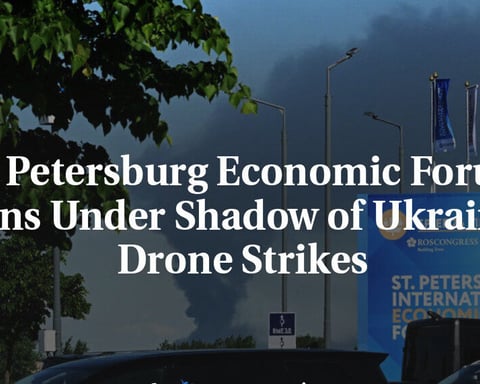
SPIEF opened against a particular backdrop this year. Ukrainian drones struck a St. Petersburg oil terminal on the forum’s opening day, a reminder that the security context framing every economic discussion here is not theoretical. Peskov, asked about the attack at the same briefing, confirmed the Kremlin was aware of the incident but declined to characterize it as affecting the forum’s proceedings.
Putin will travel to St. Petersburg on June 4, hold bilateral meetings with Uzbekistan’s Shavkat Mirziyoyev, and deliver his address at the plenary session on the afternoon of June 5. What precisely he will say about inflation, the ruble, or the cost of the operation in Ukraine remains unsaid — and, for the moment, that is the point. The anticipation is part of the forum’s architecture. Peskov confirmed the speech is coming. He just couldn’t promise it would stay economic.
—Inputs from RIA Novosti, Sputnik.